

Vaultwarden vs Bitwarden is perhaps the most discussed topic in the world of password management, and there is perhaps no other feature or topic that is discussed as much as the question of whether or not it is capable of replacing a premium service like 1Password or not. As there are growing levels of concern about matters of privacy, the price for a subscription, and the ability to do everything on your own in the modern world, there is a solution to these issues in the form of Vaultwarden, a lightweight server implementation of the Bitwarden code, and the question arises: can we really replace 1Password with Vaultwarden?
What Is Vaultwarden and How Does It Work?
Vaultwarden is an open-source, lightweight implementation of the Bitwarden server written in Rust, designed for users who want full control over their password management infrastructure. In the ongoing Vaultwarden vs Bitwarden discussion, Vaultwarden is often described as the “self-hosted power user’s choice” because it delivers most Bitwarden features while significantly reducing server resource usage.
Unlike Bitwarden’s official server, Vaultwarden does not rely on heavy enterprise components. Plutôt, it focuses on efficiency, simplicité, and compatibility. It uses the same official Bitwarden clients (desktop, mobile, and browser extensions), meaning users don’t sacrifice usability when switching.
Vaultwarden works by hosting your encrypted password vault on your own server—whether that’s a VPS, a home server, or a private cloud. All encryption happens client-side, and the server never sees your plaintext data. This architecture is central to why Vaultwarden vs Bitwarden often becomes a debate about control versus convenience rather than security alone.
Overview of Bitwarden and 1Password
To properly understand Vaultwarden vs Bitwarden, it’s important to see how both compare to a commercial leader like 1Password.

Hébergement Web WordPress
À partir de 3,99 $ / mensuel
Bitwarden is a popular open-source password manager offering both cloud-hosted and self-hosted options. It balances usability and transparency, making it attractive to individuals, teams, and enterprises alike.
1Mot de passe, d'autre part, is a proprietary, premium password manager known for polished UX, advanced sharing features, and enterprise-grade support. It is fully cloud-based, with no official self-hosting option.
Essentiel:
- Bitwarden sits in the middle ground.
- Vaultwarden leans heavily toward self-hosting and control.
- 1Password focuses on convenience and managed security.
This contrast fuels the ongoing Vaultwarden vs Bitwarden and “Can it replace 1Password?” conversation.
Vaultwarden contre Bitwarden: Key Differences Explained
At first glance, Vaultwarden and Bitwarden appear almost identical because they share the same client apps. Cependant, the real differences lie under the hood.
Vaultwarden is community-maintained and optimized for minimal hardware usage. Bitwarden’s official server includes enterprise features, telemetry options, and commercial integrations that Vaultwarden intentionally omits.
Serveur VPS pas cher
À partir de 2,99 $/mois
In the Vaultwarden vs Bitwarden comparison, the key differentiators are not features users see immediately, but operational aspects like deployment complexity, mise à l'échelle, et le soutien officiel.
Vaultwarden prioritizes:
- Lightweight performance
- Full self-hosting control
- Minimal dependencies
Bitwarden prioritizes:
- Official updates and support
- Enterprise compliance
- Hosted convenience
Security Comparison: Vaultwarden vs Bitwarden vs 1Password
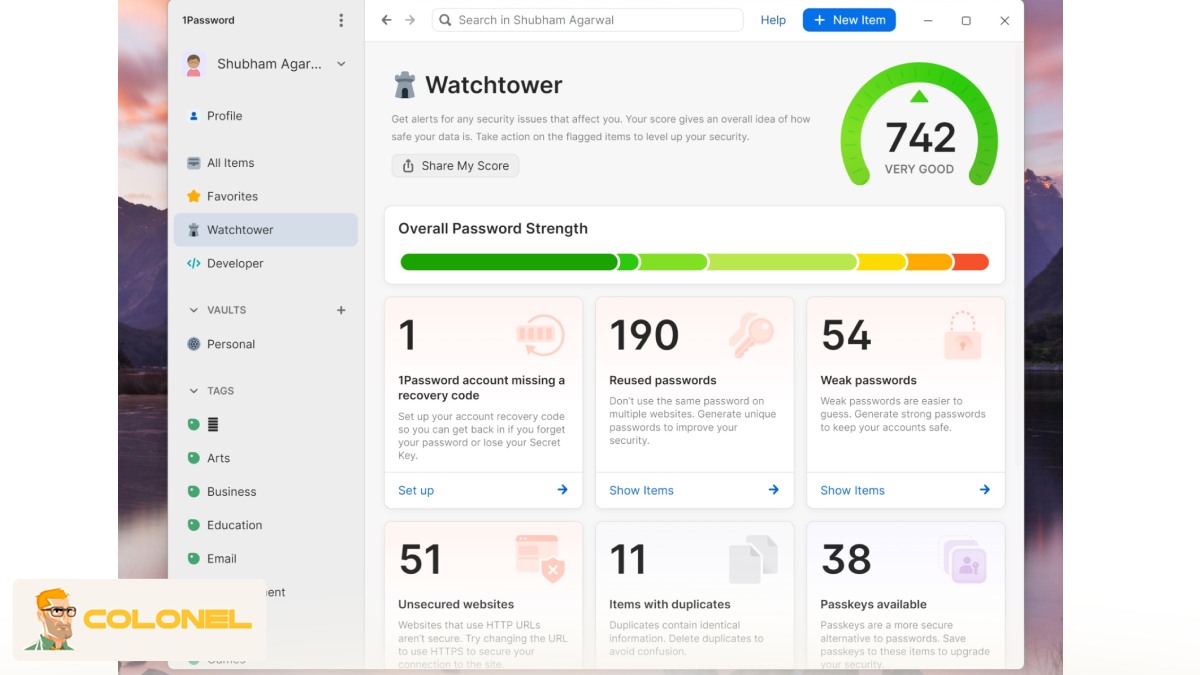
Security is the most critical factor in any password manager comparison. In Vaultwarden vs Bitwarden, it’s important to clarify that both rely on the same cryptographic principles.
All three solutions use:
Hébergement VPS Windows
Remote Access & Full Admin
- End-to-end encryption
- Client-side key generation
- Zero-knowledge architecture
Cependant, responsibility distribution differs. With Vaultwarden, security heavily depends on how well you manage your server, mises à jour, and access controls. Bitwarden’s hosted version and 1Password reduce user responsibility by managing infrastructure security themselves.
Comme Security.org notes:
“Self-hosted password managers can be just as secure as cloud-based ones, but only when users actively maintain and monitor their infrastructure.” — Security.org
This quote perfectly captures the heart of the Vaultwarden vs Bitwarden debate: security parity exists, but operational risk shifts to the user.
Self-Hosting vs Cloud-Based Password Managers
Choosing between self-hosting and cloud hosting is more than a technical decision—it’s a mindset. Before diving into features, it’s worth understanding what each model truly implies.
Self-hosting gives you:
- Full data ownership
- Infrastructure independence
- Custom security controls
- Cloud-based solutions offer:
- Zero maintenance
- Mises à jour automatiques
- Professional monitoring
This is where Vaultwarden vs Bitwarden becomes philosophical. Vaultwarden is ideal for users who value autonomy, while Bitwarden Cloud and 1Password appeal to those who prefer managed reliability.
Features Comparison: Password Vault, Autofill, and Sharing
From a user perspective, features matter day-to-day. Heureusement, Vaultwarden vs Bitwarden shows far more similarities than differences here.
Both support:
- Secure password vaults
- Autofill across browsers and devices
- Secure notes and attachments
Password sharing (with limitations depending on setup)
1Password still leads in advanced sharing workflows and UI polish, but Vaultwarden narrows the gap more than many expect—especially for individual users and small teams.
Performance and Resource Usage
Performance is where Vaultwarden clearly shines. One of the strongest arguments in Vaultwarden vs Bitwarden discussions is resource efficiency.
Vaultwarden can run comfortably on:
- Low-end VPS instances
- Raspberry Pi devices
- Home lab servers
Bitwarden’s official server requires significantly more RAM and CPU resources, especially when deployed with Docker.
This difference becomes critical for users already managing servers or hosting other services. En fait, if you’re optimizing your infrastructure, you may also find value in reading Meilleurs plugins de base de données WordPress pour la vitesse, which explores similar performance-driven decisions in a different context.
Privacy and Data Ownership
Privacy is often the emotional core of the Vaultwarden vs Bitwarden comparison.
With Vaultwarden:
- Your data stays on your server
- No third-party access
- No external metadata exposure
- With Bitwarden Cloud and 1Password:
- Data is encrypted
- Metadata may still be stored externally
- Trust is placed in the provider’s policies
For privacy-focused users, Vaultwarden represents the highest level of digital sovereignty.
Ease of Setup and Maintenance
Ease of use is where Vaultwarden demands honesty. While powerful, it is not “plug and play” for everyone. Before choosing Vaultwarden in the Vaultwarden vs Bitwarden decision, users should understand what setup entails.
You’ll typically need:
- A Linux server
- Docker or container knowledge
- HTTPS configuration
- Backup strategies
This complexity is manageable for technical users, but can be overwhelming for beginners—where Bitwarden Cloud or 1Password clearly win.
Pricing and Cost Efficiency
Cost is a major reason Vaultwarden exists at all. Vaultwarden itself is free. Your only cost is server hosting, which can be extremely low. Bitwarden offers a freemium model with affordable premium plans. 1Password is strictly subscription-based and priced higher, especially for families and teams. From a pure cost perspective, Vaultwarden vs Bitwarden heavily favors Vaultwarden for long-term users comfortable with self-hosting.
Pros and Cons of Using Vaultwarden
Avant de décider, it helps to clearly weigh strengths and limitations. Vaultwarden offers many advantages, but also real trade-offs that should not be ignored.
Les principaux avantages comprennent:
- Full control over your data
- Extremely low operating costs
- High performance on minimal hardware
- Open-source transparency
- Potential drawbacks include:
- No official support
- Manual updates required
- Greater responsibility for security
- Less beginner-friendly setup
This balanced view is essential when evaluating Vaultwarden vs Bitwarden realistically.
When Vaultwarden Is a Better Choice
Vaultwarden is not for everyone—but for the right user, it’s exceptional.
It is the better choice if you:
- Already manage servers or VPSs
- Value data ownership above convenience
- Want a Bitwarden-compatible solution without subscriptions
- Prefer open-source ecosystems
In these scenarios, Vaultwarden vs Bitwarden clearly tilts toward Vaultwarden.
When Bitwarden or 1Password Makes More Sense
There are also situations where Vaultwarden is simply not the best option.
Bitwarden or 1Password make more sense when:
- You want zero maintenance
- You manage non-technical users
- You need enterprise compliance and support
- You prioritize UX and onboarding speed
Dans ces cas, Vaultwarden vs Bitwarden becomes less about ideology and more about practicality.
Is Vaultwarden a Real Replacement for 1Password?
This is the central question—and the honest answer is: it depends. Functionally, Vaultwarden can replace 1Password for many users. Security-wise, it can match it. Cost-wise, it beats it. But in terms of polish, soutien, et commodité, 1Password still holds an edge.
The Vaultwarden vs Bitwarden debate shows that replacement doesn’t always mean equivalence—it means suitability.
Verdict final: Vaultwarden vs Bitwarden vs 1Password
Vaultwarden is a powerful, efficace, and privacy-focused password manager that challenges commercial norms. Bitwarden remains the most balanced option, while 1Password excels in user experience and managed security.
There is no universal winner in Vaultwarden vs Bitwarden vs 1Password—only the best choice for your priorities.