

It is a good idea for businesses that need flexibility, ownership, and customization to migrate from Shopify to WooCommerce. The post Shopify to WooCommerce: How to Migrate Safely is meant to enlighten you on how to migrate from Shopify to WooCommerce while avoiding common pitfalls such as data loss, temps d'arrêt, and search engine problems. With the correct strategy and planning, you can migrate your products, customers, and content with ease and create a scalable online store with WooCommerce without any problems with your business operations.
Shopify to WooCommerce Migration: What You Need to Know
Migration is a strategic decision that goes beyond just changing platforms. When an online business considers migrating from a monolithic platform to an open-source platform, it is not just about changing platforms; it is about gaining more flexibility, ownership, and scalability in the long run. Migrating from a Shopify platform to a WooCommerce platform is not an easy task, as it requires careful planning to ensure that all data is migrated without affecting daily operations. Understanding the scope of this migration will not only reduce potential risks but also set expectations for this task.
Migration is not just about technology; it is also about business. You are not just migrating from a closed SaaS environment to an open-source environment; you are gaining more freedom and ownership. Understanding what can be migrated automatically, what has to be migrated manually, and what can be optimized during this process will ensure a smooth and secure migration.
Why Businesses Switch from Shopify to WooCommerce
Shopify is an excellent platform for starting an online business due to its simplicity and ease of use. Cependant, as a business grows, it becomes more obvious that it is not scalable in terms of costs. Par conséquent, business owners are forced to switch to another platform. Switching from Shopify to WooCommerce is usually motivated by a desire for full control over the business functionality, conception, et des données.
WooCommerce is a flexible platform that gives business owners full control over their stores. With this platform, it is possible to customize all aspects of a store, including checkout functionality and pricing. Moreover, business owners can have full ownership of their data without restrictions. Pour cette raison, it is an important factor for businesses with long-term goals.
Hébergement Web WordPress
À partir de 3,99 $/mois
Before making a switch from one platform to another, it is important to consider both platforms objectively:
| Fonctionnalité | Shopify | WooCommerce |
| Hébergement | Included | Auto-hébergé |
| Personnalisation | Limité | Illimité |
| Monthly Fees | Fixed + applications | Hosting only |
| Data Ownership | Platform-controlled | Fully owned |
This comparison highlights why many scaling businesses eventually outgrow Shopify’s ecosystem.
Shopify vs WooCommerce: Which Is Best for You?
The choice between Shopify and WooCommerce will always depend on your business needs, as well as your comfort level with technology. Shopify is best for entrepreneurs looking for a hassle-free solution with minimal technical requirements. WooCommerce, d'autre part, is best for businesses looking for complete control over their store.
The best scenario for switching from Shopify to WooCommerce is if customizations, cost savings, and SEO are top priorities for your business. WooCommerce, being a WordPress plugin, is best for businesses looking for a content marketing strategy, as it is not possible with Shopify.
While there is no winner in the Shopify vs WooCommerce debate, there is only the best solution for your business needs.

Serveur VPS pas cher
À partir de 2,99 $/mois
Things to Do Before Shopify to WooCommerce Migration
Preparation is the most critical phase for any migration process, and the same goes for Shopify to WooCommerce migration. Before moving forward with the migration, one should conduct a thorough analysis of their existing Shopify store.
There are several things you need to consider before moving forward with the migration process, y compris:
- Shopify app analysis and WooCommerce alternatives
- URL structures and SEO-performing pages
- Data retention, such as orders and customers
A migration roadmap is essential for keeping the migration process as structured as possible.
How to Backup Your Shopify Store Data Safely
Backing up your store data is non-negotiable. Before proceeding with your Shopify to WooCommerce data migration, make sure that all your data is backed up securely. Shopify allows users to export their data in CSV format. Users can export their products, customers, and orders.
En plus de cela, users must also consider automated backup options. Store owners must also consider backing up their theme files, photos, and custom code snippets. Backups are a safety net that comes in handy if a user requires their data to be restored or if they need to verify their data.
Backups are not only a safety net but are also extremely helpful in troubleshooting.

Hébergement VPS Windows
Remote Access & Full Admin
Best Hosting for WooCommerce After Shopify Migration
Hosting is one of the most important factors that determine the performance and security of WooCommerce. Unlike Shopify, WooCommerce allows you to select your own hosting service. After migrating from Shopify to WooCommerce, selecting the best WordPress hosting will ensure that your website loads quickly and is scalable and stable.
When selecting a hosting service, it is important to consider factors such as WordPress hosting support, sauvegardes quotidiennes, environnements de préparation, et mesures de sécurité. The hosting service you choose will affect the performance of your website.
| Hosting Feature | Pourquoi c'est important |
| Stockage SSD | Faster page loading |
| Staging Environment | Safe testing before launch |
| Sauvegardes automatisées | Data protection |
| CDN Support | Global performance |
Investing in quality hosting is foundational to long-term success.
How to Set Up WooCommerce for Shopify Migration
Setting up WooCommerce properly prior to the import process helps prevent potential problems during the migration process. This step requires installing WordPress, configuring the WooCommerce settings, selecting a suitable theme, and installing essential plugins. When setting up Shopify to WooCommerce, the new setup should resemble your original store to ensure a seamless experience for your returning customers.
It’s essential to pay attention to the currency, tax, shipping, and checkout settings, among others, to prevent potential problems during the migration process.
How to Migrate Products from Shopify to WooCommerce
Product migration is usually the most laborious phase. When dealing with Shopify to WooCommerce product migrations, it is important that the product title, description, photos, price, SKU, and variations are properly matched.
Automated tools can be used to make the process easier, but it is important that the process is reviewed manually. Special care must be taken when migrating variable products, digital downloads, and subscriptions.
Product migration can have a direct impact on conversions and customer trust.
How to Transfer Customers fromShopify to WooCommerce
Customer data is an important asset for any business. It needs to be treated with care. When transferring data from Shopify to WooCommerce, the names, email addresses, billing information, and order associations for the customers need to be transferred with proper care. Passwords cannot be transferred due to encryption incompatibility. The customers need to reset their passwords.
How to Migrate Orders from Shopify to WooCommerce
Order data helps businesses understand their customers’ behavior. It is also important for accounting purposes. When migrating order data from Shopify to WooCommerce, the order data needs to be transferred with proper care. The order IDs, order dates, order statuses, order totals, and customer associations need to be maintained when migrating order data from Shopify to WooCommerce.
Business owners may choose to migrate either the old order data or the new order data based on their needs. The choice needs to be made based on the business needs and not based on convenience.
Migrating Pages, Blog Posts, and Content
The migration of content is particularly vital for SEO and brand integrity. Pages such as About Us, Contactez-nous, FAQs, and blog posts should be recreated or imported. The migration from Shopify to WooCommerce will take advantage of WordPress’s built-in strengths for content management.
Shopify to WooCommerce SEO Migration Best Practices
SEO integrity is one of the most significant challenges when migrating from one platform to another. URL, meta data, and internal links need to be treated with care. Setting up 301 redirects from Shopify to WooCommerce URLs should be a priority. The SEO migration from Shopify to WooCommerce should focus on continuity rather than innovation during the initial migration.
Selon Google Search Central:
“Properly implemented redirects help search engines and users find your content after a site move.” — Google Search Central
This quote from Google Search Central emphasizes the need for technical SEO best practices during migration.
How to Avoid Data Loss During Shopify Migration
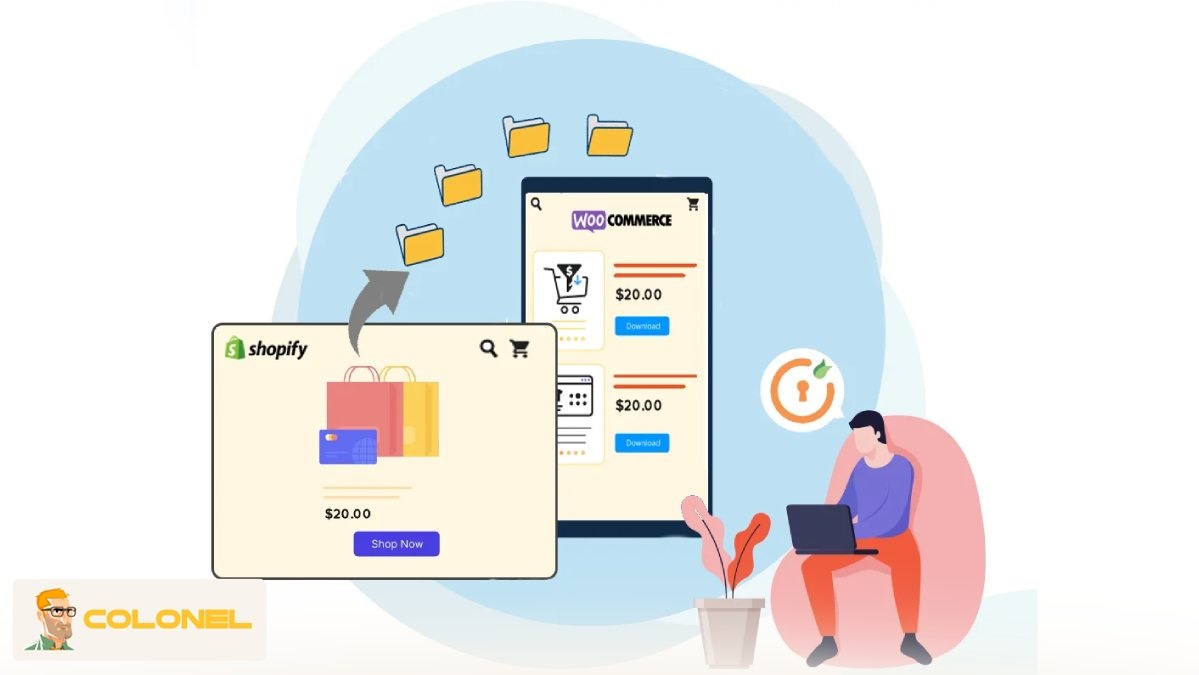
Data loss usually happens because of the rush or the lack of complete backups. To avoid this during the Shopify to WooCommerce migration, it is essential to check the imported data against the original exports. Use staging sites to test the migration before pushing the changes to the live site.
To avoid data loss, you should keep the following principles in mind:
- Do not migrate to a live production site
- Maintain multiple versions of the backup at different points
- Verify the accuracy of the data after each step of migration
- Your best tools are patience and verification.
Testing Your WooCommerce Store After Migration
Testing is not a choice; it is a must. After the completion of the Shopify to WooCommerce migration, it is essential to test every feature of your store, including product pages, checkout, passerelles de paiement, e-mails, and mobile responsiveness.
You should test the store like a real customer and place test orders.
Final Checklist Before Going Live with WooCommerce
Before going live, there are a number of things that need to be checked to ensure that everything is in place and that the Shopify to WooCommerce migration has been a success. A Shopify to WooCommerce launch checklist can be used to ensure that everything has been checked before going live.
Some of the key things that need to be checked before going live with WooCommerce include:
- Verifying redirects and broken links
- Verifying site speed
- Verifying backups
What to Do After Shopify to WooCommerce Migration
While Shopify to WooCommerce migration is a great way to increase flexibility, there are a number of things that need to be done after the migration to ensure that the store continues to thrive. This includes checking analytics and search engine results, as well as customer feedback.
It is worth noting that while Shopify to WooCommerce migration is a one-time process, there are a number of things that need to be done after the migration to ensure that the flexibility of the store is maintained.
Conclusion
Migrating from Shopify to WooCommerce is a strategic decision that offers greater control, flexibilité, and long-term growth potential. When approached with careful planning, secure data handling, and SEO-focused execution, the transition can be smooth and highly rewarding. By following best practices, testing thoroughly, and optimizing post-launch, businesses can confidently build a future-proof ecommerce store that aligns with their evolving goals.