
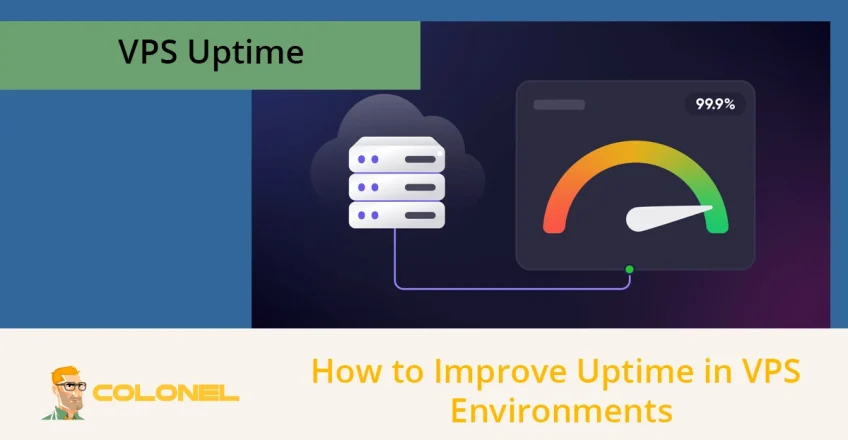

VPS uptime improvement is essential for ensuring that your websites and applications remain consistently available to users. High uptime directly translates to a better user experience, improved SEO rankings, and sustained revenue generation.
In a VPS environment, downtime can disrupt services, lead to financial losses, and damage a brand’s reputation, making proactive measures to maintain uptime a strategic priority. This article provides a comprehensive guide to strategies, outils, and best practices for maximizing uptime in VPS environments.
Understanding VPS Uptime
VPS uptime refers to the total time a virtual server remains operational and accessible. Measured as a percentage of total time, uptime metrics indicate the reliability of a server over a period, typically monthly or yearly. Par exemple, 99.9% uptime corresponds to roughly 43 minutes of downtime per month.
High uptime is critical because even short interruptions can negatively impact user experience and business outcomes. Downtime may result from hardware failures, network issues, or software misconfigurations, emphasizing the importance of comprehensive monitoring and proactive maintenance.
Flare nuageuse, one of the most trusted global infrastructure and performance companies, defines uptime and its importance as follows:
“Uptime is a measure of system reliability, expressed as the percentage of time a machine, typically a computer server, is available and operational.”

Hébergement Web WordPress
À partir de 3,99 $/mois

Factors Affecting VPS Uptime
Several technical and operational factors directly influence VPS uptime and determine how resilient a virtual server remains stressed. Uptime is not governed by a single component; plutôt, it results from the combined reliability of hardware, network infrastructure, software configuration, et discipline opérationnelle.
Understanding these factors allows administrators to proactively design VPS environments that tolerate failures without service disruption.
Hardware Reliability and Infrastructure Stability
Hardware reliability is a foundational factor in VPS uptime, even in virtualized environments. Physical components such as CPUs, memory modules, storage drives, and power units can fail unexpectedly, and when redundancy is insufficient, these failures directly translate into downtime.
Enterprise-grade data centers mitigate this risk through redundant power supplies, RAID-based storage arrays, and fail-safe cooling systems, ensuring that individual hardware failures do not impact virtual server availability.
Network Infrastructure and Connectivity Resilience
Network reliability plays a critical role in VPS uptime, as even a fully functional server becomes inaccessible during connectivity disruptions. Single-path network designs expose VPS environments to outages caused by ISP failures, routing misconfigurations, or regional connectivity issues.

Serveur VPS pas cher
À partir de 2,99 $/mois
High-availability VPS platforms (see VPS Pays-Bas) rely on multi-homed networking, redundant switches, and geographically diverse routing paths to maintain continuous access even during partial network failures.
Software Configuration and System Management
Software-related issues are among the most common causes of VPS downtime. Misconfigured firewalls, outdated operating systems, incompatible software updates, or improperly tuned services can destabilize an otherwise healthy server.
Configuration drift over time further increases risk, particularly in environments without standardized deployment or change management processes. Consistent configuration validation and controlled update cycles significantly reduce this category of downtime.
Security Threats and Malicious Activity
Cybersecurity threats represent a growing risk to VPS uptime. Distributed denial-of-service attacks, ransomware infections, and privilege escalation exploits can render services unavailable even when infrastructure remains intact. VPS environments without proper rate limiting, intrusion detection, or patch management are especially vulnerable. Effective uptime strategies, therefore, require security controls to be treated as availability mechanisms, not optional add-ons.
Note: By addressing hardware, réseau, logiciel, and security factors together, administrators create VPS environments that remain stable under both expected and unexpected conditions.

Hébergement VPS Windows
Remote Access & Full Admin
Monitoring VPS Performance for Uptime Improvement
Continuous monitoring is essential for VPS uptime improvement because downtime rarely occurs unexpected. Performance degradation often appears first as subtle resource saturation, delayed response times, or abnormal system behavior. Monitoring provides the visibility required to detect these early signals and intervene before they escalate into service outages.
Resource Utilization Monitoring
Tracking CPU usage, consommation de mémoire, disk I/O, and storage capacity allows administrators to identify resource exhaustion before it impacts availability. Sustained high CPU load or memory pressure can cause application crashes or system freezes, while disk latency often signals impending storage failures. Resource monitoring enables proactive scaling or optimization rather than reactive recovery.
Synthetic Transaction and Application Monitoring
Synthetic monitoring simulates real user interactions with applications hosted on a VPS, such as login attempts, checkout flows, or API requests. This approach detects functional failures that raw resource metrics may not reveal, including slow database queries or application-level errors.
By identifying performance degradation before real users encounter it, synthetic monitoring directly supports uptime preservation.
Network and Availability Checks from Multiple Locations
Multi-location availability monitoring verifies that a VPS remains accessible from different geographic regions. Network issues may affect specific routes or regions while leaving the server operational elsewhere.
External checks from distributed locations help distinguish between local network problems and true service outages, improving incident diagnosis and response accuracy.
Alerting and Historical Trend Analysis
Effective monitoring systems do more than collect metrics; they generate actionable alerts and long-term insights. Threshold-based alerts notify administrators when conditions deviate from normal ranges, while historical trend analysis reveals recurring patterns that indicate structural weaknesses. These insights support capacity planning and long-term uptime optimization strategies.
Comme Sematext Synthetics accurately notes, “Continuous, multi-layer monitoring is essential for modern VPS environments where uptime is mission-critical.” This layered visibility transforms uptime management from reactive troubleshooting into controlled, data-driven operations.
Choosing a Reliable VPS Provider
Selecting the right VPS hosting provider is vital for uptime assurance. Providers differ in:
- Infrastructure quality
- SLA guarantees
- Customer support responsiveness
A provider with strong redundancy, geographically diverse data centers, and robust network architecture reduces the likelihood of downtime. Avant de sélectionner un fournisseur VPS, consider:
- Uptime guarantees
- Historical performance
- The scalability options offering
High-quality providers like Colonel also offer proactive notifications, sauvegardes automatisées, and security features to mitigate risks.
A provider’s reputation and track record are strong indicators of reliability. Evaluating customer reviews, conducting trials, and reviewing SLAs ensures the provider aligns with uptime improvement objectives.

Implementing Redundancy Mechanisms
Redundancy is crucial for minimizing service interruptions. By duplicating critical server components or network paths, redundancy allows a VPS environment to continue operating even when a failure occurs.
Redundancy measures include failover systems, mirrored storage, and backup network connections. These configurations require initial investment but provide substantial benefits in reducing downtime risk.
Moreover, redundancy is not limited to hardware. Software redundancy, such as load-balanced virtual machines or clustering, ensures that applications remain accessible despite individual server failures.
Optimizing Resource Allocation
Proper resource allocation is key to VPS uptime improvement. Overloading CPU, mémoire, or storage can degrade server performance and trigger downtime. Administrators should monitor utilization patterns and allocate resources based on demand forecasts.
Dynamic resource scaling, enabled by modern virtualization technologies, allows VPS instances to adjust CPU or memory allocation automatically. This prevents bottlenecks and ensures consistent performance during peak usage periods.
Security Measures to Protect Uptime
Security incidents, such as DDoS attacks, malware infections, or ransomware, directly threaten VPS uptime. Strong firewall configurations, systèmes de détection d'intrusion, and frequent patching reduce vulnerability.
Regular security audits, combined with monitoring for unusual traffic patterns, allow administrators to respond quickly to threats. Encryption protocols and secure access policies further protect servers from unauthorized access. Security best practices include:
- Firewall and Access Control: Limit administrative access and implement IP whitelisting.
- Regular Patching: Keep operating systems and applications updated to prevent exploits.
- DDoS Mitigation Services: Utilize services that can absorb or deflect traffic spikes caused by attacks.

Capacity Planning and Load Management
Effective capacity planning ensures that VPS environments maintain high uptime even under growing workloads. Monitoring historical traffic patterns, peak loads, and storage requirements informs capacity decisions.
Load balancing can distribute traffic across multiple servers, preventing any single instance from becoming a bottleneck. This strategy also enhances resilience, allowing maintenance or unexpected failures without affecting overall availability.
Testing and Continuous Improvement
Regular testing validates uptime strategies and identifies potential weaknesses. Uptime testing can include simulated traffic, stress tests, and failover drills. Analyzing test results helps administrators fine-tune server configurations and improve resilience.
Continuous improvement is an iterative process. Monitoring metrics, addressing bottlenecks, updating security protocols, and refining redundancy measures all contribute to sustained VPS uptime improvement.
Tools for Monitoring and Enhancing VPS Uptime
Several tools support uptime management effectively:
- Uptrends: Monitors uptime and performance from over 200 global checkpoints.
- Uptime Robot: Provides ping monitoring and port checking with real-time alerts.
- StatusCake: Offers multi-location testing and detailed incident reports.
- Site24x7: Comprehensive platform for monitoring servers, sites Web, et applications.
- 360Surveillance: Provides a full package for monitoring and enhancing your website.
Each tool provides unique advantages, and combining monitoring solutions can deliver comprehensive coverage for uptime management.
Conclusion
VPS uptime improvement is a strategic necessity for businesses relying on online services. By understanding influencing factors, implementing redundancy, monitoring performance, optimizing resources, and enhancing security, administrators can minimize downtime and deliver a seamless user experience.
Investing in reliable infrastructure and following proactive uptime strategies enhances performance and builds trust, preserves revenue, and strengthens brand reputation. Maintaining high uptime is not a one-time effort but a continuous process of assessment, adaptation, and improvement.
Foire aux questions (FAQs)
What is considered excellent VPS uptime?
Generally, an uptime of 99.9% or higher is considered excellent, minimizing downtime to under an hour per month.
Can VPS downtime affect SEO?
Oui. Search engines penalize sites with frequent or prolonged downtime, negatively impacting organic search rankings.
How often should VPS uptime be monitored?
Continuous monitoring is recommended, with automated alerts and monthly performance reviews.
Is achieving 100% uptime possible?
Absolute 100% uptime is impractical due to unforeseen events, but redundancy and monitoring can minimize downtime.
What is the fastest way to detect VPS downtime?
Using real-time monitoring tools with automated alerts ensures immediate detection and rapid response to any service disruption.