
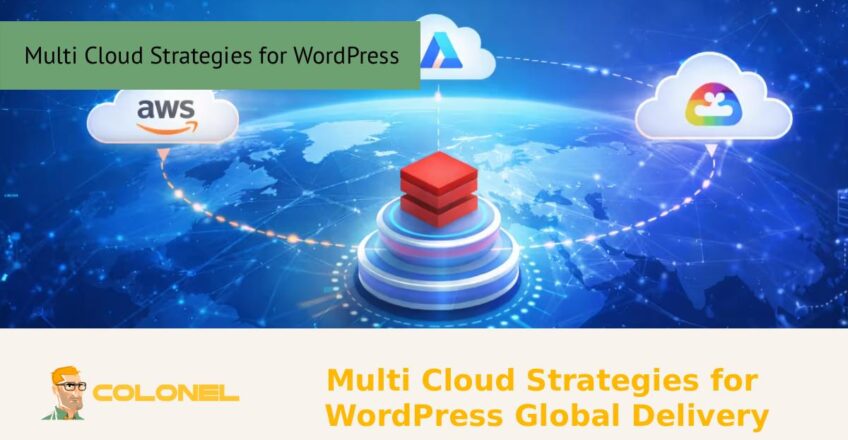
Dans le paysage Web actuel axé sur la performance, s'appuyer sur un seul fournisseur de cloud ne suffit plus à garantir la rapidité, disponibilité, et portée mondiale pour les sites WordPress. Les stratégies multi-cloud pour WordPress Global Delivery offrent une approche plus intelligente en distribuant l'infrastructure sur plusieurs environnements cloud., réduire la latence, éviter les points de défaillance uniques, et garantir que le contenu est diffusé depuis l'emplacement le plus proche possible des utilisateurs. En combinant une architecture multi-cloud avec un routage intelligent du trafic et une intégration CDN, les entreprises peuvent améliorer considérablement l'expérience utilisateur, améliorer l'évolutivité, et maintenir des performances constantes même en cas de pics de trafic imprévisibles ou de pannes régionales.
Repenser l'échelle: Pourquoi WordPress sur un seul cloud échoue silencieusement
La plupart des propriétaires de sites WordPress ne réalisent pas qu’ils ont déjà atteint un plafond jusqu’à ce que le trafic augmente., les pages ralentissent, ou pire, le site tombe complètement en panne. Le problème n’est pas toujours un mauvais hébergement; c'est une limitation architecturale. Un seul fournisseur de cloud, peu importe la puissance, introduit une fragilité cachée. Quand tout dépend d’un seul écosystème, vous n'évoluez pas, vous concentrez les risques. C’est là que les stratégies multi-cloud pour WordPress déplacent la conversation de « l’hébergement » vers la « conception d’infrastructure ».
Au lieu de compter sur un seul fournisseur pour tout gérer, calculez, stockage, livraison, vous répartissez les responsabilités sur plusieurs environnements. Cela ne réduit pas seulement le risque d’indisponibilité; cela change fondamentalement la façon dont votre site WordPress se comporte sous pression. La latence devient gérable, les pannes sont isolées, et les performances deviennent prévisibles.

Ce que signifie réellement le multi-cloud (Et ce que ça ne fait pas)
Supprimons les mots à la mode. Le multi-cloud ne consiste pas à utiliser plusieurs fournisseurs au hasard. Il s’agit d’une distribution intentionnelle. Chaque fournisseur joue un rôle: on pourrait gérer la réplication de base de données, un autre pourrait optimiser la livraison frontale, et un troisième pourrait gérer les sauvegardes ou le basculement.
Dans le cadre des Stratégies Multi Cloud pour WordPress, cette approche crée un système à plusieurs niveaux dans lequel aucune défaillance ne peut tout faire tomber. Il ne s’agit pas de redondance pour le plaisir, mais d’une séparation stratégique des préoccupations..
Hébergement Web WordPress
À partir de 3,99 $/mois
L’erreur que font la plupart des gens est de penser que le multi-cloud est réservé aux entreprises.. C'était vrai avant. Ce n'est plus le cas.
Le vrai pilote: La performance n’est plus locale
Vos utilisateurs ne sont pas au même endroit. Votre infrastructure ne devrait pas l’être non plus.
Si votre site WordPress est hébergé dans une région, chaque visiteur en dehors de cette région subit un retard. Ce retard s'aggrave avec chaque script, image, et appel API. Au fil du temps, cela détruit les mesures d'engagement sans même que vous vous en rendiez compte.
C'est pourquoi les stratégies multi-cloud pour WordPress sont étroitement liées à la réflexion moderne sur la performance.. Ce n’est pas seulement une question de rapidité, c’est aussi une question de cohérence géographique. Un utilisateur à Singapour devrait vivre la même expérience qu'un utilisateur à Francfort. Sans architecture distribuée, c'est presque impossible.
Briser le goulot d'étranglement: De l'hébergement à l'architecture
L'hébergement traditionnel se concentre sur les ressources: Processeur, BÉLIER, stockage. Mais faire évoluer WordPress à l’échelle mondiale n’est pas un problème de ressources, c’est un problème d’architecture..
En appliquant des stratégies multi-cloud pour WordPress, vous découplez différentes couches de votre système:

Serveur VPS pas cher
À partir de 2,99 $/mois
- Couche d'application (Noyau WordPress et exécution PHP)
- Couche de base de données (MySQL ou alternatives)
- Couche de livraison (actifs statiques, mise en cache, CDN)
- Acheminement du trafic (DNS et équilibrage de charge)
Lorsque ces couches fonctionnent sur plusieurs cloud, vous éliminez les goulots d'étranglement que les environnements uniques ne peuvent pas résoudre. C'est là que la véritable infrastructure multi-cloud devient un avantage concurrentiel, pas seulement une mise à niveau technique.
La vitesse n'est pas seulement la vitesse; C'est de la perception
Les utilisateurs ne mesurent pas le temps de chargement en secondes, ils mesurent la frustration.
Un site qui se charge 2 secondes mais qui semble incohérent fonctionnera moins bien qu'un site qui se charge en 2.5 secondes mais se comporte de manière prévisible. Le multi-cloud vous aide à contrôler cette perception en réduisant la variance.
Avec les stratégies multi-cloud pour WordPress, vous pouvez acheminer les utilisateurs de manière dynamique en fonction de l'emplacement, charge du serveur, ou même des contrôles de santé en temps réel. Cela signifie que les utilisateurs sont toujours connectés au nœud disponible le plus rapide, pas seulement le plus proche.
Le rôle caché de la diffusion de contenu
La distribution de contenu est au cœur de la performance mondiale. Images d'actifs statiques, CSS, JavaScript représente la majorité du poids de la page. Si ces actifs ne sont pas optimisés globalement, vos améliorations backend n'auront pas d'importance.

Hébergement VPS Windows
Accès à distance et administrateur complet
Un Global CDN pour WordPress bien configuré agit comme la couche externe de votre configuration multi-cloud. Il met en cache et distribue le contenu sur les emplacements périphériques, réduisant le besoin de requêtes répétées vers les serveurs d'origine.
Mais voici la nuance: un CDN seul ne constitue pas une stratégie multi-cloud. C'en est un élément. Sans distribution backend appropriée, vous masquez simplement des inefficacités plus profondes.
Quand le trafic augmente, L'architecture est testée
N'importe qui peut gérer un site rapide dans des conditions normales. Le véritable test est la volatilité.
Pics de trafic, qu'ils proviennent de campagnes marketing, contenu viral, ou la demande saisonnière révèle instantanément les faiblesses. Les configurations à cloud unique réagissent souvent en évoluant verticalement (ajouter plus de ressources à un serveur). Cela fonctionne… jusqu'à ce que ce ne soit plus le cas.
Les stratégies multi-cloud pour WordPress adoptent une approche différente. Au lieu de faire évoluer un seul système, ils répartissent la charge sur plusieurs systèmes. Cela réduit le risque de surcharge et permet une gestion plus gracieuse des demandes soudaines..
Les données comptent: Où et comment il vit
L'un des plus grands défis des configurations multi-cloud est la cohérence des données. WordPress s'appuie fortement sur sa base de données, et une réplication mal gérée peut causer plus de mal que de bien.
La solution ne consiste pas seulement à synchroniser les bases de données, elle les conçoit pour la distribution. Lire les répliques, bases de données géo-distribuées, et la mise en cache intelligente jouent tous un rôle.
Quand c'est bien fait, Les stratégies multi-cloud pour WordPress garantissent que les données sont toujours disponibles, toujours à jour, et toujours proche de l'utilisateur qui en a besoin.

Implications SEO que vous ne pouvez pas ignorer
Les moteurs de recherche ne se soucient pas seulement du contenu, ils se soucient de l'expérience. Éléments essentiels du Web, vitesse des pages, disponibilité, et la réactivité influencent tous les classements.
C’est là que l’optimisation des performances WordPress croise l’infrastructure. Un système distribué à l’échelle mondiale réduit les temps de chargement, améliore la stabilité, et augmente l'efficacité de l'exploration.
Google ne récompense pas les efforts, il récompense les résultats. Le multicloud fournit ces résultats à grande échelle.
L'économie du multi-cloud
Répondons à la préoccupation évidente: coût.
À première vue, utiliser plusieurs fournisseurs de cloud semble coûteux. Et si c'est mal fait, c'est. Mais une fois optimisé, le multi-cloud peut réellement réduire les coûts en:
- Éviter le surprovisionnement dans un seul environnement
- Utiliser les avantages tarifaires spécifiques à la région
- Réduire les pertes de revenus liées aux temps d'arrêt
- Optimiser l'allocation des ressources de manière dynamique
C'est pourquoi les stratégies multi-cloud pour WordPress ne sont pas seulement une question de performances, elles sont également une question d'efficacité..
Un système, De nombreux emplacements
L'idée de l'hébergement distribué pour WordPress est simple: votre site ne réside pas au même endroit. Il existe sous la forme d'un réseau de nœuds interconnectés.
Chaque nœud sert un objectif. Certains gèrent le trafic, d'autres gèrent les données, et d'autres agissent comme des basculements. Ensemble, ils créent un système qui est supérieur à la somme de ses parties.
Cette distribution permet à WordPress de fonctionner au niveau mondial sans compromettre la vitesse ou la fiabilité..
La fiabilité n'est pas une fonctionnalité, c'est un choix de conception
Les temps d'arrêt sont rarement causés par une seule panne catastrophique. C’est généralement le résultat de petits problèmes qui se transforment en problèmes plus importants..
L'architecture multi-cloud empêche cette cascade. Si un fournisseur rencontre des problèmes, le trafic est redirigé. Si une région tombe en panne, un autre prend le relais.
C’est la base de l’hébergement WordPress haute disponibilité, et pas seulement des garanties de disponibilité., mais une réelle résilience.
Et c’est là que les stratégies multi-cloud pour WordPress prouvent leur valeur. Ils n’éliminent pas l’échec; ils le contiennent.
La seule balle dont vous avez besoin: Quand le multi-cloud prend tout son sens
Soyons clairs, le multicloud n’est pas pour tout le monde. Mais si vous vous reconnaissez dans l'un de ces scénarios, tu es déjà candidat:
- Vous servez des utilisateurs dans plusieurs pays ou continents
- Votre trafic est imprévisible ou piloté par une campagne
- Les temps d'arrêt ont un impact direct sur les revenus ou la réputation
- Vous êtes devenu trop grand pour l'hébergement partagé ou dans un cloud unique
- Vous avez besoin de performances constantes sous différentes charges
Si même deux d’entre eux s’appliquent, ignorer les stratégies multi-cloud pour WordPress est une erreur stratégique.
De la théorie à l'exécution
Comprendre le concept est facile. C'est dans sa mise en œuvre que les choses deviennent réelles.
Vous avez besoin d'outils d'orchestration, systèmes de surveillance, et une stratégie de déploiement claire. Sans ces, le multi-cloud devient chaos au lieu de structure.
Mais avec la bonne configuration, cela devient un système d'auto-guérison qui s'adapte, Balance, et fonctionne sans intervention constante.
C'est pourquoi les stratégies multi-cloud pour WordPress concernent moins les outils que la réflexion différente..
L'avenir est déjà là
Ce qui était autrefois « avancé » devient rapidement la norme. À mesure que les attentes des utilisateurs augmentent et que la concurrence s’intensifie, la performance n’est plus facultative.
Le multi-cloud n’est pas une tendance, c’est une réponse à la réalité.
Si votre site WordPress fait partie de votre entreprise, votre marque, ou votre source de revenus, alors les décisions en matière d'infrastructure sont des décisions commerciales. Et maintenant, la décision la plus intelligente que vous puissiez prendre est d’adopter des stratégies multi-cloud pour WordPress avant d’y être obligé..
Pensée finale: Contrôlez l'expérience ou perdez-la
En fin de journée, les utilisateurs ne se soucient pas de votre fournisseur d'hébergement. Ils se soucient de la sensation de votre site.
Rapide. Fiable. Cohérent.
C'est le bar.
Et la seule façon d’y parvenir à grande échelle est de prendre le contrôle de votre infrastructure.. Ne pas réagir aux problèmes mais concevoir des systèmes qui les préviennent.
C’est exactement pour cela que les stratégies multi-cloud pour WordPress sont conçues.