

SEO Plugins for WordPress are the most practical way to control on-page optimization, technical SEO, performance signals, and search visibility without touching core code. In 2026, WordPress SEO is no longer limited to meta titles and XML sitemaps, and modern SEO plugins for WordPress now influence Core Web Vitals, structured data, content quality signals, and even AI-assisted optimization workflows. Choosing the right plugin stack directly impacts crawlability, indexation quality, and long-term ranking stability, especially as search engines increasingly evaluate experience, relevance, and technical efficiency together.
Why SEO Plugins for WordPress Matter in 2026
SEO Plugins for WordPress matter because they translate complex search engine requirements into executable actions inside the CMS environment. Without these plugins, tasks such as schema implementation, canonical management, index control, and performance optimization require custom development, which is inefficient for most site owners.
In 2026, algorithm updates place a heavier weight on page experience, entity-based SEO, and structured data consistency. WordPress SEO plugins help bridge the gap between content creation and technical execution by automating repetitive tasks while still allowing granular control. They also reduce dependency on external tools by bringing analytics, optimization hints, and diagnostics directly into the WordPress dashboard.

Categories of SEO Plugins for WordPress
SEO Plugins for WordPress are no longer single-purpose tools and are best understood by category rather than brand alone. Each category solves a specific SEO problem, and combining the right tools creates a sustainable optimization framework.
Some plugins focus on content-level optimization, others on analytics and tracking, while performance-focused plugins indirectly influence SEO through speed and stability. Understanding these distinctions prevents feature overlap and plugin conflicts.
WordPress Web Hosting
Starting From $3.99/Monthly
| Plugin Category | SEO Impact |
| On-page SEO plugins | Improve relevance, readability, and keyword targeting |
| Analytics and tracking | Enable data-driven SEO decisions |
| Performance and caching | Improve load speed and Core Web Vitals |
| Redirection and error handling | Preserve link equity and crawl efficiency |
| Local and structured data | Enhance visibility in rich and local results |
1. Yoast SEO
Yoast SEO is one of the most established SEO Plugins for WordPress and remains relevant in 2026 due to its strong focus on content quality and readability signals. It is particularly effective for publishers who want structured editorial guidance rather than purely technical controls.
The plugin evaluates content against predefined SEO and readability criteria, helping writers align their pages with search intent while maintaining clarity for users. Yoast SEO also handles critical technical elements such as XML sitemaps, canonical URLs, and schema markup with minimal configuration.
| Attribute | Details |
| Best for | Content-focused SEO and editorial teams |
| Pricing | Freemium, premium plans from $99/year |
| Core strength | Readability and on-page optimization |
Key strengths of Yoast SEO include:
- Real-time content analysis with SEO and readability indicators
- Built-in schema support for articles, pages, and breadcrumbs
- Automated XML sitemap generation and canonical handling
Limitations to consider:
- Advanced features require paid add-ons.
- Less flexibility for large-scale technical customization
Yoast also emphasizes that performance and readability are core components of sustainable SEO strategies.


Cheap VPS Server
Starting From $2.99/Monthly
2. All in One SEO (AIOSEO)
All in One SEO is a comprehensive WordPress SEO plugin designed to serve both beginners and advanced users without overwhelming either group. It strikes a balance between automation and customization, making it suitable for a wide range of site types, from blogs to e-commerce platforms.
AIOSEO stands out for its TruSEO scoring system, which provides actionable recommendations based on real ranking factors. It also supports advanced use cases such as WooCommerce SEO, Google News sitemaps, and video SEO, making it one of the most versatile SEO Plugins for WordPress in 2026.
| Attribute | Details |
| Best for | Scalable on-page and technical SEO |
| Pricing | Freemium, paid plans from $49.60/year |
| Core strength | Balanced automation and control |
Key strengths of AIOSEO include:
- Smart XML and video sitemap generation
- WooCommerce and local SEO support
- Built-in robots.txt and index control
Limitations to consider:
- Some advanced monitoring features are premium-only
3. Rank Math SEO
Rank Math SEO positions itself as a modern, AI-powered alternative among WordPress SEO plugins, focusing on efficiency and data-driven optimization. It is particularly attractive for users who want deeper keyword insights and content assistance without relying on multiple external tools.
The plugin integrates AI-based recommendations that suggest keyword usage, content length, internal links, and structural improvements. Its modular architecture allows users to enable only the features they need, which helps maintain performance while scaling SEO capabilities.

Windows VPS Hosting
Remote Access & Full Admin
| Attribute | Details |
| Best for | AI-assisted SEO and keyword optimization |
| Pricing | Freemium, premium plans from $69/year |
| Core strength | Content AI and modular design |
Key strengths of Rank Math SEO include:
- AI-powered keyword and content suggestions
- Advanced schema support with minimal setup
- Unlimited site usage on higher-tier plans
Limitations to consider:
- AI features operate on a credit-based system

4. The SEO Framework
The SEO Framework is built for performance-focused users who want clean, automated SEO without excessive configuration. Among SEO Plugins for WordPress, it is known for its minimal footprint and fast execution.
Instead of overwhelming users with prompts, the plugin generates optimized metadata automatically based on content context. It also includes protection against common SEO issues such as duplicate indexing and malformed metadata, which helps maintain long-term site health.
| Attribute | Details |
| Best for | Lightweight, performance-oriented SEO |
| Pricing | Freemium, premium from $7/month |
| Core strength | Speed and automation |
Key strengths of The SEO Framework include:
- Automatic meta title and description generation
- Built-in SEO monitoring and protection
- Minimal database impact
Limitations to consider:
- Advanced schema features require premium extensions
5. SEOPress
SEOPress is a flexible and developer-friendly SEO plugin that covers on-page SEO, analytics integration, and redirection management within a single interface. It is particularly effective for teams that manage multiple sites or custom WordPress builds.
Unlike many SEO Plugins for WordPress, SEOPress does not restrict keyword usage and provides deep integration with Google Analytics and page builders. Its interface allows granular control without forcing predefined workflows.
| Attribute | Details |
| Best for | Advanced users and agencies |
| Pricing | Freemium, premium from $49/year |
| Core strength | Flexibility and analytics integration |
Key strengths of SEOPress include:
- Unlimited keyword optimization
- Built-in redirection management
- AI-assisted meta generation in premium plans
Limitations to consider:
- Broad feature set requires learning time
6. Squirrly SEO
Squirrly SEO is designed for users who want continuous guidance rather than static optimization rules, and it stands out among SEO Plugins for WordPress by functioning as an AI-driven SEO consultant inside WordPress. Instead of focusing only on technical settings, it actively analyzes ranking pages and suggests real-time improvements.
The plugin connects to a cloud-based AI engine that evaluates keyword opportunities, internal linking structures, and SERP competitiveness. This approach helps content teams adjust their pages dynamically rather than relying on fixed checklists that may become outdated.
| Attribute | Details |
| Best for | AI-guided content and SEO audits |
| Pricing | Freemium, paid plans from $20.99/month |
| Core strength | Live SEO assistance |
Key strengths of Squirrly SEO include:
- Real-time keyword suggestions based on current SERPs
- Automated internal linking recommendations
- Focus Pages feature for priority URL optimization
Limitations to consider:
- Requires an account connection to cloud services

7. WP Meta SEO
WP Meta SEO focuses on bulk SEO management and visual control, making it suitable for large content libraries that require consistent optimization. Among SEO Plugins for WordPress, it excels in handling metadata and image-related SEO at scale.
Instead of editing pages individually, site owners can manage meta titles, descriptions, and image attributes from centralized dashboards. This significantly reduces time spent on maintenance while preserving optimization consistency across the site.
| Attribute | Details |
| Best for | Bulk meta and image optimization |
| Pricing | Freemium, paid plan from $49/year |
| Core strength | Centralized SEO control |
Key strengths of WP Meta SEO include:
- Bulk editing of meta titles and descriptions
- Image SEO optimization without HTML resizing issues
- Built-in 404 detection and redirection
Limitations to consider:
- Social sharing previews may require additional configuration
8. WPSSO Core
WPSSO Core specializes in structured data and rich snippet optimization, positioning itself differently from traditional SEO Plugins for WordPress. Its primary goal is to control how content appears across search engines and social platforms. According to Google Search Central:
“Structured data helps search engines better understand page context and enhance search appearance.”
The plugin supports hundreds of schema types and subtypes, allowing precise entity definition. This level of granularity helps search engines interpret content context more accurately, which improves visibility in enhanced SERP features.
| Attribute | Details |
| Best for | Advanced schema and structured data |
| Pricing | Freemium, paid plans from $89/site |
| Core strength | Rich snippet optimization |
Key strengths of WPSSO Core include:
- Extensive schema.org and Google rich result support
- Optimized Open Graph and Twitter Card data
- WooCommerce schema integration
Limitations to consider:
- Some features require additional add-ons
9. MonsterInsights
MonsterInsights is not a traditional SEO plugin, but it plays a critical role in SEO decision-making by translating Google Analytics data into actionable insights. When combined with other SEO Plugins for WordPress, it enables data-driven optimization.
By presenting analytics directly inside WordPress, MonsterInsights helps site owners identify content opportunities, traffic patterns, and user behavior without switching tools. This visibility supports smarter SEO prioritization.
| Attribute | Details |
| Best for | Analytics-driven SEO decisions |
| Pricing | Freemium, paid plans from $79.60/year |
| Core strength | Google Analytics integration |
Key strengths of MonsterInsights include:
- Real-time traffic and engagement reporting
- Google Search Console integration
- eCommerce and conversion tracking
Limitations to consider:
- Advanced integrations require premium plans
10. Site Kit by Google
Site Kit by Google simplifies access to essential Google services and is often used alongside other SEO Plugins for WordPress rather than as a standalone solution. Its primary value lies in centralized data visibility.
The plugin aggregates insights from Google Analytics, Search Console, PageSpeed Insights, and AdSense into a single dashboard. This consolidated view helps site owners monitor SEO performance without configuration complexity.
| Attribute | Details |
| Best for | Google service integration |
| Pricing | Free |
| Core strength | Unified analytics dashboard |
Key strengths of Site Kit include:
- Native integration with Google tools
- Core Web Vitals reporting.
- Minimal setup requirements
Limitations to consider:
- Limited customization and advanced analysis
11. WP Rocket
WP Rocket is a performance-focused plugin that indirectly influences SEO by improving site speed and Core Web Vitals. In modern SEO, performance optimization is inseparable from ranking success, making WP Rocket a valuable complement to SEO Plugins for WordPress.
The plugin applies caching, minification, and lazy loading techniques automatically, reducing load times without requiring technical expertise. Faster pages lead to lower bounce rates and stronger engagement signals.
| Attribute | Details |
| Best for | Core Web Vitals optimization |
| Pricing | Paid, from $59/year |
| Core strength | Performance and caching |
Key strengths of WP Rocket include:
- Page caching and cache preloading
- File minification and compression
- Lazy loading for images and media
Limitations to consider:
- No free version available
12. WP-Optimize
WP-Optimize focuses on backend efficiency by cleaning databases, compressing images, and managing cache layers. As one of the performance-oriented SEO Plugins for WordPress, it supports long-term site stability.
The plugin removes redundant data that accumulates over time, which improves query performance and reduces server load. These improvements indirectly support SEO by maintaining consistent page speed.
| Attribute | Details |
| Best for | Database and performance maintenance |
| Pricing | Freemium, paid from $49/year |
| Core strength | Database optimization |
Key strengths of WP-Optimize include:
- Automated database cleanup schedules
- Image compression with configurable settings
- GZIP compression support
Limitations to consider:
- No built-in CDN integration
13. Redirection
Redirection is essential for maintaining link equity and crawl efficiency, especially during site migrations or structural changes. Among SEO Plugins for WordPress, it specializes exclusively in redirect management.
The plugin allows complex redirect rules, conditional redirects, and detailed logging of 404 errors. This ensures search engines and users are consistently routed to valid content.
| Attribute | Details |
| Best for | Redirect and error management |
| Pricing | Free |
| Core strength | Redirect precision |
Key strengths of Redirection include:
- Regex-based redirect rules
- Detailed error logging
- Import and export capabilities
Limitations to consider:
- Advanced options may require learning time
14. WP 301 Redirects
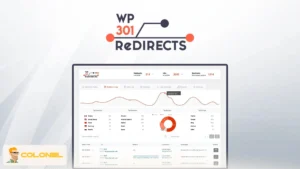
WP 301 Redirects is a practical SEO plugin designed to automate redirect management in WordPress. It helps websites maintain SEO value when URLs change due to content updates, restructuring, or deleted pages. By ensuring that old URLs properly redirect to new ones, this plugin prevents traffic loss and preserves search engine rankings.
From a technical SEO perspective, WP 301 Redirects reduces the risk of crawl errors and broken backlinks by handling redirects automatically. This is especially useful for large websites where manual redirect management becomes inefficient and error-prone.
Key benefits of WP 301 Redirects include:
- Automatic creation of 301 redirects when URLs change
- Preservation of link equity and referral traffic
- Reduced the occurrence of 404 errors
- Minimal manual configuration for site administrators
| Attribute | Details |
| Best for | Automated redirect handling |
| Pricing | Freemium, paid plans from $49/site |
| Core strength | Automation and SEO protection |
15. Yoast Local SEO
Yoast Local SEO is specifically built to improve a website’s visibility in location-based search results. It extends the core Yoast SEO plugin by adding structured local business data that helps search engines better understand geographic relevance.
By implementing local schema markup, this plugin improves how business information appears in Google Maps and local pack results. It ensures consistency across search listings, which is a key factor in local SEO performance.
Yoast Local SEO provides the following core capabilities:
- Local business schema implementation
- Accurate display of address, opening hours, and contact details
- Integration with Google Maps
- Enhanced eligibility for local pack visibility
| Attribute | Details |
| Best for | Local SEO optimization |
| Pricing | Premium add-on for Yoast SEO |
| Core strength | Local schema and geo-visibility |
16. LiteSpeed Cache
LiteSpeed Cache is a performance-driven SEO plugin that focuses on improving page speed and Core Web Vitals. When used on LiteSpeed-powered servers, it operates at the server level, delivering significantly faster load times compared to traditional caching plugins.
Performance improvements achieved through LiteSpeed Cache directly impact SEO rankings by enhancing user experience and reducing bounce rates. It’s all-in-one approach eliminates the need for multiple optimization plugins.
Core optimization features include:
- Server-level full-page caching
- Image optimization and lazy loading
- Database cleanup and optimization
- CDN integration for global performance
| Attribute | Details |
| Best for | Performance and speed optimization |
| Server support | LiteSpeed Web Server only |
| Core strength | Server-level caching and Core Web Vitals |

17. Broken Link Checker
Broken Link Checker is an essential maintenance plugin that monitors link integrity across a WordPress website. It automatically scans internal and external links to detect broken URLs that could negatively affect SEO and user experience.
From an SEO standpoint, broken links waste crawl budget and reduce trust signals. This plugin enables site owners to identify and fix these issues before they escalate into ranking problems.
Broken Link Checker helps by:
- Detecting broken internal and external links
- Monitoring 404 errors and unreachable URLs
- Alerting administrators in real time
- Supporting long-term technical SEO health
| Attribute | Details |
| Best for | SEO maintenance and link health |
| Monitoring type | Automatic and continuous |
| Core strength | Proactive link issue detection |

What to Look for in SEO Plugins for WordPress
The best SEO Plugins for WordPress combine technical reliability, usability, and strategic depth rather than offering isolated features. A plugin that only handles metadata without addressing performance or structured data is no longer sufficient in competitive niches.
Before selecting any WordPress SEO plugin, it is important to evaluate how well it supports modern ranking factors, integrates with your existing stack, and scales as your site grows. A balanced evaluation includes feature coverage, learning curve, update frequency, and ecosystem compatibility.
| Evaluation Criteria | Why It Matters for SEO in 2026 |
| On-page optimization | Controls titles, meta descriptions, headings, and content signals |
| Technical SEO tools | Manages sitemaps, indexation, canonicals, and crawl directives |
| Performance impact | Directly affects Core Web Vitals and UX signals |
| Schema and structured data | Enhances SERP appearance and entity understanding |
| Integration options | Works with analytics, page builders, and eCommerce setups |
| Scalability | Supports content growth and multi-site environments |
Final Perspective on Choosing SEO Plugins for WordPress
SEO Plugins for WordPress are no longer optional tools but foundational components of modern site optimization. The most effective strategy combines one robust primary SEO plugin with specialized tools for performance, analytics, and maintenance. By aligning plugin selection with site goals, content strategy, and technical capacity, WordPress users can build SEO frameworks that remain resilient as algorithms evolve and competition intensifies.
Frequently Asked Questions About SEO Plugins for WordPress
What should I prioritize when choosing SEO Plugins for WordPress?
You should prioritize technical reliability, performance impact, schema support, and compatibility with your site’s goals rather than feature volume alone.
Is one SEO plugin enough for WordPress?
One primary SEO plugin is usually sufficient, but performance, analytics, and redirection plugins often complement it effectively.
Can multiple SEO plugins harm WordPress SEO?
Using overlapping SEO plugins can cause conflicts, duplicated metadata, and crawl issues if not configured carefully.