
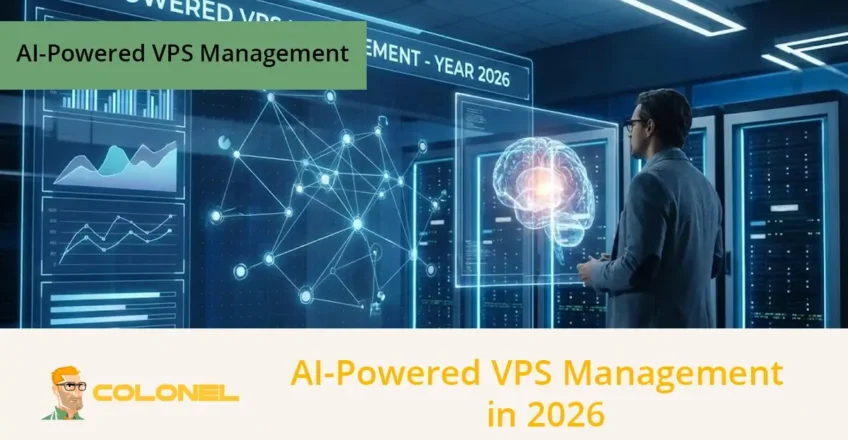

AI-enabled VPS management in the year 2026 would be the integration of machine learning, predictive analytics, and automation into the actual operation of virtual private servers. This means that instead of responding to server downtime, traffic, or degradation, AI-enabled systems can predict the behavior of the infrastructure and make adjustments accordingly.
This means that VPS environments would be transformed from manually managed systems to self-managing, performance-focused ecosystems with AI-powered VPS management.
Why Traditional VPS Management No Longer Scales
The traditional VPS hosting management system fails to handle the current traffic variability and security requirements because it is a reactive system. The system tracks data and responds once the threshold is reached, thus creating a performance gap between detection and response.
There are several structural issues that characterize the traditional model:
- Reactive Troubleshooting
Problems with the infrastructure are typically resolved after users have experienced latency or downtime. Notifications show that a problem has already occurred instead of preventing it. - Static Resource Allocation
Resources are allocated for peak usage even if peak traffic is not frequent. This causes unnecessary operational expenses and poor resource utilization. - Manual Patch Deployment
Security patches are deployed during scheduled maintenance hours. During the time gap between vulnerability disclosure and deployment, systems are vulnerable. - Non-Intelligent Load Distribution
The traditional load balancer distributes traffic equally without understanding the patterns of demand, complexity, and server exhaustion.

Predictive Maintenance in AI-Powered VPS Management
Predictive maintenance is one of the most impactful advantages of AI-powered VPS management because it prevents failure before it affects performance. Machine learning models analyze historical telemetry and real-time metrics to identify patterns that precede hardware strain or service instability.

WordPress Web Hosting
Starting From $3.99/Monthly
Instead of waiting for CPU saturation or memory exhaustion, AI systems detect subtle anomalies such as gradual latency drift, unusual disk I O spikes, or irregular traffic bursts. Once a deviation pattern matches historical failure signals, automated remediation can be triggered immediately. This capability produces three measurable outcomes:
- Reduced downtime through early intervention
- Lower incident escalation rates
- Improved infrastructure stability during high traffic periods
By shifting from reactive alerts to predictive intelligence, AI-powered VPS management fundamentally changes operational risk management. (Check out the AI website builder.)
Dynamic Resource Scaling Based on Behavioral Data
AI-powered VPS management enables dynamic scaling by learning real traffic behavior instead of relying on fixed thresholds. Traditional auto scaling reacts only after usage crosses predefined limits. Intelligent scaling anticipates demand based on historical and seasonal patterns.
Machine learning models continuously evaluate:
- Hourly traffic distribution
- Seasonal growth trends
- Campaign-driven spikes
- Geographic access variations
When traffic is predicted to increase, compute resources expand before performance drops. When demand declines, capacity contracts automatically to reduce waste. This real time elasticity improves both cost efficiency and user experience without constant administrative oversight.

Cheap VPS Server
Starting From $2.99/Monthly
Intelligent Load Balancing and Traffic Optimization
Load balancing under AI-powered VPS management becomes adaptive rather than mechanical. Instead of distributing requests evenly, intelligent systems analyze server health, latency metrics, request complexity, and historical performance behavior.
If one node shows early signs of strain, traffic is redistributed proactively. Idle servers receive increased load while saturated ones are relieved before failure conditions appear. This continuous recalibration stabilizes performance across the entire VPS cluster.
In large scale environments, AI driven traffic optimization has demonstrated measurable latency reductions and improved time to first byte metrics. These gains are not theoretical improvements but operational enhancements visible in real performance dashboards.
Automated Security and Patch Intelligence
Security automation within AI-powered VPS management reduces the exposure window between vulnerability detection and remediation. Intelligent systems monitor vendor advisories, correlate risk levels with active workloads, and determine optimal deployment timing.
Rather than applying patches blindly, AI evaluates system stability impact and schedules updates during low traffic windows. Post deployment validation ensures that performance baselines remain intact.
This intelligent approach strengthens security posture while preserving operational continuity. It also reduces manual workload for DevOps teams, allowing them to focus on architectural improvements instead of repetitive maintenance tasks.
Windows VPS Hosting
Remote Access & Full Admin

Measurable Performance Gains in AI-Driven VPS Environments
The performance impact of AI-powered VPS management is reflected in latency reduction, faster response times, and improved infrastructure utilization. When predictive routing and intelligent allocation models are deployed, organizations report consistent improvements in request handling efficiency. Observed benefits typically include:
- Significant reductions in time to first byte
- Lower average latency across distributed users
- More stable performance during traffic spikes
- Improved conversion rates for high-traffic digital platforms
These outcomes demonstrate that AI-powered VPS management is not simply an automation trend. It is a structural evolution in how virtual infrastructure is governed, optimized, and secured.
Cost Optimization Through AI-Powered VPS Management
AI-powered VPS management reduces infrastructure costs by aligning resource consumption with real demand rather than estimated peak capacity. Instead of over-provisioning servers to avoid risk, intelligent systems scale capacity based on predictive traffic modeling and real usage behavior. This alignment minimizes waste while maintaining performance stability.
Traditional VPS environments frequently operate at 30 to 50 percent utilization because teams provision for worst case scenarios. AI-powered VPS management analyzes historical growth trends, campaign cycles, and seasonal patterns to allocate compute resources precisely when needed. Idle capacity is reduced without compromising resilience. Cost optimization typically occurs in three areas:
- Elastic Compute Allocation
Resources expand only when predicted demand justifies it. During off-peak periods, capacity contracts automatically, reducing unnecessary spending. - Intelligent Storage Tiering
Frequently accessed data remains on high-performance storage, while inactive data shifts to cost-efficient tiers without manual intervention. - Bandwidth Optimization
Traffic routing algorithms minimize redundant data transfers and reduce cross-region latency costs.
This approach transforms VPS infrastructure from a fixed expense into a dynamically optimized asset.

Energy Efficiency and Operational Reduction
Machine learning models continuously evaluate system load patterns and consolidate processes when possible. This reduces total compute cycles and decreases power draw in data center environments. For organizations operating at scale, even marginal efficiency improvements translate into measurable sustainability gains.
AI-powered VPS management improves energy efficiency by reducing idle resource consumption and optimizing workload distribution across servers. When workloads are balanced intelligently, fewer machines operate under strain while others sit underutilized.
Operational labor requirements also decline. Routine monitoring, log analysis, and scaling decisions shift from manual review to automated intelligence. DevOps teams spend less time responding to predictable events and more time improving architecture strategy. AI-powered VPS management, therefore, lowers both energy overhead and human intervention costs. As Google Cloud states:
“Google uses AI and machine learning to improve data center efficiency and reliability, reducing energy usage while increasing performance.”
AI-Driven FinOps and Financial Visibility
AI-powered VPS management enhances financial governance by connecting infrastructure behavior directly to spending analytics. Instead of reviewing monthly cost reports retrospectively, organizations gain predictive cost modeling tied to workload patterns. FinOps teams benefit from:
- Real Time Cost Forecasting
Spending projections adjust dynamically based on traffic trends and scaling predictions. - Anomaly Detection in Billing Patterns
Unexpected resource spikes trigger alerts before financial overages accumulate. - Workload Cost Attribution
AI correlates application-level behavior with infrastructure cost impact, improving budgeting precision.
By combining operational telemetry with financial analytics, AI-powered VPS management enables proactive cost control rather than reactive budget correction.

Security and Compliance Intelligence
AI-powered VPS management strengthens security posture by continuously monitoring behavior patterns rather than relying solely on signature-based detection. Instead of identifying only known threats, intelligent systems recognize abnormal activity relative to baseline behavior. This behavioral approach allows:
- Early detection of suspicious login attempts
- Identification of unusual outbound traffic
- Real-time mitigation of distributed attacks
- Automated isolation of compromised workloads
Compliance management also benefits. AI can track configuration drift, monitor policy violations, and generate audit trails automatically. Infrastructure, therefore, remains aligned with regulatory requirements without continuous manual verification.
Multicloud and Hybrid Environment Orchestration
Instead of locking services into a single infrastructure environment, AI evaluates cost efficiency, latency metrics, and regional demand. AI-powered VPS management simplifies multicloud orchestration by analyzing workload performance across providers and reallocating traffic accordingly.
When performance degrades in one region, traffic shifts intelligently. When pricing advantages emerge across providers, non-critical workloads can migrate automatically. This dynamic orchestration reduces dependency risks and improves resilience.
Hybrid environments also benefit from AI-powered VPS management. On-premises workloads integrate with cloud VPS clusters under unified predictive scaling models. The result is consistent performance regardless of infrastructure location.
Real World Business Impact
AI-powered VPS management directly influences revenue and user experience, not just server metrics. Performance stability reduces bounce rates. Faster response times improve engagement. Intelligent scaling prevents service disruption during high traffic events.
For e-commerce platforms, even a minor latency reduction can increase conversion rates. For SaaS providers, predictable uptime strengthens customer retention. For publishers, intelligent caching and traffic optimization maintain stable page delivery during viral spikes.
These tangible outcomes position AI-powered VPS management as a strategic business decision rather than a purely technical upgrade.
Challenges and Practical Limitations of AI-Powered VPS Management
Machine learning systems require high-quality telemetry data to function accurately. Poorly configured monitoring pipelines reduce prediction reliability. Key challenges include:
- Integration with legacy infrastructure
- Initial configuration complexity
- Model training time for accurate forecasting
- Over-reliance on automation without oversight
AI-powered VPS management is transformative, but it introduces implementation complexity that organizations must evaluate carefully. Successful adoption depends on balancing automation with governance. Human supervision remains essential for architectural design and risk evaluation.

The Future of VPS Administration
Predictive analytics will expand beyond scaling and patching into architectural optimization and workload placement design. Future developments are likely to include:
| Future Development | Description |
| Self-Tuning Databases | Automatic adjustment of database settings based on query patterns |
| AI-Generated Infrastructure Configurations | AI suggests optimal server and network configurations |
| Fully Automated Incident Remediation | Automatic detection and resolution of infrastructure issues |
| Real-Time Sustainability Optimization | AI adjusts operations to reduce energy usage and carbon footprint |
As machine learning models mature, VPS administration will shift further from operational oversight to strategic infrastructure engineering. So, AI-powered VPS management is evolving toward increasingly autonomous infrastructure models.
Conclusion
AI-powered VPS management represents a structural evolution in how virtual infrastructure is optimized, secured, and scaled. By replacing reactive administration with predictive intelligence, organizations achieve stronger uptime, lower costs, improved performance, and greater operational clarity.
Rather than eliminating human expertise, AI-powered VPS management enhances it. Routine interventions decline, while strategic oversight gains importance. In 2026 and beyond, intelligent VPS ecosystems are becoming the standard foundation for scalable digital operations.
Frequently Asked Questions
What is AI-powered VPS management?
AI-powered VPS management integrates machine learning and automation into virtual server operations to predict failures, scale resources dynamically, and optimize performance without constant manual intervention.
Does AI-powered VPS management reduce costs?
Yes. By aligning resource allocation with actual demand and eliminating over-provisioning, it significantly improves cost efficiency.
Is AI-powered VPS management secure?
It enhances security through behavioral anomaly detection, automated patch intelligence, and continuous compliance monitoring.
Can small businesses benefit from AI-powered VPS management?
Yes. Even small scale environments gain from automated scaling, predictive monitoring, and reduced operational workload.