

AI crawlers are expanding their footprint across the web faster than any other category, while traditional search engine bots remain structurally dominant, Und LLM training bots face increasing resistance. An analysis of 66.7 billion bot requests across more than five million websites shows that the web is entering a hybrid discovery era. Search engines still anchor visibility, but AI assistant crawlers are steadily reshaping how content gets surfaced.
This shift is not theoretical. It is measurable in request volume, coverage percentage, and behavioral patterns. To understand what this means for publishers and site owners in 2026, we need to examine how each category of crawlers behaves and why their influence differs.
Understanding the New Crawling Landscape
The web crawling ecosystem has become layered and purpose-driven. Not all bots exist for the same reason, and lumping them together hides critical strategic differences. Some crawlers index pages for traditional search engines. Others collect datasets for AI training. A newer class responds directly to user queries inside AI assistants.
This analysis focuses on two metrics that reveal influence more clearly than raw traffic:
- Request volume
This shows how aggressively a bot scans the web. High request counts often indicate the depth of crawl or repeated access. - Website coverage
This reflects the number of unique websites a bot interacts with. Coverage reveals influence and reach, not just intensity.
A bot that visits 90 percent of websites once has a broader structural impact than one that repeatedly crawls a small cluster of domains. That distinction becomes critical when comparing AI crawlers and search engine bots.
Gruppe 1: Scripts and Generic Bots Dominate in Volume but Not in Strategy
Scripts and generic bots generate the highest raw traffic volume, but they do not significantly shape web discovery. Mit 23 billion requests and 34.6 percent of total activity, this group looks dominant at first glance. Jedoch, influence is not defined by volume alone. These bots create activity, not visibility.

WordPress-Webhosting
Ab 3,99 $/Monat
To understand their real impact, we need to look at how they behave and why they exist.
Scripts with Identifiable Keywords
Bots using identifiers such as python, curl, or wget reach more than 92 percent of monitored websites. Their presence is nearly universal, which immediately raises the question: are they powerful discovery systems?
In den meisten Fällen, they are not. These scripts typically originate from automation tools, API integrations, uptime monitors, security scanners, or custom backend processes. Some may scrape data at scale, but they lack centralized indexing logic or ranking influence.
Their behavior tends to be repetitive and task-specific. They access endpoints, fetch structured data, or validate responses. They do not build structured search indexes, nor do they systematically map the web for public discovery. Their reach is broad, but their strategic role in search or AI visibility is limited.
Empty User-Agent Strings
Empty user-agent strings generated 12.2 billion requests and reached over half of the observed websites. This category is inherently opaque. When no identifier is provided, attribution becomes difficult.

Günstiger VPS-Server
Ab 2,99 $/Monat
These visits may originate from poorly configured automation tools, scraping scripts that intentionally hide identity, or background systems with incomplete configuration. High request volume does not imply indexing power. In vielen Fällen, it reflects opportunistic or fragmented crawling rather than coordinated discovery.
Aus strategischer Sicht, empty identifiers introduce noise. They inflate traffic metrics but rarely translate into structured exposure in search results or AI systems.
Generic Bot Labels
Bots labeled simply as spider, crawler, or bot cover nearly half of websites. While these labels confirm automation, they provide no insight into intent.
Some may belong to small-scale indexing projects. Others may be commercial scraping tools or competitive intelligence systems. The lack of transparency limits their interpretive value.
The essential conclusion for Group 1 is clear: raw volume does not equal influence. These bots create background activity across the web, but they do not meaningfully define visibility in either search engines or AI assistants.
Gruppe 2: Classic Search Engine Bots Remain Structurally Dominant
Traditional search engine bots continue to define baseline web visibility. Mit 20.3 billion requests and 30.5 percent of total activity, they represent structured, purpose-driven crawling systems that power search indexes globally.
Windows VPS-Hosting
Remote Access & Full Admin
Unlike generic scripts, search engine bots operate within clearly defined indexing frameworks. Their behavior is systematic, vorhersehbar, and directly tied to ranking outcomes.
Googlebot Leads with Expanding Reach
Googlebot covers approximately 72 percent of monitored websites and generated 14.7 billion requests. This level of coverage reinforces its central role in structured web discovery.
Its continued expansion contradicts the assumption that AI systems are displacing traditional search. Stattdessen, Google’s crawler shows sustained or growing engagement across the web. That indicates search indexing remains foundational for online visibility.
Googlebot’s behavior reflects disciplined crawling cycles, prioritization algorithms, and structured content evaluation. It does not operate opportunistically. It builds and maintains the largest searchable index on the web.
Bingbot and Regional Engines Maintain Stability
Bingbot reaches more than 57 percent of sites, while Yandex, Baidu, DuckDuckGo, and Sogou maintain smaller but consistent footprints.
These engines serve regional or niche markets but follow the same structural logic as Google. Their crawl patterns show incremental adjustments rather than volatility. Stability in coverage signals a mature indexing infrastructure.
The strategic implication is straightforward: search engine bots still define the baseline for discoverability. AI crawlers may expand, but ranking visibility in search engines continues to depend on these structured crawlers.
Gruppe 3: LLM Training Crawlers Face Growing Resistance
LLM training crawlers generated 10.1 billion requests, accounting for 15.1 percent of total activity. Jedoch, their influence is shifting because coverage has declined significantly.

OpenAI GPTBot and the Coverage Collapse
GPTBot experienced one of the sharpest drops in coverage, declining from 84 percent to 12 percent. This is not a technical anomaly. It reflects deliberate blocking decisions by publishers.
Training bots collect content to improve language models. They do not send referral traffic. They do not provide ranking visibility. Their value exchange is indirect and long-term. For many publishers, that trade-off is no longer compelling.
Blocking GPTBot and similar systems signals a shift toward content protection and infrastructure control. Entsprechend GPTBot documentation:
“Site owners can control whether OpenAI’s GPTBot can access their site. GPTBot is used to improve future models and can be disallowed via robots.txt.”
Meta ExternalAgent and Other Training Systems
Meta’s ExternalAgent maintained broader coverage but also experienced downward pressure. ClaudeBot and CommonCrawl show comparatively limited reach relative to search engines.
The broader pattern indicates differentiation. Website owners increasingly distinguish between AI crawlers that respond to users and those that collect training data. Training bots remain active in request volume, but their coverage decline reduces structural influence.
Access is becoming conditional rather than automatic.
Gruppe 4: SEO and Monitoring Crawlers Show Selective Contraction
SEO Und Überwachung bots account for 6.4 billion requests. Their role remains important for analytics and competitive intelligence, but their overall web-wide coverage is gradually narrowing.
This contraction does not imply irrelevance. It reflects strategic focus.
Ahrefs, Semrush, and Majestic
AhrefsBot reaches around 60 percent of websites. Semrush and Majestic maintain moderate but declining coverage.
These tools prioritize commercially relevant or actively optimized websites. They do not need universal coverage to provide value. Stattdessen, they concentrate on domains where SEO competition matters.
Gleichzeitig, some publishers block high-frequency SEO crawlers to reduce server load. This selective blocking contributes to shrinking coverage.
SEO bots remain central to digital marketing ecosystems. Jedoch, they no longer expand their footprint across the entire web. Their reach is strategic rather than universal.
Gruppe 5: AI Assistant Crawlers Are Expanding Strategically
AI assistant crawlers represent the most strategically significant growth category. Mit 4.6 billion requests, their total volume is lower than that of search engines, but their coverage expansion signals a structural change.
These crawlers power AI-driven interfaces that directly answer user queries.
OpenAI SearchBot and Query-Driven Crawling
OpenAI SearchBot reaches over half of the monitored websites. Its behavior differs fundamentally from training bots.
Assistant crawlers fetch content in response to real-time user questions. They retrieve relevant pages dynamically rather than building static datasets. This makes their crawl activity more targeted and context-sensitive.
Website owners are more willing to allow these crawlers because they align with discoverability. Even if referral traffic is indirect, brand presence inside AI responses creates exposure.
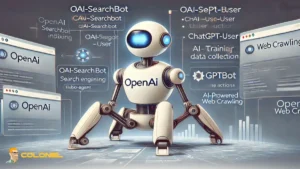
AppleBot, TikTokBot, and PetalSearch
AppleBot and TikTokBot show meaningful expansion, reflecting AI-enhanced search inside mobile and social ecosystems.
Their growth signals a shift in discovery behavior. Users increasingly interact with AI interfaces instead of traditional search result pages. These crawlers enable that interaction.
The structural distinction matters. AI assistant crawlers do not map the entire web in advance. They retrieve information when prompted by user intent. This makes them closer to real-time search proxies than to dataset collectors.
Gruppe 6: Social and Advertising Bots Remain Stable
Social and advertising bots generated 2.2 billion requests. Their primary role is metadata extraction rather than discovery indexing.
They fetch preview images, titles, descriptions, and ad validation data. Their purpose is presentation and monetization.
Meta’s link preview crawler still covers a majority of websites but shows mild contraction. Google AdsBot and PinterestBot maintain a stable but moderate reach.
These bots affect how content appears in feeds and advertisements, not how it ranks in search or appears in AI responses. Their impact is supportive rather than transformative. (Kasse Telegramm-VPS)
Why AI Assistant Crawlers Are Gaining Acceptance
AI assistant crawlers are gaining broader access because they are directly tied to user intent and potential traffic. Unlike LLM training bots, these crawlers fetch content dynamically to answer real user queries inside tools such as ChatGPT, Siri, TikTok Search, and Petal Search.
Several factors explain their expansion:
- They are query-driven rather than dataset-driven
Assistant crawlers retrieve information in response to active user questions. This makes their activity more aligned with search behavior and easier for publishers to justify. - They can indirectly drive brand visibility
Even if they do not send traditional referral traffic, they increase exposure inside AI responses, which now compete with classic search results. - Their crawl patterns are more targeted
Instead of scraping large volumes for training, they access specific pages relevant to user queries, reducing perceived extraction risk.
This shift positions AI assistant crawlers closer to search engine bots than to LLM training systems.
Why LLM Training Bots Face Increasing Blocking?
LLM training bots are encountering resistance because their value exchange is unclear for publishers. They collect content at scale to improve AI models, but do not provide direct traffic or attribution.
The decline in coverage for bots such as GPTBot reflects deliberate decisions by site owners. Several concerns drive this behavior:
- Commercial reuse of proprietary content
Publishers worry that their content may contribute to AI systems that monetize responses without attribution. - Infrastructure strain
High-volume training crawls can increase server load without generating user visits. - Lack of transparency
Some training crawlers provide limited clarity regarding how content will be used.
Infolge, many publishers now differentiate between AI crawlers that support discoverability and those focused purely on model training.
Technical Considerations for Bot Management
Effective bot management requires precision rather than blanket blocking. A structured approach improves control without sacrificing visibility.
- Log Analysis and Identification
Understanding which AI crawlers access your site begins with accurate log monitoring. Coverage percentage reveals reach, while request volume indicates depth. Both metrics should inform access decisions.
- Robots Directives and Access Control
Robots.txt configurations can allow or disallow specific user agents. Granular control ensures that assistant-facing AI crawlers remain accessible while LLM training bots can be restricted if desired.
- Server Load and Rate Limiting
High-traffic sites may implement rate limiting for aggressive crawlers. This reduces strain without eliminating access entirely.
Strategic configuration supports both performance stability and discovery reach.
The Future of Web Discovery: Hybrid Visibility
Web discovery in 2026 is hybrid. Traditional search engine bots continue to provide structural indexing, while AI crawlers introduce dynamic, assistant-driven discovery. Ignoring either layer limits the reach.
The long-term trend suggests coexistence rather than replacement. Search engines remain foundational, but AI assistant crawlers increasingly shape how users consume information. Publishers that recognize this dual system will maintain broader visibility and stronger competitive positioning.
AI crawlers vs search engine bots is no longer a debate about replacement. It is a question of balance, Kontrolle, and strategic access.
Abschluss
AI crawlers are expanding their reach, search engine bots remain structurally dominant, and LLM training bots face growing resistance. The analysis of 66 billion bot requests confirms that web discovery is evolving into a dual-layer system where both search and AI assistants influence visibility.
Publishers who differentiate between assistant-facing AI crawlers and training bots gain more control over exposure and data protection. A selective access strategy offers the most sustainable path forward in 2026.
Häufig gestellte Fragen
Are AI crawlers replacing search engine bots?
NEIN. Search engine bots continue to cover a majority of websites and remain central to web indexing. AI crawlers are expanding but operate alongside traditional search systems rather than replacing them.
Should I block LLM training bots?
That depends on your content strategy. If protecting proprietary data is a priority, selective blocking may make sense. If broader AI ecosystem inclusion is beneficial for your brand, allowing access could support long-term visibility.
Do AI assistant crawlers send traffic?
They may not always generate direct referral traffic, but they increase visibility inside AI responses, which influences brand exposure and user awareness.
How can I differentiate between AI crawlers and search engine bots?
Monitoring server logs and reviewing user-agent strings allows you to classify bots accurately. Coverage patterns and crawl behavior also help distinguish assistant-driven systems from training crawlers.