
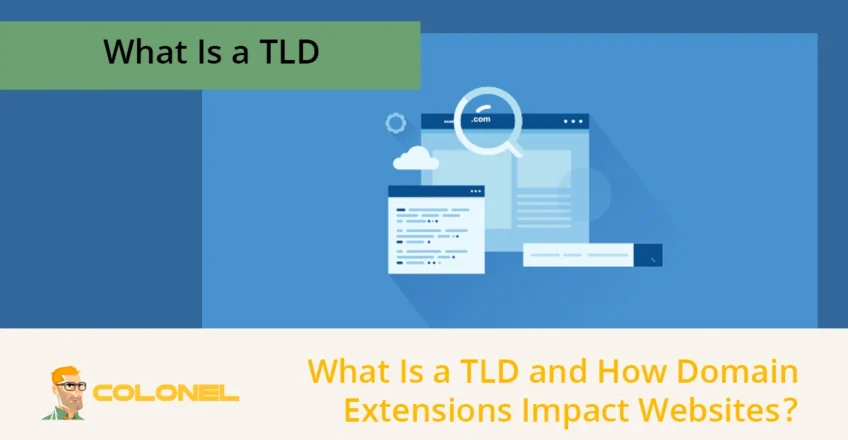

What Is a TLD is a foundational question for anyone building a website because the top-level domain directly defines how a domain name functions, how it is categorized within the DNS, and how users and search engines perceive a website. A TLD is not merely a technical suffix but a strategic component of online identity, influencing trust, geographic relevance, branding clarity, and long-term SEO performance.
Understanding how TLDs work and how to choose the right one allows businesses and creators to align technical structure with marketing goals and search visibility from the very beginning.
What Is a TLD?
What Is a TLD can be answered simply as the final segment of a domain name that appears after the last dot and represents the highest level in the Domain Name System hierarchy. A top-level domain identifies the category, purpose, or geographic association of a website and helps route internet traffic to the correct name servers. Common examples include .com, .org, .netto, and country-specific extensions such as .uk or .de.
Beyond its technical role, a TLD functions as a trust and signaling mechanism. Users often make instant judgments about credibility and relevance based solely on the domain extension. For search engines, the TLD provides contextual signals that assist with geographic targeting and content classification, even though it is not a direct ranking factor.
How a Domain Name Is Structured
A domain name is structured hierarchically from right to left, with each segment serving a distinct functional role within the DNS. Understanding this structure clarifies where a TLD fits and why it carries such strategic importance.
WordPress-Webhosting
Ab 3,99 $/Monat
In a domain such as www.example.com, the TLD sits at the far right as .com, followed by the second-level domain example, and optionally preceded by a subdomain like www. Each layer contributes to routing, Organisation, and human readability. To understand the hierarchy clearly, consider the structural components:
- Subdomain: Located to the left of the second-level domain and often used to separate sections such as blog.example.com or store.example.com.
- Second-level domain (SLD): The core brand identifier that users remember and associate with a website.
- Top-level domain (TLD): The DNS suffix that categorizes the domain by purpose, geography, or authority.
This layered structure allows DNS resolvers to locate servers efficiently while presenting a readable and memorable address to users.
Why TLDs Matter for Websites Today
What Is a TLD becomes a strategic question when viewed through the lens of trust, SEO, and user behavior rather than pure infrastructure. TLDs influence how browsers, networks, and users interpret a website before any content is consumed.
From a technical perspective, TLDs help DNS systems route queries and apply filtering or security rules. From a human perspective, they function as credibility shortcuts. Users instinctively trust familiar extensions and hesitate when encountering obscure or suspicious ones. TLDs matter today because they affect several critical dimensions simultaneously:
- Initial trust and click behavior in search results
- Geographic relevance and localization signals
- Brand perception and memorability
- Long-term scalability of domain strategy
Ignoring the importance of domain extensions often leads to branding limitations or SEO constraints that are costly to reverse later. Entsprechend Search Central Documentation, Google :
“Choosing the right domain extension is not about SEO advantage but about clarity, trust, and long-term brand alignment.”
Günstiger VPS-Server
Ab 2,99 $/Monat
Types of TLDs Recognized by ICANN
The Internet Corporation for Assigned Names and Numbers (ICANN) recognizes several categories of top-level domains, each designed for a specific purpose within the global DNS. While many TLDs exist, only some are available for public registration.
Understanding these categories helps clarify which TLDs are suitable for commercial use and which are reserved for restricted or technical purposes.
Generic Top-Level Domains (gTLDs)
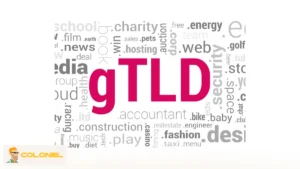
Generic top-level domains are the most widely used and flexible domain extensions available for public registration. gTLDs are not tied to a specific country and are designed for general-purpose use across industries and regions.
The popularity of gTLDs comes from their familiarity and global recognition. Extensions such as .com, .org, and .net have decades of user trust behind them, making them safe and effective choices for most websites. Common characteristics of gTLDs include:
- No geographic restriction
- Broad applicability across industries
- High user familiarity and trust
- Strong suitability for global brands
In addition to legacy gTLDs, newer generic extensions like .online, .shop, and .tech allow businesses to communicate niche relevance while maintaining global reach.

Windows VPS-Hosting
Remote Access & Full Admin
Sponsored Top-Level Domains (sTLDs)
Sponsored top-level domains are restricted extensions governed by specific organizations and intended for clearly defined communities or sectors. Registration under an sTLD requires eligibility verification and authorization from the sponsoring body.
These TLDs exist to preserve trust and integrity within sensitive or authoritative domains. Because access is limited, sTLDs carry inherent credibility and are rarely associated with abuse or spam.
Examples of widely recognized sTLDs include .gov for government entities, .edu for accredited educational institutions, and .mil for military organizations. Their restricted nature makes them unsuitable for general businesses but extremely powerful for qualified entities.
Country Code Top-Level Domains (ccTLDs)
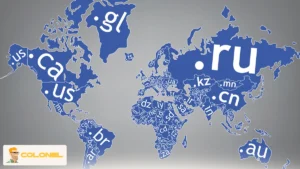
Country code top-level domains represent specific countries or territories and are based on ISO 3166-1 alpha-2 codes. These extensions consist of two letters and serve as strong geographic indicators.
ccTLDs are particularly valuable for businesses targeting local markets because search engines treat them as explicit signals of regional relevance. Users also tend to trust local extensions when searching for services within their own country. Examples of ccTLDs include:
- .us for the United States
- .uk for the United Kingdom
- .de for Germany
- .fr for France
Some ccTLDs are restricted to residents, while others, such as .co or .tv, are open globally and widely adopted beyond their original geography.
Infrastructure and Test TLDs
Not all TLDs are designed for public-facing websites. Infrastructure and test TLDs serve technical and developmental purposes within the internet ecosystem.
The .arpa TLD is reserved exclusively for infrastructure-related functions such as reverse DNS lookups and routing protocols. It is managed by the Internet Engineering Task Force and is not available for public registration.
Test TLDs such as .test, .example, .invalid, and .localhost are reserved for documentation, Entwicklung, and testing. These domains are intentionally excluded from the global DNS to prevent accidental real-world usage.
How TLD Choice Influences Trust and Credibility
What Is a TLD becomes especially important when evaluating user trust because domain extensions act as credibility signals before any content interaction occurs. Users often associate established TLDs with legitimacy and safety.
Familiar extensions like .com and .org benefit from decades of positive exposure, while obscure or recently introduced TLDs may raise skepticism. This effect is amplified in industries involving payments, personal data, or legal authority.
Jedoch, credibility is contextual. Industry-specific gTLDs such as .tech or .design gain trust when they align naturally with the website’s purpose. Misalignment between content and extension, auf der anderen Seite, undermines confidence.
Branding Implications of Domain Extensions
A TLD is part of the brand narrative rather than a technical afterthought. The extension can reinforce messaging, clarify positioning, and make a domain more memorable.
Creative use of TLDs allows brands to construct meaningful phrases where the extension completes the idea, such as example.store or insights.consulting. When executed correctly, this approach enhances recall and differentiates the brand.
Branding considerations tied to TLD selection include tone, industry alignment, audience expectations, und langfristige Skalierbarkeit. A well-chosen extension supports brand growth rather than constraining it.

How TLDs Affect SEO Performance
What Is a TLD from an SEO perspective is not about direct ranking power, but about how domain extensions influence relevance signals, Benutzerverhalten, and geographic targeting. Search engines do not rank sites higher simply because they use a specific TLD, but they do interpret TLDs as contextual indicators that shape crawling priorities and localization logic. The real SEO impact emerges indirectly through trust, click-through rate, and alignment with search intent.
From a practical standpoint, TLDs influence SEO through three primary mechanisms that operate together rather than independently.
- Geographic relevance signals that help search engines determine which users should see the site in regional results
- User trust and familiarity, which affect click behavior and engagement metrics
- Brand clarity, which reduces ambiguity in topical or commercial intent
When these signals are aligned, the TLD strengthens overall SEO performance without functioning as a standalone ranking factor.
gTLD vs ccTLD for SEO and Business Strategy
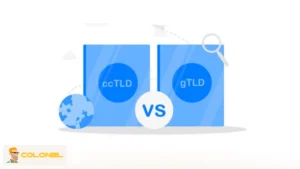
Choosing between a generic TLD and a country code TLD requires balancing SEO goals with long-term business strategy. Each option sends different signals to both users and search engines, and the decision should be based on the target audience rather than perceived authority.
A ccTLD provides strong localization benefits, making it ideal for businesses that operate in a single country or region. Im Gegensatz, gTLDs offer flexibility and scalability for international or multi-market growth. The following table highlights the strategic differences clearly.
| Criteria | gTLD | ccTLD |
| Geographic targeting | Global by default | Country-specific |
| Local SEO strength | Mäßig | Stark |
| International scalability | Hoch | Beschränkt |
| User trust | High for .com and legacy gTLDs | High within local markets |
| Brand flexibility | Broad | Region-bound |
From an SEO standpoint, neither option is inherently better. The correct choice depends on whether geographic precision or global reach is the primary objective.
When a ccTLD Is the Right Choice
A ccTLD is most effective when geographic relevance outweighs expansion flexibility. For businesses that rely on local visibility, trust, and regulatory alignment, country-specific extensions provide a competitive advantage that cannot be replicated by technical SEO alone.
Search engines treat ccTLDs as explicit signals that content targets users in a specific country. This reduces ambiguity and improves ranking stability in local SERPs without relying heavily on hreflang or regional subdirectories. ccTLDs are particularly suitable for:
- Local service providers with physical presence
- National brands operating in regulated markets
- Content platforms targeting a single-language, single-country audience
In diesen Fällen, the SEO clarity gained from a ccTLD often outweighs the limitations on international scalability.
When a gTLD Is the Better Option
Generic top-level domains are better suited for businesses that plan to scale internationally or serve diverse audiences. A gTLD avoids geographic lock-in and allows SEO strategies to evolve alongside market expansion.
From a technical SEO perspective, gTLDs integrate more naturally with international structures such as subdirectories, subdomains, and hreflang implementations. This makes them ideal for SaaS platforms, global publishers, Und E-Commerce Marken. A gTLD is the better choice when:
- The target audience spans multiple countries.
- The business model prioritizes growth and flexibility.
- Brand recognition matters more than local identity.
In diesen Szenarien, the neutrality of a gTLD supports long-term SEO and brand development.
Do New TLDs Harm SEO?
What Is a TLD often raises concerns about whether newer extensions negatively affect SEO. From a search engine standpoint, new gTLDs are treated the same as legacy ones in terms of crawling and indexing.
Jedoch, user perception plays a critical role. Some newer TLDs suffer from low trust due to historical abuse or unfamiliarity. This indirectly affects SEO by lowering click-through rates and engagement metrics, even if rankings remain technically unaffected.
The SEO risk of new TLDs depends on context. When the extension aligns clearly with the site’s purpose and audience expectations, it performs comparably to traditional domains.
Common SEO Mistakes When Choosing a TLD
Many SEO issues related to TLDs stem from strategic misalignment rather than technical flaws. Choosing an extension without considering user expectations or long-term goals often leads to corrective migrations that damage rankings.
Before listing specific mistakes, it is important to understand that TLD decisions are difficult to reverse without SEO risk. Domain changes require redirects, reindexing, and trust rebuilding. Common mistakes are:
- Selecting a ccTLD while planning global expansion
- Using unfamiliar TLDs in trust-sensitive industries
- Choosing spam-associated extensions for commercial sites
- Prioritizing novelty over clarity and credibility
Avoiding these mistakes preserves SEO equity and reduces the need for disruptive domain changes later.
How to Choose the Right TLD Step by Step
What Is a TLD becomes actionable when translated into a structured decision process. Choosing the right extension should follow a logical sequence rather than intuition or availability alone.
The process begins with audience definition and ends with long-term scalability assessment.
- Define the primary target audience and geographic scope.
- Clarify brand positioning and industry expectations.
- Evaluate SEO goals, including localization and expansion.
- Assess trust, familiarity, and competitive norms.
- Confirm availability and legal considerations.
Following this sequence ensures that the TLD supports both SEO performance and business objectives.
Final Perspective on Choosing the Right TLD
What is a TLD ultimately becomes a strategic question rather than a technical one. The right domain extension aligns search visibility, user trust, and brand identity into a coherent signal that supports growth over time. By choosing a TLD that matches audience expectations and business direction, websites avoid structural limitations and strengthen their SEO foundation from the outset.
Frequently Asked Questions About TLDs
Does a .com domain rank better than other TLDs?
No TLD ranks better by default. Jedoch, .com domains often achieve higher click-through rates due to familiarity and trust, which can indirectly support SEO performance.
Are ccTLDs required for local SEO?
ccTLDs are not required, but they provide strong geographic signals that simplify local targeting compared to gTLDs.
Can changing a TLD hurt SEO?
Ja, changing a TLD can temporarily reduce rankings if not managed carefully with proper redirects, indexing controls, and authority transfer.
Are new TLDs safe for long-term SEO?
New TLDs are technically safe, but their effectiveness depends on user trust and industry perception rather than search engine limitations.