


Node.js is a JavaScript runtime that enables developers to execute JavaScript code outside the browser, primarily on the server. This makes it possible to build fast, skalierbar, and network-centric applications using a single language. Understanding what is Node.js is critical today because many modern backend systems, APIs, and cloud services rely on its architectural model rather than traditional server paradigms.
What Is Node.js?
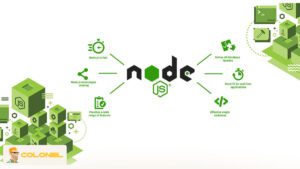
Node.js is an open-source, cross-platform JavaScript runtime built on Chrome’s V8 engine that allows JavaScript to run on the server side. When answering what is Node.js in its simplest form, it can be described as the environment that transformed JavaScript from a browser-only language into a full backend development tool.
Node.js executes JavaScript code at high speed because it leverages the same engine used by modern browsers, but it removes the browser dependency entirely. This enables developers to build servers, APIs, and system-level tools using JavaScript while benefiting from strong performance characteristics and a vast ecosystem of packages.
From a practical perspective, Node.js changed backend development by addressing performance bottlenecks caused by blocking I/O and thread-based concurrency. Instead of scaling by adding threads, Node.js scales by managing events efficiently, which aligns directly with the needs of real-time applications, Mikrodienste, and high-traffic platforms.
Why Node.js Was Created
Node.js was created to solve scalability and performance limitations found in traditional web servers. To fully understand what is Node.js, it is important to understand the problem it was designed to address.

WordPress-Webhosting
Ab 3,99 $/Monat
Conventional server architectures relied heavily on blocking operations and thread-per-request models. As traffic increased, these systems consumed excessive memory and CPU resources. Node.js introduced a non-blocking, event-driven approach that allowed servers to handle thousands of concurrent connections efficiently, even on modest hardware.
How Node.js Works Internally
Node.js works by combining a fast JavaScript engine with an event-driven execution model that avoids blocking operations. This internal design is the foundation of what makes Node.js suitable for scalable network applications.
When a Node.js application starts, it executes the initial script and then automatically enters an event loop. Tasks such as file reads, Datenbankabfragen, or network requests are delegated to background workers. Once those operations complete, callbacks are placed back into the event queue, allowing the main thread to remain responsive at all times.
The Event Loop Explained in Practical Terms
The event loop is the mechanism that allows Node.js to process asynchronous tasks without blocking execution. Any accurate explanation of what is Node.js must include a clear understanding of this concept.
Rather than waiting for operations to finish, Node.js registers callbacks and continues executing other code. The event loop continuously checks for completed tasks and executes their callbacks in sequence. When no tasks remain, the process exits automatically. This behavior mirrors browser JavaScript, where developers rarely interact with the event loop directly.
Blocking vs Non-Blocking I/O in Node.js
Node.js is built around non-blocking I/O, which directly impacts application performance and scalability. Blocking I/O pauses execution until a task completes, while non-blocking I/O allows the application to continue running.

Günstiger VPS-Server
Ab 2,99 $/Monat
In Node.js, most standard library functions use non-blocking operations by default. This ensures that slow tasks such as disk access or database queries do not prevent the server from handling other requests. This design choice is a key reason why Node.js performs exceptionally well in I/O-heavy workloads.

Asynchronous Programming in Node.js
Node.js relies on asynchronous programming to maintain responsiveness under load. Understanding what is Node.js without understanding asynchronous execution would be incomplete.
Asynchronous code allows Node.js to initiate tasks and move on immediately without waiting for results. Developers express this logic using callbacks, promises, or async/await syntax. This model enables efficient handling of multiple simultaneous operations, which is essential for APIs, real-time services, and data-driven applications.
Why Node.js Does Not Use Thread-Based Concurrency
Node.js avoids traditional thread-based concurrency to reduce complexity and overhead. From a system design perspective, this choice defines what is Node.js as a runtime.
Thread-based servers require synchronization mechanisms that increase the risk of deadlocks and performance degradation. Node.js eliminates these concerns by using a single-threaded event loop where operations rarely block. Developers are free from managing locks and shared memory, which simplifies application logic and improves reliability.

Windows VPS-Hosting
Remote Access & Full Admin
HTTP as a Core Feature of Node.js
HTTP is a first-class citizen in Node.js, not an afterthought. This design decision plays a major role in why Node.js is widely used for web services.
The built-in HTTP module supports streaming, low-latency communication, and fine-grained control over request handling. By embedding HTTP deeply into the runtime, Node.js enables developers to build web servers and APIs without relying on heavy frameworks, which improves performance and flexibility.
Multi-Core Processing in Node.js
Although Node.js uses a single-threaded event loop, it is not limited to a single CPU core. Addressing what is Node.js accurately requires understanding how it scales across hardware.
Node.js provides child processes and clustering mechanisms that allow workloads to be distributed across multiple cores. These processes can share network ports and communicate efficiently, enabling horizontal scaling while preserving the simplicity of the event-driven model.
CommonJS and ECMAScript Modules in Node.js
Node.js supports multiple module systems that define how code is organized and reused. This flexibility is an important part of modern Node.js development.
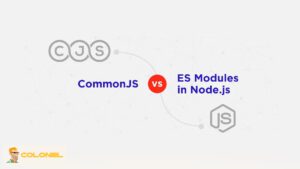
Historisch, Node.js relied on CommonJS modules, which use require and module.exports. More recently, ECMAScript Modules have been introduced to align Node.js with modern JavaScript standards. Supporting both systems allows developers to maintain legacy projects while adopting newer patterns gradually.
What Can You Build with Node.js
Node.js supports a wide range of application types, making it one of the most versatile backend runtimes available today. It is commonly used to build REST APIs, Mikrodienste, real-time communication systems, Streaming-Plattformen, and command-line tools. Its non-blocking architecture allows it to handle large numbers of concurrent users efficiently, which is essential for modern web applications.
Node.js in Real-World Architectures
Node.js is widely used in modern application architectures due to its efficiency and flexibility. In practical deployments, what is Node.js becomes clearer when examining how it fits into real systems.
Node.js often acts as an API layer in microservice architectures, handling authentication, Routenführung, and data aggregation. It is also commonly used as a real-time communication layer for WebSockets and event-driven workflows. In cloud-native environments, Node.js integrates seamlessly with containers, orchestration platforms, and serverless infrastructure.
Why Node.js Is Widely Adopted
Node.js gained widespread adoption because it aligned perfectly with evolving web requirements. As applications became more interactive and data-intensive, traditional server models struggled to keep up.
By enabling JavaScript on both the client and server, Node.js reduced development friction and accelerated product cycles. Its performance characteristics and strong ecosystem further reinforced its position as a core backend technology.
Node.js Versions and the Importance of LTS Releases
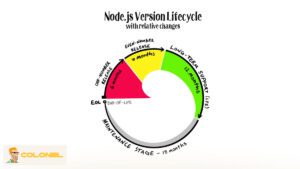
Node.js follows a structured release cycle that directly impacts stability, Sicherheit, und langfristige Wartbarkeit. A new major Node.js version is released approximately every six months, introducing new features and changes. Jedoch, not all versions are suitable for production use.
Long Term Support (LTS) versions receive extended security patches and bug fixes, making them the preferred choice for enterprise systems, commercial applications, and mission-critical services. Using an LTS version reduces upgrade risk and ensures predictable behavior over time.
How a Node.js Request Is Processed Step by Step
A Node.js request lifecycle demonstrates how the runtime handles concurrency efficiently without blocking execution. This operational flow explains what is Node.js beyond theoretical definitions.
When a request arrives, Node.js registers it in the event loop and determines whether the task involves computation or I/O. CPU-bound logic executes immediately, while I/O operations such as database queries are delegated to background workers. Once the operation completes, its callback is queued for execution. This process ensures the server remains responsive even under heavy load.
To clarify this flow, the process can be summarized as follows:
- The request enters the event loop and is evaluated.
- I/O-heavy tasks are offloaded asynchronously.
- The event loop continues handling other requests.
- Completed tasks return results via callbacks or promises.
- The response is sent without blocking other connections.
Strengths and Limitations of Node.js
Node.js has well-defined strengths alongside technical limitations, and understanding both is essential to accurately answer the question of what is Node.js in real-world backend development. Gleichzeitig, its execution model introduces constraints when dealing with CPU-heavy operations, meaning architectural decisions play a critical role in successful adoption. Consider the following table:
| Aspect | Strengths | Limitations |
| Concurrency Model | Non-blocking, event-driven architecture enables thousands of concurrent connections efficiently | Single-threaded event loop can be blocked by CPU-intensive tasks |
| Leistungsprofil | Excellent throughput for I/O-heavy applications such as APIs and WebSockets | Poor suitability for heavy computation without worker threads or external services |
| Skalierbarkeit | Easy horizontal scaling through clustering and microservices | Vertical scaling is limited by single-core execution per process |
| Development Efficiency | Shared JavaScript language across frontend and backend accelerates development | Complex async flows can reduce maintainability in large codebases |
Node.js Compared to Other Backend Technologies
Node.js differs fundamentally from traditional backend platforms in how it handles execution and concurrency, not merely in the language it uses. To properly contextualize what is Node.js, it must be compared against established backend technologies such as Java, .NETTO, Python, and Go.
| Technology | Concurrency Model | Practical Comparison with Node.js |
| Node.js | Event loop with asynchronous execution | Lower memory overhead and high efficiency for concurrent I/O operations |
| Java | Thread-based concurrency | Strong for CPU-intensive workloads but higher resource consumption |
| .NETTO | Managed multithreading | Reliable for enterprise systems, typically slower iteration cycles |
| Python | GIL-restricted concurrency | Simpler for data tasks but lower throughput for concurrent connections |
| Go | Goroutines and channels | Strong native concurrency model, smaller web ecosystem than Node.js |
Package Management and the Node.js Ecosystem
The Node.js ecosystem is powered by npm, the largest package registry in the software world. This ecosystem plays a major role in why Node.js adoption continues to grow.
npm provides access to libraries for web frameworks, database drivers, security tools, and automation utilities. Using official Node.js package scopes ensures authenticity and reduces security risks. This ecosystem allows developers to assemble complex systems rapidly without reinventing core functionality.
Security Considerations in Node.js Applications
Security is a critical aspect of production Node.js systems. Understanding what is Node.js responsibly includes knowing how to secure it properly.
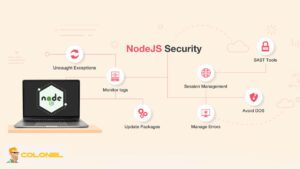
Node.js applications must validate input, manage dependencies carefully, and avoid unsafe patterns such as synchronous blocking calls in critical paths. Benutzen HTTPS, environment variables for secrets, and official Node.js sources reduces attack surfaces. Regular dependency audits and updates are essential due to the fast-moving ecosystem.
Performance Optimization Strategies for Node.js
Node.js performance optimization focuses on maintaining non-blocking behavior and efficient resource usage. This aspect directly influences scalability.
Key optimization strategies include avoiding synchronous I/O, using connection pooling for databases, implementing caching layers, and monitoring event loop latency. Profiling tools help identify bottlenecks early, ensuring that performance remains stable as traffic grows.
Authoritative Perspectives on Node.js
Industry experts and official documentation consistently highlight Node.js scalability and efficiency. According to the official Node.js documentation:
“Node.js is designed to build scalable network applications using an event-driven, non-blocking I/O model.”
Zusätzlich, Die OpenJS Foundation emphasizes its role in modern infrastructure:
“Node.js enables developers to build high-performance, scalable systems with JavaScript across platforms.”
When Node.js Is the Right Choice?
Node.js is the right choice when application requirements align with its architectural strengths. Determining what is Node.js suitable for depends on workload characteristics.
Applications that involve real-time communication, high request concurrency, streaming data, or API-driven systems benefit the most. Umgekehrt, applications dominated by heavy numerical computation may require complementary technologies alongside Node.js.
Frequently Asked Questions About Node.js
What is Node.js mainly used for?
Node.js is primarily used for building scalable backend services, APIs, Echtzeitanwendungen, and development tools that require high concurrency.
Is Node.js a programming language?
Node.js is not a language; it is a JavaScript runtime that executes JavaScript outside the browser.
Can Node.js handle high traffic?
Ja, Node.js is designed to handle large numbers of concurrent connections efficiently using non-blocking I/O.
Is Node.js suitable for enterprise applications?
Ja, when used with LTS versions and proper architecture, Node.js is widely adopted in enterprise systems.