

WordPress caching is important for reducing page load times and improving overall website performance by limiting repetitive server-side processing. Instead of creating pages from scratch with every request, cached content lets WordPress deliver pre-built versions of pages. This significantly lowers server load and response time, leading to faster rendering, a better user experience, and improved SEO performance, insbesondere für stark frequentierte Websites.
What Is WordPress Caching and How It Works
Im Kern, WordPress Caching is a method to improve performance by cutting down the real-time processing needed to display a web page. When a visitor opens a WordPress site, PHP scripts run, database queries happen, and the HTML is created on the fly. While this method is flexible, it consumes a lot of resources and takes time.
Caching changes this by saving the final output—or parts of it—so that later visitors can receive pre-generated content instead of starting the full process again. From a systems perspective, this greatly reduces CPU usage, disk I/O operations, and database connections, especially during busy traffic times.
According to Google’s Web Fundamentals documentation, “Fast load times are essential for maintaining user engagement and reducing bounce rates, particularly on mobile devices.” This statement shows why caching is not just an extra feature but a key part of performance for modern websites.
Types of WordPress Caching
Caching in WordPress is not just one method, but a set of layers that work together. Each layer targets a specific slowdown in the request process and works best when used together. Types of WordPress Caching include:
WordPress-Webhosting
Ab 3,99 $/Monat
- Page Caching
- Browser Caching
- Object Caching
- Database Caching
Page Caching
Page caching saves the fully rendered HTML of a page and delivers it directly to users without running PHP or making database queries. This is the most effective layer of caching in WordPress because it avoids nearly all backend processing.
Technically, page caching can be done at the application level (through plugins), server level (using NGINX FastCGI cache), or even at the CDN edge. The closer the cache is to the user, the lower the delay and Time to First Byte (TTFB).
Browser Caching
Browser caching tells the visitor’s browser to store static resources like CSS, JavaScript, Bilder, and fonts on their device. When set up correctly, returning visits don’t need to re-download unchanged assets, which greatly cuts down on HTTP requests.
This part of WordPress Caching relies on proper HTTP headers like Cache-Control, Expires, and ETag. Modern browsers respect these headers, making browser caching one of the most effective optimizations with little server-side complexity.
Object Caching
Object caching focuses on saving frequently used data objects, like query results or configuration options, in memory. Instead of querying the database repeatedly, WordPress pulls these objects from fast memory stores like Redis or Memcached.
Unlike page caching, object caching works silently in the background and helps both logged-in and logged-out users. On complex sites with custom queries, this part of WordPress Caching can greatly lessen the database load and execution time.

Günstiger VPS-Server
Ab 2,99 $/Monat
Database Caching
Database caching temporarily holds the results of costly SQL queries. This stops the same queries from running repeatedly within a set time frame.
While database caching overlaps with object caching, it is especially helpful for older systems or setups where object caching is not fully in place. When configured correctly, this layer of WordPress Caching helps keep performance steady during traffic spikes.
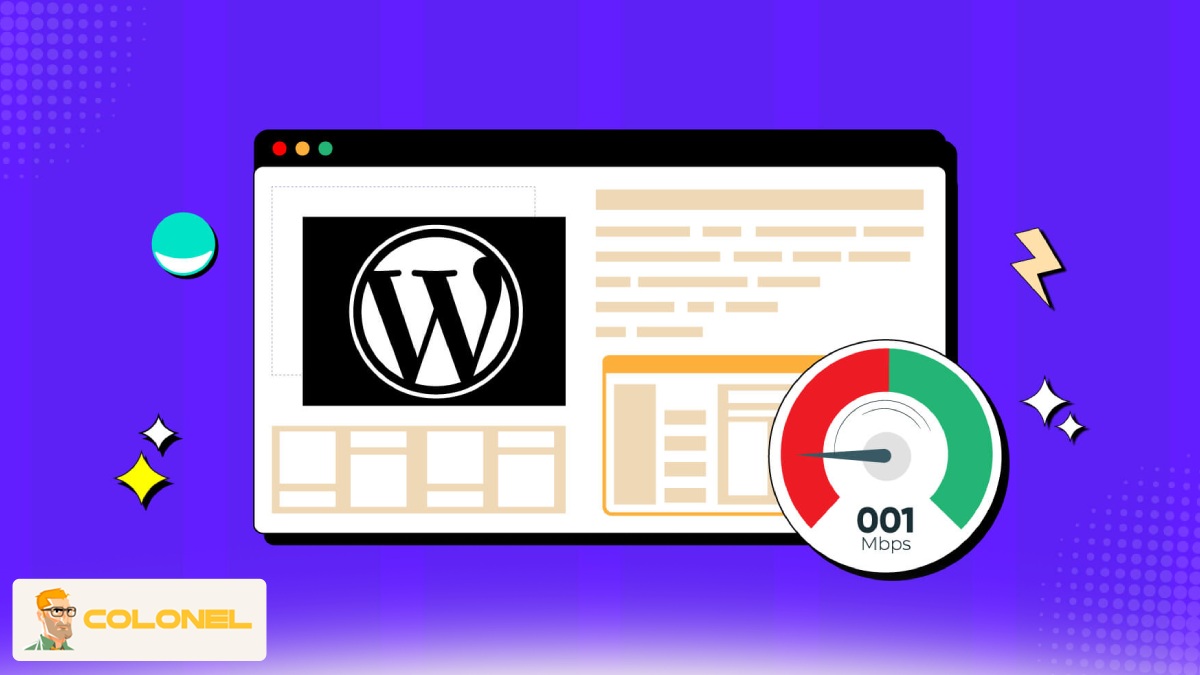
How WordPress Caching Reduces Server Load
Server load is directly linked to how often the backend needs to handle requests. By serving cached responses, WordPress Caching reduces PHP execution cycles, cuts down MySQL connections, and lowers memory use per request.
Before looking at performance metrics, it’s vital to understand which server resources benefit the most:
- CPU usage goes down because fewer scripts run.
- Database throughput improves due to fewer read operations.
This reduction lets servers support more users at the same time without needing to upgrade infrastructure, making caching an affordable performance strategy.

Windows VPS-Hosting
Remote Access & Full Admin
Impact of WordPress Caching on Website Loading Time
Page speed is not a single metric but a collection of measurable timings such as TTFB, First Contentful Paint (FCP), und größte inhaltsreiche Farbe (LCP). WordPress Caching positively influences all of them by shortening the critical rendering path.
Below is a simplified comparison showing how caching affects load performance:
| Scenario | Average TTFB | Server Processing |
|---|---|---|
| No caching | 600–900 ms | Full PHP + DB execution |
| Partial caching | 300–450 ms | Reduced DB queries |
| Full caching | 80–150 ms | Static HTML delivery |
This illustrates why caching is often the single biggest contributor to perceived speed improvements.
WordPress Caching and SEO Performance
Search engines favor fast-loading websites because speed directly impacts user satisfaction. WordPress Caching helps bots fetch pages more quickly and consistently.
According to Cloudflare’s performance documentation, “Caching reduces origin server load and improves page delivery speed, which can positively affect search visibility.”
This highlights the clear link between caching, Leistung, and SEO results.
Common WordPress Caching Mistakes to Avoid
Misconfigured caching can eliminate its benefits or even disrupt functionality. Many problems arise not from caching itself but from misunderstanding how it works with dynamic content.
Before listing errors, it’s crucial to remember that caching must consider user context and content freshness. Common mistakes include:
- Caching pages with personalized or session-based content.
- Not excluding checkout, cart, or account pages.
- Using multiple caching layers without coordination.
Avoiding these mistakes helps ensure that WordPress Caching improves performance without hurting usability.
Best Practices for Implementing WordPress Caching
A successful caching strategy depends on matching the hosting environment, traffic patterns, and content type. WordPress Caching should be implemented thoughtfully.
Key principles include:
- Matching cache type to content behavior (static vs. dynamic).
- Using server-level caching whenever possible.
- Combining caching with compression and HTTP/2.
Match Cache Type to Content Behavior
Different types of content need different caching methods. Static pages, like blog posts, Landingpages, and documentation, benefit from full-page caching. Dynamic content, such as user dashboards or shopping carts, should be excluded or cached selectively. Segmenting content properly ensures cached data does not disrupt personalized or session-based functions.
Use Server-Level Caching Whenever Possible
Server-level caching works closer to the core infrastructure and delivers content faster than application-level solutions. By caching responses before they reach the PHP execution layer, server-based methods lower processing demands and improve response consistency. This technique is particularly effective for high-traffic websites and resource-heavy environments.
Combine Caching with Compression and HTTP/2
Caching alone cannot provide the best performance without additional improvements. Compression reduces file sizes during transfer, while HTTP/2 enhances parallel request handling. When used with caching, these technologies reduce delivery time, geringere Latenz, and improve loading efficiency across different devices and network conditions.
When and How to Clear WordPress Cache
Clearing the cache is an important maintenance task. It ensures that both users and search engines access the most current version of a website. While caching improves performance, old cache files can lead to outdated content, broken layouts, or unexpected behavior, especially on dynamic WordPress sites.
From a practical standpoint, you should clear the cache whenever structural or content-related changes happen. This includes publishing or updating posts and pages, installing or updating plugins, switching themes, and making configuration changes that affect site output. In diesen Fällen, stored cached data no longer reflects the live version of the website and needs to be refreshed.
How to Clear the WordPress Cache
The process of clearing the cache depends on how caching works within the site’s structure. Most modern WordPress caching solutions offer built-in purge options directly in the WordPress admin dashboard. This allows administrators to clear cached files manually with one action.
Besides manual clearing, many systems also use automatic cache invalidation. This method employs WordPress hooks to detect content updates and selectively remove affected cache entries without deleting the entire cache. On managed hosting platforms, cache clearing may also happen at the server level. Advanced setups may include CDN cache purging to make sure all edge locations serve updated content at the same time. Automated cache clearing is usually the most dependable way to maintain consistency and performance on high-traffic websites.
Choosing the Right WordPress Caching Solution
Choosing the right caching solution relies on hosting setup, traffic size, and technical skills. WordPress Caching isn’t a universal feature but a layered system tailored to each website’s needs.
The best solution balances performance, Zuverlässigkeit, and ease of maintenance while integrating well with the existing setup. When done right, caching becomes a key element of scalable and search-friendly WordPress websites.