
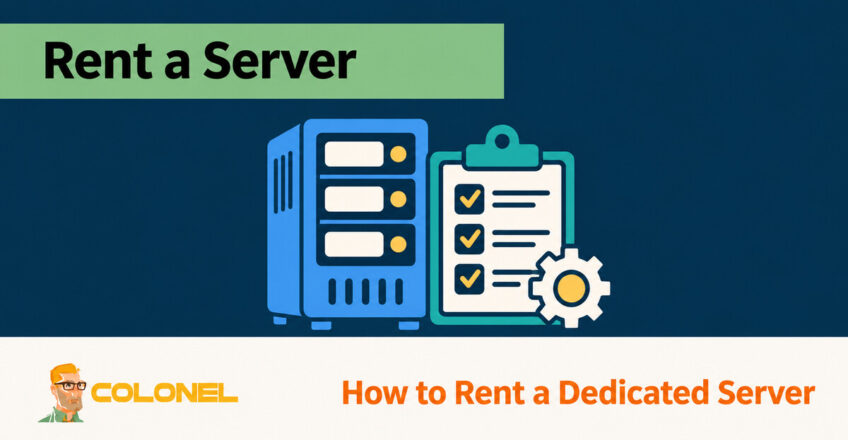
What Does It Mean to Rent a Dedicated Server?
A dedicated server is a physical machine that is allocated entirely to a single customer. You receive exclusive access to the physical server’s CPU, memory and local storage. Upstream networking may still be shared, and port speed, committed bandwidth and transfer allowances depend on the plan.
Renting a dedicated server allows businesses, developers, ecommerce stores, gaming platforms, and high-traffic websites to benefit from maximum performance, stronger security, and complete control over their hosting environment without the expense of purchasing and maintaining hardware.
For beginners, the process may appear complex at first, but understanding the key decisions involved makes choosing the right server significantly easier.
Overview: How to Rent a Dedicated Server
The process typically involves the following steps:
- Select a hosting provider.
- Choose the appropriate hardware configuration.
- Decide on an operating system.
- Select a management level.
- Add security and software options.
- Review pricing and contract terms.
- Deploy and configure the server.
Each step plays an important role in ensuring the server meets both current requirements and future growth plans.
Important Factors to Consider Before Renting
Choosing a dedicated server involves more than comparing CPU models and RAM capacity.
WordPress Web Hosting
Starting From $3.99/Monthly
Several factors should be evaluated before placing an order.
Performance Requirements
The server must have sufficient resources to support your workload.
Consider:
- Website traffic levels
- Database activity
- Application complexity
- Concurrent users
- Background processes
Underestimating requirements can lead to performance issues, while overestimating them can result in unnecessary costs.
Scalability
Business requirements often grow over time.
Choose a provider that allows:
Cheap VPS Server
Starting From $2.99/Monthly
- Hardware upgrades
- Additional storage
- RAM expansion
- Migration to larger servers
A scalable environment helps avoid disruptive migrations later.
Management Requirements
Not every organization has an experienced system administrator available.
Determine whether you need:
- Fully managed hosting
- Self-managed hosting
- Hybrid support options
The right management level can significantly reduce operational complexity.
Security Features
Security should be considered from the beginning.
Look for providers offering:
Windows VPS Hosting
Remote Access & Full Admin
- Firewall protection
- DDoS mitigation
- Monitoring services
- Backup solutions
- Security hardening options
These services help protect both infrastructure and customer data.
Data Center Location
Server location directly affects latency and website responsiveness.
Whenever possible, select a server located close to your primary audience.
Benefits include:
- Faster page loading
- Reduced latency
- Better user experience
- Improved application responsiveness
Technical Support
Reliable support becomes critical when issues arise.
Evaluate:
- Support availability
- Response times
- Support channels
- Technical expertise
Access to experienced technicians can significantly reduce downtime.
Pricing Structure
Understand exactly what is included in the monthly fee.
Review:
- Hardware specifications
- Bandwidth allocations
- Licensing fees
- Management services
- Backup costs
- Security add-ons
Comparing complete pricing rather than base pricing often provides a clearer picture of long-term costs.
Step 1: Choose a Dedicated Hosting Provider
Start by comparing dedicated server hosting configurations that match your measured workload and required location.
A hosting provider supplies the hardware, networking, power, cooling, and infrastructure required to operate your dedicated server.
Instead of purchasing equipment and maintaining your own data center, you rent infrastructure from a specialized provider.
What to Look For
Uptime Guarantees
Look for providers offering strong uptime commitments, typically 99.9% or higher.
Support Availability
24/7 technical support is especially valuable for beginners and business-critical environments.
Data Center Quality
Evaluate:
- Redundant power systems
- Network connectivity
- Physical security
- Environmental controls
Additional Services
Useful services may include:
- Automated backups
- DDoS protection
- Monitoring
- Control panels
- Managed services
Step 2: Choose Your Hardware Configuration
The server configuration affects performance and capacity. The examples below are starting points, not universal minimums; benchmark the application, database and peak concurrency before ordering.
Processor (CPU)
The CPU handles application processing and website requests.
Typical recommendations include:
Small Websites
- 4 CPU cores
Business Websites and Ecommerce
- 8 CPU cores or more
High-Traffic Applications
- High-core-count Intel Xeon or AMD EPYC processors
More cores generally improve multitasking and concurrent workload handling.
Memory (RAM)
RAM affects application responsiveness and database performance.
Common configurations include:
- 16 GB RAM for smaller projects
- 32 GB RAM for growing businesses
- 64 GB RAM or more for enterprise workloads
Storage
Storage selection impacts loading speed and data access performance.
SSD Storage
Benefits include:
- Faster loading times
- Better database performance
- Lower latency
NVMe Storage
Provides even greater performance for demanding applications.
Bandwidth
Bandwidth determines how much traffic your server can handle.
Consider:
- Visitor volume
- Download activity
- Streaming requirements
- Application usage
High-traffic websites often require generous bandwidth allocations or unmetered connectivity.
Example Configurations
Small Website
- 4-Core CPU
- 16 GB RAM
- 500 GB SSD
- 5 TB bandwidth
Ecommerce Store
- 8-Core CPU
- 32 GB RAM
- 1 TB SSD
- 10 TB bandwidth
Streaming Platform or Game Server
- High-core CPU
- 64 GB RAM or more
- NVMe storage
- Unmetered network connection
Step 3: Managed vs Unmanaged Hosting
When assessing managed dedicated servers, confirm which updates, backups and troubleshooting tasks are included in the service.
One of the most important decisions is selecting a management level.
Managed Dedicated Server
With managed hosting, the provider assists with:
- Operating system installation
- Updates
- Security patches
- Monitoring
- Troubleshooting
Managed servers are ideal for:
- Beginners
- Small businesses
- Organizations without dedicated administrators
Unmanaged Dedicated Server
Unmanaged hosting provides complete control but requires technical expertise.
You are responsible for:
- Server setup
- Security configuration
- Updates
- Monitoring
- Problem resolution
This option is popular among developers and experienced administrators.
Step 4: Choose an Operating System
Every dedicated server requires an operating system.
The two primary choices are Linux and Windows.
Linux
Linux powers most web servers worldwide.
Advantages include:
- Open-source software
- Strong security
- Excellent performance
- Broad application support
Popular distributions include:
- AlmaLinux
- Rocky Linux
- Ubuntu
- Debian
Linux is often the preferred option for websites, applications, and hosting environments.
Windows Server
Windows Server is suitable for applications that require Microsoft technologies.
Common use cases include:
- ASP.NET applications
- Microsoft SQL Server
- Active Directory environments
Windows licensing typically increases overall hosting costs.
Step 5: Choose a Control Panel
A control panel simplifies server administration through a graphical interface.
Instead of using command-line tools, administrators can manage hosting services through a web-based dashboard.
cPanel
Popular features include:
- Website management
- Email management
- DNS administration
- Database management
- Backup tools
cPanel is available for Linux servers.
Plesk
Plesk supports both Linux and Windows.
Benefits include:
- Modern interface
- WordPress management tools
- Security features
- Application management
Plesk is often preferred by users managing multiple websites or mixed operating system environments.
Understanding Dedicated Server Costs
Dedicated server pricing varies depending on hardware and included services.
Entry-Level Servers
Typically suitable for:
- Small websites
- Development environments
- Basic applications
Mid-Range Servers
Often used for:
- Ecommerce websites
- Business applications
- Growing projects
Enterprise Servers
Designed for:
- Large platforms
- Streaming services
- SaaS applications
- High-traffic websites
Additional costs may include:
- Control panel licenses
- Windows licensing
- Backup services
- Security add-ons
- Managed support
Always evaluate the total monthly cost rather than focusing solely on the base server price.
Why Rent Instead of Buying?
Many organizations choose to rent dedicated servers rather than purchase hardware outright.
No Hardware Maintenance
The hosting provider manages:
- Hardware failures
- Power systems
- Network infrastructure
- Data center operations
Faster Deployment
Provisioning time depends on stock, customization and verification requirements. Confirm the expected delivery time before planning a migration.
Easier Upgrades
Many providers offer:
- RAM upgrades
- Storage expansion
- CPU upgrades
- Migration assistance
Lower Initial Investment
Renting avoids large upfront hardware purchases and spreads costs across predictable monthly payments.
Advantages of Dedicated Hosting
Dedicated servers provide several important benefits.
Maximum Performance
All hardware resources belong exclusively to your environment.
Enhanced Security
You control:
- Firewall rules
- Security policies
- User permissions
- Software installations
Complete Customization
Install:
- Any supported operating system
- Custom applications
- Development tools
- Specialized software
Reliable Performance
Dedicated resources help eliminate performance fluctuations caused by neighboring users.
Long-Term Scalability
Dedicated hosting can support growth through hardware upgrades and infrastructure expansion.
Common Mistakes to Avoid
Purchasing More Resources Than Needed
Start with realistic requirements and upgrade as traffic increases.
Choosing Unmanaged Hosting Without Experience
Server administration requires technical knowledge and ongoing maintenance.
Ignoring Backups
Always implement automated backup procedures.
Selecting the Wrong Server Location
Choose a location close to your primary audience whenever possible.
Overlooking Licensing Costs
Control panels and operating systems may introduce additional monthly fees.
Assuming Security Is Fully Managed
Many dedicated servers require customers to configure security measures themselves.
Neglecting Monitoring
Regular monitoring helps identify performance and security issues before they impact users.
Is Renting a Dedicated Server Right for You?
A dedicated server is an excellent choice for businesses and projects that require consistent performance, enhanced security, and full control over their hosting environment. Whether you operate a high-traffic website, ecommerce platform, game server, SaaS application, or business-critical infrastructure, renting a dedicated server provides access to enterprise-grade resources without the complexity of owning and maintaining physical hardware.
By carefully evaluating hardware requirements, management preferences, operating system choices, and future growth plans, you can select a dedicated hosting solution that supports both your current workload and long-term objectives.