
Why Redundancy Matters in Modern Cloud Infrastructure
Unexpected service interruptions can have a serious impact on business operations. Research consistently shows that downtime can result in substantial financial losses, reduced customer confidence, and operational disruption. For organizations that rely on online services, maintaining availability has become a core requirement rather than a luxury.
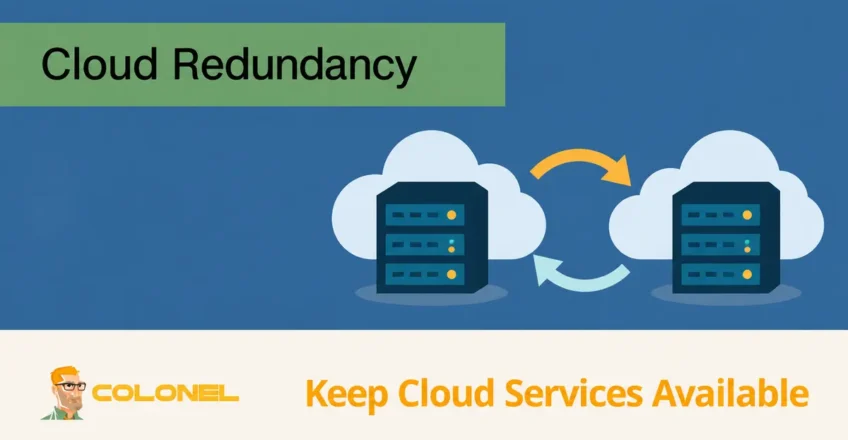
Cloud redundancy is one of the most effective ways to reduce the risk of outages. Instead of depending on a single system, Server, or data location, redundant architectures introduce additional resources that can continue operating when failures occur.
A practical way to understand redundancy is to think about critical infrastructure. A single point of failure creates risk, while multiple independent components provide resilience. In Cloud-Umgebungen, redundancy serves the same purpose by ensuring that applications, Dienstleistungen, and data remain accessible when hardware, Software, or network issues arise.
Organizations that implement redundancy can benefit from:
- Higher service availability during failures
- Faster recovery from unexpected incidents
- Stronger protection against data loss
- Improved scalability and resource management
- Better overall application performance
While redundant environments require additional planning, Überwachung, and investment, the operational benefits often outweigh the costs, especially for business-critical workloads.
Core Redundancy Strategies for Cloud Environments
Several technologies work together to create highly available cloud platforms. The most common approaches include data replication, Lastausgleich, automatische Skalierung, and geographic distribution.

WordPress-Webhosting
Ab 3,99 $/Monat
Data Replication for Continuous Data Availability
Data replication creates and maintains multiple copies of information across different systems or locations. If one copy becomes unavailable, another can be used to continue operations and support recovery efforts.
This approach improves fault tolerance and helps maintain business continuity during infrastructure failures.
There are two primary replication methods:
Synchronous Replication
With synchronous replication, data is written to multiple locations at the same time. This method provides strong consistency because all copies remain identical. The tradeoff is that write operations may experience slightly higher latency.
Asynchronous Replication
Asynchronous replication first writes data to the primary location and then transfers it to secondary systems. This approach generally improves performance, although temporary differences between replicas may exist until synchronization is completed.
Common cloud replication solutions include:

Günstiger VPS-Server
Ab 2,99 $/Monat
| Anbieter | Replication Approach |
|---|---|
| AWS | Multi-AZ database deployments across availability zones |
| Microsoft Azure | Geo-redundant storage across separate regions |
| Google Cloud | Globally distributed databases with integrated consistency mechanisms |
For businesses operating private cloud environments, replication can also be implemented through clustered storage systems, synchronized file servers, and custom disaster recovery platforms.
Load Balancing for Reliable Traffic Distribution
Load balancing distributes incoming requests across multiple servers instead of directing all traffic to a single destination.
This helps maintain performance, prevents resource exhaustion, and increases availability when individual servers encounter problems.
Several load balancing models are commonly used:
Hardware Load Balancers
Dedicated appliances designed to process and distribute large volumes of traffic.
Software Load Balancers
Applications running on standard infrastructure that provide flexible and cost-effective traffic management.
Windows VPS-Hosting
Fernzugriff und vollständige Verwaltung
Cloudbasierte Load Balancer
Managed services that automatically adapt to traffic patterns while reducing administrative overhead.
Major cloud platforms offer integrated load balancing services capable of routing traffic only to healthy instances, ensuring that failed systems do not affect user access.
Advanced load balancing platforms often include:
- SSL offloading
- Health monitoring
- Automatisches Failover
- Custom traffic policies
- Sitzungspersistenz
- Multiple traffic distribution algorithms
Common balancing methods include round-robin, least-connections, and response-time-based routing.
Auto-Scaling to Match Demand
Traffic patterns rarely remain constant. Applications may experience significant increases in demand during promotions, seasonal events, or unexpected traffic spikes.
Auto-scaling automatically adjusts available resources based on real-time usage.
By dynamically allocating resources, organizations can maintain performance while controlling infrastructure costs.
Vertikale Skalierung
Vertical scaling increases or decreases resources within an existing server.
Beispiele hierfür sind:
- Adding CPU capacity
- Increasing memory
- Expanding storage
This method is often the fastest way to address immediate resource limitations.
Horizontale Skalierung
Horizontal scaling adds or removes servers from a resource pool.
Instead of making a single system larger, workloads are distributed across multiple instances, improving both scalability and fault tolerance.
Examples of cloud auto-scaling services include:
| Anbieter | Auto-Scaling Service |
|---|---|
| AWS | Auto Scaling |
| Microsoft Azure | Virtual Machine Scale Sets |
| Google Cloud | Managed Instance Group Autoscaling |
Bei richtiger Konfiguration, auto-scaling enables applications to maintain consistent performance during fluctuating workloads while avoiding unnecessary infrastructure expenses.
Multi-Zone and Multi-Region Deployments
Physical disasters, power failures, and network disruptions can affect entire facilities.
To reduce these risks, organizations deploy resources across multiple availability zones or geographic regions.
Multi-zone deployments ensure that workloads continue operating even if a complete data center becomes unavailable.
This strategy offers several advantages:
- Greater fault tolerance
- Improved disaster recovery capabilities
- Reduced dependency on a single location
- Increased service availability
Cloud providers typically organize infrastructure into separate zones with independent power, Kühlung, and networking systems. By distributing applications across these zones, organizations can minimize the impact of localized failures.
Balancing Availability and Cost
Building highly available infrastructure does not mean every workload requires the highest possible level of redundancy.
Successful cloud architecture balances resilience with operational efficiency.
Classify Critical and Non-Critical Workloads
Applications that directly affect customers or revenue generation typically require stronger redundancy.
Beispiele hierfür sind:
- E-Commerce-Plattformen
- Kundenportale
- Finanzsysteme
- Production databases
Less critical environments may tolerate limited downtime, wie zum Beispiel:
- Entwicklungsumgebungen
- Internal testing platforms
- Temporary staging systems
Understanding workload importance allows organizations to allocate resources more effectively.
Adopt Tiered Redundancy Models
Redundancy levels are often described using models such as:
- N+1
- 2N
- 2N+1
In these models, „N“ represents the minimum infrastructure required for operation.
Higher tiers provide greater protection against failures but increase infrastructure costs. Selecting the appropriate level depends on business objectives, recovery requirements, und Budgetbeschränkungen.
Use Interruptible Compute Resources When Appropriate
Many cloud providers offer discounted compute resources that can be reclaimed when capacity is needed elsewhere.
These resources are often suitable for:
- Batch processing
- Data analysis jobs
- Stateless applications
- Non-time-sensitive workloads
Combining lower-cost resources with standard infrastructure can significantly reduce operating expenses while maintaining acceptable reliability.
Define Recovery Objectives
Redundancy planning should include clear recovery goals.
Recovery Time Objective (RTO)
RTO defines how quickly systems must be restored after an outage.
Wiederherstellungspunktziel (RPO)
RPO defines the maximum amount of data loss that can be tolerated, measured as a period of time.
Organizations should establish realistic RTO and RPO targets based on:
- Business requirements
- Compliance-Pflichten
- Historical incident data
- Risk tolerance
- Available budget
These objectives help determine the level of redundancy necessary for each workload.
Evaluate Managed and Serverless Architectures
Managed services simplify infrastructure operations by shifting maintenance responsibilities to the provider.
Benefits often include:
- Built-in redundancy
- Automatisiert SicherungS
- Reduced administrative workload
- Simplified scalability
Serverless platforms provide similar advantages by automatically allocating resources in response to demand.
For many workloads, these approaches can reduce operational complexity while maintaining strong availability characteristics.
Monitor and Optimize Continuously
Redundancy is not a one-time deployment. Ongoing monitoring is required to ensure systems remain effective and cost-efficient.
Key activities include:
- Monitoring resource utilization
- Tracking application performance
- Reviewing failover behavior
- Testing disaster recovery procedures
- Identifying underutilized resources
- Optimizing infrastructure spending
Regular audits help ensure redundancy configurations continue meeting operational requirements as environments evolve.
Cloud Infrastructure for High Availability
Organizations pursuing near-continuous availability often combine dedicated resources, scalable virtual environments, automated failover mechanisms, and geographically distributed infrastructure.
Dedicated cloud resources can provide predictable performance for critical applications, while scalable virtual environments offer flexibility for changing workloads.
High availability platforms typically include:
- Hardware redundancy
- Automated failover
- Kontinuierliche Überwachung
- Clustered infrastructure
- Redundante Vernetzung
- Non-disruptive maintenance procedures
For specialized requirements, clustered architectures distribute workloads across multiple servers. If one node becomes unavailable, another can continue serving requests with minimal interruption.
Building a Zero-Downtime Strategy
Maintaining application availability is essential for protecting revenue, Kundenvertrauen, and operational continuity.
Achieving this goal requires a combination of proven technologies rather than relying on a single solution. Data replication, Lastausgleich, auto-scaling, and geographic redundancy each play a critical role in reducing downtime risks.
When these strategies are supported by reliable cloud infrastructure, organizations can create resilient environments capable of withstanding failures while continuing to deliver services to users.