
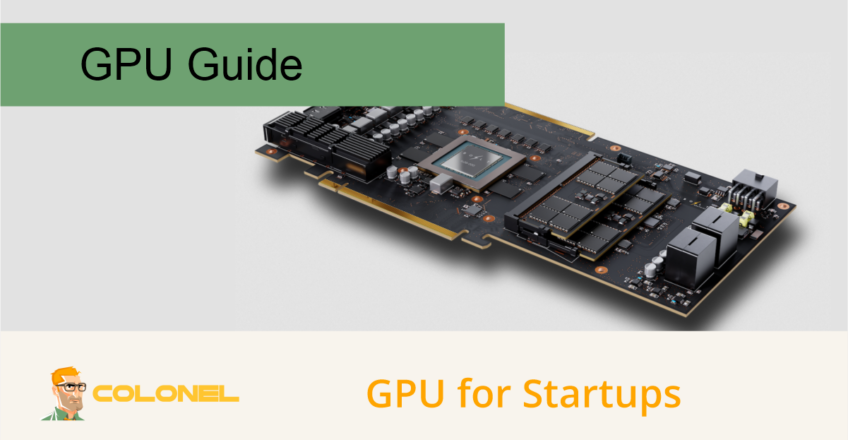
Warum GPU-Hosting für Startups wichtig ist
Künstliche Intelligenz, maschinelles Lernen, Computer Vision, große Sprachmodelle, 3D-Rendering, und wissenschaftliches Rechnen erfordern alle erhebliche Rechenressourcen. Für viele Startups, Der Kauf und die Wartung von GPU-Hardware für Unternehmen ist teuer, zeitaufwendig, und schwer zu skalieren.
GPU-Hosting solves this problem by providing access to high-performance GPU infrastructure without the upfront investment of building your own environment.
Jedoch, not every GPU hosting solution is the same. Startups typically choose between three major deployment models:
- Cloud GPU hosting
- GPU als Service (GPUaaS)
- Dedicated single-tenant GPU servers
Each option offers different levels of performance, Flexibilität, Kontrolle, und Kosteneffizienz.
Understanding these differences helps startups make better infrastructure decisions as projects move from experimentation to production.
Cloud-GPU-Hosting
Cloud GPU hosting provides virtual machines equipped with GPU resources through public cloud platforms.

WordPress-Webhosting
Ab 3,99 $/Monat
Users can deploy GPU-enabled instances on demand and pay only for the resources they consume.
Zu den häufigsten Anwendungsfällen gehören::
- Machine learning experiments
- Entwicklungsumgebungen
- Short-term training projects
- Temporary rendering workloads
- Prototype deployments
Advantages of Cloud GPU Hosting
Schnelle Bereitstellung
GPU resources can usually be provisioned within minutes.
Development teams can begin testing models and applications immediately without waiting for hardware procurement or server deployment.
Flexible Skalierung
Cloud environments allow startups to scale GPU resources up or down based on workload requirements.
This flexibility is useful for:
Günstiger VPS-Server
Ab 2,99 $/Monat
- Training bursts
- Seasonal workloads
- Temporäre Projekte
- Proof-of-concept environments
Large Ecosystem Support
Most cloud platforms integrate with:
- Docker
- Kubernetes
- TensorFlow
- PyTorch
- MLOps platforms
- CI/CD-Pipelines
This simplifies deployment and automation.
Challenges of Cloud GPU Hosting
Shared Infrastructure
Most cloud GPU instances operate in multi-tenant environments.
Although resource isolation exists, performance can sometimes vary due to virtualization overhead or shared infrastructure.
Long-Term Costs
Hourly billing appears attractive initially, but continuous GPU usage can become expensive over time.
Organizations running AI workloads around the clock often discover that monthly cloud expenses grow rapidly.
Windows VPS-Hosting
Fernzugriff und vollständige Verwaltung
Limited Hardware Control
Cloud providers restrict access to:
- GPU firmware
- Driver versions
- Low-level tuning
- Hardware customization
This can create limitations for advanced workloads.
GPU als Service (GPUaaS)
GPUaaS builds on top of cloud infrastructure by abstracting away server management entirely.
Instead of deploying virtual machines, users simply select a GPU type, upload code, and execute workloads.
The platform handles the underlying infrastructure automatically.
Popular GPUaaS platforms typically provide:
- Web-based interfaces
- API-Zugriff
- Notebook environments
- Managed execution frameworks
Vorteile von GPUaaS
Minimal Operational Overhead
Teams can focus entirely on development rather than infrastructure management.
There is no need to maintain:
- Betriebssysteme
- Sicherheitspatches
- Treiberaktualisierungen
- Hardwareüberwachung
Rapid Experimentation
GPUaaS platforms are ideal for:
- AI research
- Model prototyping
- Educational projects
- Startup MVP development
Simplified User Experience
Many platforms provide ready-to-use environments with popular frameworks already installed.
Developers can start training models within minutes.
Challenges of GPUaaS
Higher Long-Term Costs
Convenience often comes with increased pricing.
GPUaaS services typically charge more per GPU hour than equivalent dedicated infrastructure.
Limited Customization
Infrastructure decisions are controlled by the platform provider.
Organizations may encounter restrictions around:
- Betriebssysteme
- Container environments
- Netzwerkkonfiguration
- Speicherarchitektur
Shared Resource Models
Although GPUaaS feels seamless, most services still operate on shared infrastructure underneath.
This can affect consistency under heavy demand.
Single-Tenant Dedicated GPU Servers
Single-tenant GPU hosting provides an entire physical server dedicated to a single customer.
Unlike cloud or GPUaaS environments, there is no virtualization layer between the customer and the hardware.
All server resources belong exclusively to one organization.
Typical configurations include:
- NVIDIA L4
- NVIDIA L40S
- NVIDIA A100
- NVIDIA H100
- AMD EPYC-Prozessoren
- High-capacity DDR5 memory
- NVMe-SSD-Speicher
Advantages of Dedicated GPU Servers
Konsistente Leistung
Dedicated servers eliminate resource contention.
There are no neighboring workloads competing for:
- CPU-Ressourcen
- GPU-Ressourcen
- Speicherleistung
- Netzwerkbandbreite
Performance remains predictable under heavy workloads.
Vollständige Umgebungskontrolle
Organizations have full control over:
- Betriebssysteme
- Treiber
- Sicherheitsrichtlinien
- Container
- Frameworks für maschinelles Lernen
- Netzwerkkonfigurationen
This flexibility is especially valuable for production deployments.
Better Long-Term Economics
For organizations running GPU workloads continuously, dedicated servers often provide a lower total cost of ownership than cloud-based alternatives.
Monthly costs remain predictable regardless of utilization.
Compliance and Security
Dedicated infrastructure simplifies compliance requirements for industries that handle sensitive information.
Beispiele hierfür sind:
- Gesundheitspflege
- Finanzen
- Regierung
- Enterprise SaaS
Dedicated environments help support standards such as:
- GDPR
- HIPAA
- PCI-DSS
Ideal Use Cases
Dedicated GPU servers work particularly well for:
- AI startups
- Large language model hosting
- KI-Inferenzplattformen
- Computer-Vision-Systeme
- SaaS applications with GPU workloads
- Continuous model training pipelines
- Produktions-KI-Umgebungen
Comparing GPU Hosting Models
| Besonderheit | Cloud-GPU | GPUaaS | Dedizierter GPU-Server |
|---|---|---|---|
| Ersteinrichtung | Schnell | Fastest | Mäßig |
| Hardware-Steuerung | Beschränkt | Very Limited | Volle Kontrolle |
| Performance Consistency | Mäßig | Mäßig | Exzellent |
| Infrastrukturmanagement | Erforderlich | Minimal | Volle Kontrolle |
| Langfristige Kosteneffizienz | Mäßig | Untere | Highest |
| Security Isolation | Shared Environment | Shared Environment | Fully Isolated |
| Compliance-Unterstützung | Beschränkt | Beschränkt | Stark |
| Skalierbarkeit | Exzellent | Exzellent | Exzellent |
| Production Readiness | Gut | Gut | Exzellent |
How to Choose the Right GPU Hosting Model
Choose Cloud GPU Hosting If
Cloud GPU infrastructure is a good fit when:
- Building prototypes
- Testing machine learning models
- Running short-term projects
- Experimenting with AI workloads
- Needing rapid scalability
Choose GPUaaS If
GPUaaS works well when:
- Your team lacks infrastructure expertise
- You want immediate productivity
- Projects are relatively short-lived
- Simplicity is more important than customization
Choose Dedicated GPU Servers If
Dedicated GPU hosting is ideal when:
- AI workloads run continuously
- Predictable performance matters
- Compliance requirements exist
- Production inference services are deployed
- Infrastructure costs are increasing
- Long-term scalability is important
Questions Startups Should Ask Before Choosing
What Are Your GPU Workloads?
Understanding workload characteristics is critical.
Beispiele hierfür sind:
- KI-Modelltraining
- KI-Schlussfolgerung
- Rendern
- Videoverarbeitung
- Wissenschaftliches Rechnen
Different workloads may require different GPU architectures.
How Often Will GPUs Be Used?
Occasional usage often favors cloud resources.
Continuous workloads frequently justify dedicated infrastructure.
What Is Your Growth Plan?
In Betracht ziehen:
- Expected user growth
- Future model sizes
- Scaling requirements
- Infrastructure complexity six to twelve months from now
Planning ahead prevents expensive migrations later.
Are Compliance Requirements Important?
Organisationen, die mit sensiblen Informationen umgehen, sollten eine Bewertung vornehmen:
- Data residency
- Zugangskontrollen
- Security certifications
- Regulatory obligations
Dedicated infrastructure often provides greater flexibility in these areas.
Building a Long-Term GPU Strategy
Many startups begin with cloud GPUs because deployment is simple and upfront costs are low.
As products mature, workloads become more predictable and GPU utilization increases.
At that stage, dedizierte GPU-Server often become the preferred option because they offer:
- Better performance consistency
- Größere Individualisierung
- Improved security
- Lower long-term operating costs
The ideal hosting model depends on current needs, but successful AI companies frequently transition toward dedicated GPU infrastructure as they scale.
Choosing the right GPU hosting platform early can reduce costs, simplify operations, and create a stronger foundation for future growth.