
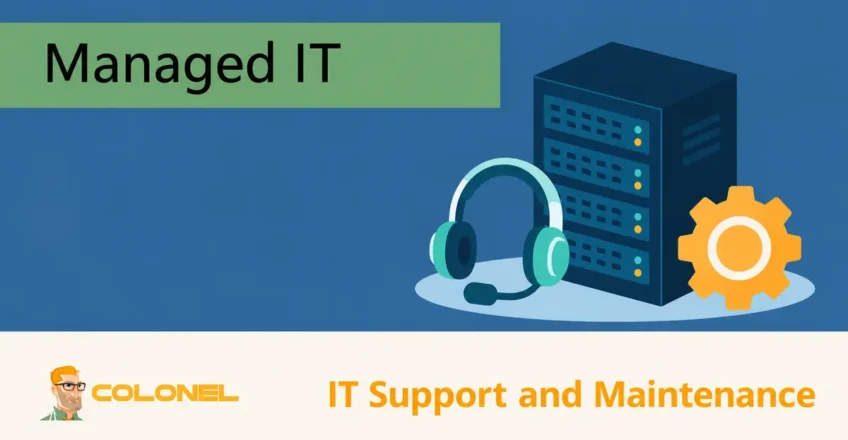
What Are Managed IT Services?
Managed IT services involve outsourcing the management, Überwachung, Wartung, and support of an organization’s technology infrastructure to a specialized third-party provider known as a Managed Service Provider (MSP).
Rather than waiting for problems to occur and fixing them afterward, MSPs take a proactive approach by continuously monitoring systems, applying updates, identifying potential issues, and maintaining security controls before disruptions happen.
Managed IT services can cover a wide range of technology requirements, einschließlich:
- Network management
- Serververwaltung
- Help desk support
- Cybersicherheit
- Backup and recovery
- Cloud-Infrastruktur
- Compliance management
- System monitoring
This approach allows businesses to focus on their core operations while experienced technology professionals manage day-to-day IT responsibilities.
How Managed IT Services Work
Traditional IT support often follows a break-fix model, where support is only provided after a problem occurs.
Managed services operate differently.

WordPress-Webhosting
Ab 3,99 $/Monat
Instead of reacting to issues, MSPs continuously monitor systems and perform preventative maintenance to reduce the likelihood of outages, security incidents, und Leistungsprobleme.
Common responsibilities include:
- Infrastructure monitoring
- Patch-Management
- Sicherheitsüberwachung
- Hardwarewartung
- Software-Updates
- User support
- Backup-Überprüfung
The objective is to improve reliability, Sicherheit, and operational efficiency while reducing downtime.
Types of Managed IT Services
Managed IT services can be tailored to different business requirements.
Organizations may outsource specific functions or their entire IT environment.
Network Infrastructure Management
Networks form the foundation of modern business operations.
Günstiger VPS-Server
Ab 2,99 $/Monat
Managed providers help ensure that network infrastructure remains available, sicher, und optimiert.
Typical services include:
- Network monitoring
- Konfigurationsmanagement
- Leistungsoptimierung
- Fault management
- Sicherheitsmanagement
These services help maintain stable connectivity and reduce disruptions.
Help Desk Support
Technical issues can impact productivity and business operations.
Managed help desk services provide users with access to technical assistance when problems arise.
Support often includes:
Windows VPS-Hosting
Fernzugriff und vollständige Verwaltung
- User troubleshooting
- Software support
- Hardware assistance
- Connectivity issues
- Account management
Viele Anbieter bieten an:
- 24/7 Unterstützung
- Remote assistance
- Escalation procedures
- Incident management
Rapid issue resolution helps minimize downtime and improve user satisfaction.
Cybersecurity Services
Cybersecurity has become one of the most important areas of managed services.
Organizations face constant threats from:
- Malware
- Ransomware
- Phishing-Angriffe
- Datenschutzverletzungen
- Unauthorized access attempts
Managed security services often include:
- Threat detection
- Vulnerability assessments
- Sicherheitsüberwachung
- Endpoint protection
- Incident response
- Compliance assistance
These services help strengthen an organization’s security posture while reducing risk exposure.
Backup und Notfallwiederherstellung
Data loss can result from:
- Hardwarefehler
- Software corruption
- Menschliches Versagen
- Cyberattacks
- Naturkatastrophen
Managed backup and recovery services help protect critical information and ensure business continuity.
Backup-Dienste
Backup solutions focus on preserving data through:
- Geplante Backups
- Version retention
- Secure storage
- Wiederherstellungstest
Disaster Recovery Services
Disaster recovery planning helps organizations restore operations after major incidents.
These services may include:
- Wiederherstellungsverfahren
- Infrastructure replication
- Emergency failover systems
- Business continuity planning
Zusammen, backup and disaster recovery solutions reduce operational risk.
Cloud Management Services
Cloud adoption continues to grow across organizations of all sizes.
Managed cloud services help businesses deploy, optimieren, and maintain cloud infrastructure.
Common cloud services include:
- Infrastructure as a Service (IaaS)
- Platform as a Service (PaaS)
- Software as a Service (SaaS)
Managed cloud providers assist with:
- Migration planning
- Resource optimization
- Sicherheitsmanagement
- Cost control
- Leistungsüberwachung
This allows organizations to maximize cloud investments while reducing complexity.
Server Maintenance
Servers require ongoing maintenance to remain secure and reliable.
Managed server services often include:
- Betriebssystem-Updates
- Sicherheitspatches
- Performance tuning
- Hardware lifecycle management
- Überwachung und Alarmierung
Regular maintenance helps prevent outages and security vulnerabilities.
Systemadministration
System administration services focus on the daily management of IT infrastructure.
Responsibilities may include:
- User account management
- Softwarebereitstellung
- Disk cleanup
- Log management
- Ressourcenzuteilung
- Dienstkonfiguration
These tasks help maintain operational stability and performance.
Audit and Compliance Services
Many industries must comply with specific regulatory requirements.
Managed service providers can assist with:
- Security audits
- Compliance assessments
- Risk analysis
- Documentation reviews
- Policy implementation
Examples of compliance frameworks include:
- HIPAA
- PCI DSS
- DSGVO
- SOC 2
Regular auditing helps organizations maintain compliance and reduce regulatory risk.
Benefits of Managed IT Services
Organizations adopt managed services for several reasons.
Enhanced Security and Compliance
Cyber threats continue to evolve, making security management increasingly challenging.
Managed providers often offer enterprise-grade security capabilities that may be difficult for smaller organizations to maintain internally.
Zu den Vorteilen gehören::
- Continuous monitoring
- Threat detection
- Security expertise
- Compliance support
- Incident response capabilities
This helps reduce exposure to security incidents and regulatory violations.
Increased Uptime and Reliability
Downtime can affect productivity, Einnahmen, and customer satisfaction.
Managed services help improve availability through:
- Proactive monitoring
- Preventative maintenance
- Faster issue resolution
- Infrastructure optimization
Identifying problems before they become outages helps maintain business continuity.
Reduced IT Costs
Building and maintaining a full internal IT department can be expensive.
Costs often include:
- Salaries
- Vorteile
- Ausbildung
- Certifications
- Tools and software
Managed services allow organizations to access specialized expertise without maintaining large internal teams.
This often results in more predictable technology spending.
Proactive Risk Management
Rather than responding after problems occur, MSPs continuously monitor systems to identify risks early.
Beispiele hierfür sind:
- Security vulnerabilities
- Hardware degradation
- Software issues
- Capacity limitations
Early detection helps prevent larger disruptions.
Access to Specialized Expertise
Technology environments have become increasingly complex.
Managed providers often employ specialists in areas such as:
- Vernetzung
- Cybersicherheit
- Cloud computing
- Compliance
- Infrastructure management
Organizations gain access to this expertise without needing to hire specialists directly.
How to Choose a Managed Service Provider
Selecting the right MSP is a critical decision.
Several factors should be evaluated before entering a long-term partnership.
Service Quality
The quality of service directly impacts:
- System reliability
- Leistung
- Sicherheit
- User satisfaction
Look for providers with proven operational processes and strong service delivery records.
Security Capabilities
Evaluate the provider’s security practices carefully.
Zu den zu berücksichtigenden Fragen gehören::
- What security certifications do they hold?
- How do they monitor threats?
- How often are security assessments performed?
- What incident response procedures are in place?
Industry-recognized certifications may indicate mature security programs.
Beispiele hierfür sind:
- ISO 27001
- SOC 2
Reputation and Reliability
Research the provider’s history and customer feedback.
Rezension:
- Customer testimonials
- Case studies
- Independent reviews
- Industry recognition
A provider’s reputation often reflects the consistency of its services.
Technical Experience
Experience matters, particularly when supporting complex environments.
In Betracht ziehen:
- Years in operation
- Industry specialization
- Technology expertise
- Relevant certifications
Providers with experience in similar environments may be better equipped to address specific challenges.
Service Portfolio
Not every MSP offers the same services.
Ensure the provider can support:
- Current requirements
- Zukünftiges Wachstum
- Industry-specific needs
A good fit should align with both present and long-term objectives.
Service Level Agreements (SLAs)
Service Level Agreements define expectations and responsibilities.
Important SLA elements include:
- Verfügbarkeitsgarantien
- Reaktionszeiten
- Resolution targets
- Escalation procedures
Well-defined SLAs help ensure accountability and transparency.
Managed IT Services Pricing Models
Pricing structures vary among providers.
Common models include:
Per-User Pricing
Charges are based on the number of users receiving support.
Per-Device Pricing
Costs are determined by the number of devices being managed.
Beispiele hierfür sind:
- Server
- Arbeitsplätze
- Laptops
- Mobile Geräte
Monitoring-Only Services
Organizations pay specifically for monitoring and alerting functions.
À La Carte Pricing
Individual services are purchased as needed.
This model provides flexibility but may result in less predictable costs.
Flat-Rate Pricing
A fixed monthly fee covers a predefined set of services.
Many organizations prefer this model because of its budgeting simplicity.
Tiered Pricing
Different service packages offer varying levels of support and features.
Organizations can select the tier that best matches their requirements.
Managed Services vs Internal IT Teams
Both managed services and internal IT departments offer advantages.
Advantages of Managed Services
- Access to specialized expertise
- 24/7 Überwachung
- Planbare Kosten
- Scalable support
- Reduced staffing requirements
Advantages of Internal IT Teams
- Direct organizational familiarity
- Immediate onsite presence
- Deep understanding of internal processes
- Greater control over daily priorities
Many organizations choose a hybrid approach.
Internal teams focus on business-specific initiatives while MSPs handle:
- Überwachung
- Wartung
- Sicherheit
- Backups
- Infrastructure support
This combination often delivers the best balance of expertise and operational efficiency.
Building a Strong IT Strategy with Managed Services
Managed IT services provide organizations with a proactive approach to technology management. Through continuous monitoring, infrastructure maintenance, cybersecurity protection, Backup-Management, cloud support, and technical expertise, MSPs help businesses improve reliability while reducing operational complexity.
Whether supporting a small business with limited internal resources or supplementing an established IT department, managed services can provide the expertise, Skalierbarkeit, and operational support needed to maintain secure and efficient technology environments.