


Green web hosting enables businesses to minimize their digital carbon footprint while maintaining optimal website performance. By leveraging renewable energy, energy-efficient hardware, and carbon offset programs, companies can align their online operations with sustainability goals.
Choosing a verified green hosting provider not only supports environmental responsibility but also enhances brand reputation and meets the increasing demand of consumers for eco-conscious practices. This guide explores how green hosting works, its environmental impact, business advantages, and the steps required to transition smoothly.
What Is Green Web Hosting?
Green web hosting refers to hosting services that actively reduce environmental impact through renewable energy use, infrastructure optimization, and carbon management strategies. Unlike traditional hosting environments that depend on conventional power grids fueled by coal or gas, green hosting providers prioritize clean energy sources and energy-efficient technologies.
Beyond simply purchasing renewable electricity, green web hosting often includes optimized server utilization, virtualization, advanced cooling systems, and carbon offset investments. The goal is not only to power servers sustainably but also to reduce total energy demand through intelligent infrastructure design and operational efficiency.
Key Components of Green Web Hosting
To understand green web hosting fully, it is important to examine the operational elements that define it:
- Renewable Energy Integration: Data centers powered partially or entirely by wind, solar, or hydroelectric energy.
- Energy-Efficient Hardware: Modern processors, SSD storage, and virtualization technologies that reduce electricity consumption.
- Advanced Cooling Systems: Liquid cooling or hot/cold aisle containment systems that minimize wasted energy.
- Carbon Offset Programs: Investments in environmental initiatives that compensate for unavoidable emissions.
- Resource Optimization: Intelligent workload distribution to prevent over-provisioning of servers.
Each of these components contributes to lowering the overall digital carbon footprint of a hosted website.

WordPress Web Hosting
Starting From $3.99/Monthly

The Environmental Impact of Web Hosting
Web hosting plays a significant role in global energy consumption because data centers operate continuously. Every hosted website requires electricity for processing, storage, and network transmission. On average, a single page view generates approximately 0.8 grams of CO₂. When multiplied across billions of daily page loads worldwide, the cumulative environmental impact becomes substantial.
Understanding this impact highlights why green web hosting is no longer optional for sustainability-focused businesses. Reducing digital emissions is becoming as important as optimizing supply chains or minimizing physical waste.
Internet Carbon Footprint
The internet accounts for roughly 3.7 percent of global carbon emissions, a figure comparable to the aviation industry. Data centers are responsible for a significant portion of this footprint because servers must operate 24/7 to maintain availability, security, and performance. Cooling systems alone can represent nearly 40 percent of a data center’s energy usage.
As cloud computing expands and digital services grow, energy demand is expected to increase further. Without sustainable intervention, the environmental cost of digital infrastructure will continue to rise. According to theshiftproject:
“The internet accounts for approximately 3.7% of global greenhouse gas emissions, a figure comparable to the aviation industry.”
Buy Now
Cheap VPS Server
Starting From $2.99/Monthly

Impact by Website Type
Not all websites consume energy at the same rate. The environmental footprint of hosting depends heavily on website complexity and traffic volume.
- eCommerce Websites: Require continuous database processing, payment gateway integration, and image storage, resulting in higher energy consumption.
- Content-Rich Platforms: News portals, blogs, and educational websites frequently update media files, increasing bandwidth usage.
- Media-Intensive Services: Video streaming or interactive applications demand constant high-capacity processing and storage.
- High-Traffic Websites: Sites with thousands of daily users increase server workload and electricity demand significantly.
Recognizing these differences allows businesses to better estimate their environmental impact and select appropriate green hosting solutions.
The Business Case for Green Hosting
Green web hosting is not solely an environmental initiative; it is also a strategic business decision. Organizations that integrate sustainability into digital infrastructure often benefit from cost efficiencies, improved brand perception, and long-term resilience.
Companies increasingly face environmental reporting requirements, and sustainable hosting contributes positively to ESG performance metrics. This alignment strengthens investor confidence and corporate credibility.
Cost-Benefit Analysis
Although some green hosting plans may involve slightly higher upfront costs, long-term financial benefits often outweigh the difference.

Windows VPS Hosting
Remote Access & Full Admin
- Lower Operational Energy Costs: Energy-efficient servers consume less electricity.
- Infrastructure Optimization: Reduced waste leads to lower maintenance expenses.
- Regulatory Readiness: Sustainable operations reduce compliance risks.
- Brand Equity Value: Sustainability strengthens market positioning.
Over time, efficiency gains and reputational advantages contribute to measurable return on investment.
Marketing and Brand Advantages
Consumer awareness around environmental responsibility continues to grow. Businesses that adopt green web hosting can communicate sustainability commitments with credibility.
- Around 45 percent of consumers prefer environmentally responsible brands.
- Approximately 66 percent are willing to pay more for sustainable services.
- Sustainable positioning differentiates companies in competitive industries.
These trends demonstrate that green hosting influences purchasing decisions and customer loyalty.

Performance and Reliability of Green Hosting
A common misconception is that green web hosting sacrifices performance for sustainability. In practice, modern green hosting environments maintain high uptime, rapid load speeds, and scalable infrastructure.
Energy efficiency and performance are not mutually exclusive. In fact, optimized systems often deliver superior operational stability.
Speed and Resource Management
Green hosting providers utilize advanced performance technologies to deliver high speed and optimal resource efficiency without increasing environmental impact. Sustainable infrastructure is designed to balance performance demands with reduced energy consumption, ensuring that websites remain responsive while minimizing carbon emissions.
Modern green data centers integrate hardware optimization and intelligent traffic distribution to achieve this balance effectively.
- NVMe SSD storage reduces latency and significantly improves read and write speeds compared to traditional storage systems.
- Content Delivery Networks (CDNs) distribute website content across geographically dispersed servers, reducing the physical distance between users and data sources.
- Load balancing distributes incoming traffic across multiple servers to maintain stable performance during peak demand periods.
- Virtualization technologies maximize server utilization by reducing idle capacity and consolidating workloads efficiently.
Collectively, these strategies enhance website performance while reducing unnecessary power consumption, demonstrating that speed and sustainability can operate simultaneously.
Uptime and Reliability
Green web hosting environments maintain uptime standards that align with or exceed those of conventional data centers. Sustainability initiatives do not compromise operational stability; instead, they are integrated into resilient infrastructure models. Businesses adopting environmentally responsible hosting can expect consistent availability supported by robust technical safeguards.
Redundant power supplies, backup generators, and failover systems ensure uninterrupted service during unexpected disruptions. Real-time monitoring tools detect anomalies immediately, allowing rapid intervention before service degradation occurs. By combining renewable energy integration with infrastructure redundancy, green hosting providers sustain long-term reliability without sacrificing environmental responsibility.
Business continuity remains a central objective, and environmentally conscious infrastructure is designed to support mission-critical operations.

Server Response Times
Optimized server architecture plays a vital role in maintaining low response times within green hosting environments. Efficient software stacks, lightweight configurations, and modern processors work together to reduce latency and improve data processing speed. Many providers achieve response times below 200 milliseconds, ensuring smooth user interaction and improved website performance metrics.
Lower latency directly enhances user experience by accelerating page loads and reducing bounce rates. Additionally, efficient processing minimizes unnecessary computational cycles, which contributes to reduced energy consumption. This dual benefit reinforces the operational efficiency of green web hosting while maintaining competitive performance standards.
Transitioning to Green Hosting
Transitioning to green web hosting requires careful planning to ensure operational continuity and technical compatibility. A structured migration strategy allows businesses to adopt sustainable infrastructure without risking downtime or data integrity. Thorough evaluation of current hosting configurations is essential before initiating the transition.
Organizations must analyze traffic patterns, storage requirements, application dependencies, and scalability needs. Clear documentation and coordinated implementation prevent disruptions during the migration process. When properly executed, the transition supports sustainability goals while maintaining website stability and performance.
Step-by-Step Implementation
A systematic migration framework reduces technical risk and ensures a smooth transition to green web hosting. Structured implementation improves predictability and safeguards digital assets during the process. A typical migration includes the following stages:
- Evaluating current hosting performance and technical requirements.
- Researching certified green hosting providers with transparent sustainability policies.
- Selecting scalable and secure hosting plans aligned with projected growth.
- Backing up all website files, databases, and configurations.
- Scheduling migration during low-traffic periods to minimize user impact.
- Conducting comprehensive performance and security testing after deployment.
Each stage strengthens operational control and supports a seamless adoption of environmentally responsible infrastructure.
Downtime Prevention Strategies
Maintaining uninterrupted service during migration is essential for preserving user trust and business credibility. Proactive preparation significantly reduces the likelihood of service disruptions during the transition to green hosting.
Organizations can minimize downtime through the following measures:
- Utilizing staging environments to test configurations before public deployment.
- Updating DNS settings carefully to avoid propagation conflicts.
- Implementing temporary maintenance pages when brief interruptions are unavoidable.
- Monitoring performance metrics immediately after launch to detect irregularities.
Careful coordination between technical teams ensures that sustainability upgrades remain transparent to end users while preserving operational continuity.
Certification and Verification in Green Hosting
Verifying sustainability claims is critical when selecting a green web hosting provider. Environmental marketing statements do not always reflect measurable environmental impact. Objective validation through recognized certifications ensures that sustainability commitments are credible and accountable.
Transparent reporting practices, third-party verification, and publicly available environmental data strengthen trust between providers and clients. Businesses should prioritize documented evidence over promotional claims when evaluating green hosting options.

Ensuring Genuine Sustainability
Authentic green hosting providers demonstrate measurable renewable energy usage and publish quantifiable sustainability metrics. Transparent carbon accounting, renewable sourcing disclosures, and emission reduction data support credible environmental commitments.
Public reporting reduces the risk of greenwashing and allows businesses to assess the long-term environmental impact of their hosting choices. Providers that maintain verifiable documentation signal accountability and responsible environmental governance.
How to Verify Credentials?
Organizations can independently confirm sustainability practices before selecting a hosting partner. Due diligence reduces exposure to misleading claims and ensures alignment with environmental objectives. Verification methods include:
- Reviewing official environmental certifications issued by recognized authorities.
- Checking third-party verification databases for compliance records.
- Examining publicly available sustainability or environmental impact reports.
- Requesting documentation detailing renewable energy sourcing and carbon offset initiatives.
Comprehensive verification strengthens confidence in the provider’s environmental integrity and long-term sustainability strategy.
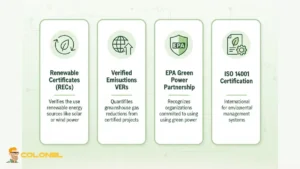
Common Green Hosting Certifications
Recognized certifications provide standardized validation of environmental responsibility within the hosting industry. These credentials reflect compliance with established sustainability benchmarks and operational transparency requirements. Common certifications include:
- Renewable Energy Certificates (RECs)
- Verified Emission Reductions (VERs)
- EPA Green Power Partnership recognition
- ISO 14001 environmental management certification
Each certification represents adherence to measurable sustainability standards and structured environmental management practices.
Industry Best Practices
Leading green hosting providers extend beyond certification requirements by integrating environmental responsibility into daily operations. Practical sustainability measures reinforce long-term efficiency and ecological accountability. Industry best practices include:
- Maintaining low Power Usage Effectiveness (PUE) ratios to optimize energy efficiency.
- Deploying advanced cooling systems that reduce excess electricity consumption.
- Investing in carbon offset programs to balance residual emissions.
- Implementing hardware lifecycle management and recycling programs to reduce electronic waste.
These operational strategies demonstrate comprehensive sustainability integration while supporting high-performance hosting environments.
Reality Check: Beyond the Green Label
Even certified providers vary in execution quality. Businesses must evaluate operational transparency and long-term environmental commitment rather than relying solely on marketing claims. Careful due diligence prevents superficial sustainability alignment.
Key evaluation areas include energy sourcing transparency, equipment recycling policies, and verifiable efficiency metrics. Comparing these elements ensures meaningful environmental impact.
Future Trends in Green Hosting
Green web hosting continues evolving as technology and regulation advance. Innovation and policy shifts are accelerating the transition toward carbon-conscious infrastructure.
Sustainability is becoming a structural requirement rather than a competitive differentiator.

Emerging Technologies
Advancements shaping green hosting include:
- Liquid cooling systems that significantly reduce energy waste.
- Heat recycling within data center ecosystems.
- Artificial intelligence for workload optimization.
- Smart automation for dynamic energy scaling.
These technologies improve both performance and sustainability.
Upcoming Regulations
Governments increasingly introduce carbon reporting mandates and efficiency requirements. Regions such as the European Union and the United States are implementing sustainability frameworks that directly affect digital infrastructure.
Compliance readiness will soon become a strategic necessity for hosting providers and their clients.
Industry Growth
The global green data center market, valued at 49.75 billion dollars in 2022, is projected to grow at a compound annual growth rate of 19 percent through 2030. Growth is driven by stricter regulations, rising consumer demand, and operational cost efficiency.
This trajectory confirms that green web hosting represents a long-term structural shift in the hosting industry.
Choosing the Right Green Hosting Provider
Selecting the right green web hosting provider requires balancing environmental performance with technical reliability.
Businesses must evaluate sustainability metrics alongside scalability, security, and support quality.
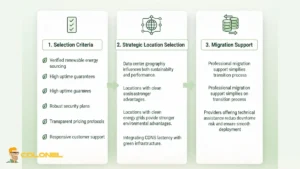
- Selection Criteria: Important evaluation factors include:
- Verified renewable energy sourcing.
- High uptime guarantees.
- Scalable hosting plans.
- Robust security protocols.
- Transparent pricing models.
- Responsive customer support.
- Strategic Location Selection: Data center geography influences both sustainability and performance. Locations with clean energy grids provide stronger environmental advantages. Additionally, integrating CDNs reduces latency while maintaining centralized green infrastructure.
- Migration Support: Professional migration support simplifies the transition process. Providers offering technical assistance reduce downtime risk and ensure smooth deployment.
Wrapping Up
Green web hosting allows businesses to align digital operations with sustainability objectives while maintaining speed, reliability, and scalability. As environmental accountability becomes increasingly important, adopting green hosting strengthens both corporate responsibility and competitive positioning.
Transitioning to green web hosting reduces long-term operational risk, improves brand perception, and supports global carbon reduction efforts. Sustainable digital infrastructure is no longer a niche strategy but a forward-looking business standard.
Frequently Asked Questions About Green Web Hosting
How does green web hosting work?
Green web hosting uses renewable energy sources, efficient hardware, and carbon offset initiatives to reduce emissions while maintaining high performance.
Is eco-friendly hosting reliable?
Yes. Modern green hosting environments deliver comparable uptime and speed to traditional hosting systems.
Does green hosting increase costs?
Initial pricing may vary, but long-term operational savings and efficiency gains often balance the investment.
How can sustainability claims be verified?
Review recognized certifications, third-party audits, and transparent sustainability reports.
Why should businesses switch to green hosting?
It reduces carbon footprint, strengthens brand credibility, supports regulatory compliance, and enhances long-term operational efficiency.