
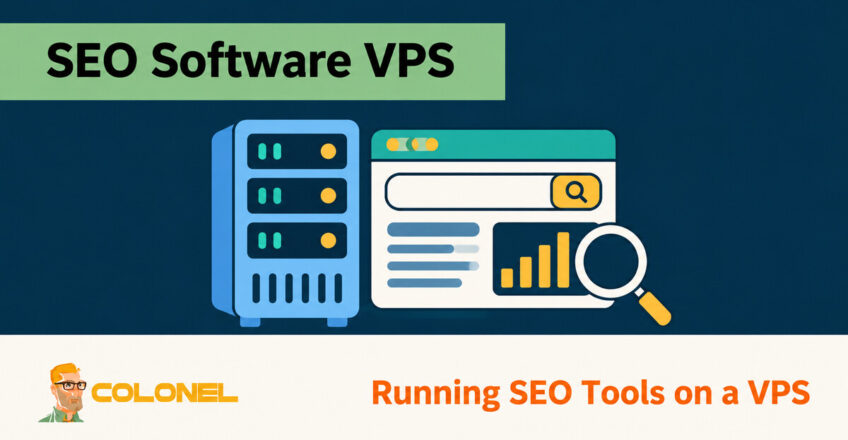
Why SEO Software Often Outgrows Shared Hosting
Many SEO applications require significantly more resources and flexibility than a typical shared hosting account can provide. As websites grow and SEO campaigns become more complex, tools used for crawling, auditing, rank tracking, automation, and data collection often demand dedicated processing power, additional memory, and unrestricted software installation.
A Virtual Private Server (VPS) provides an isolated operating environment with allocated resources. CPU time, storage I/O and networking may be shared, depending on the plan. It can suit teams running SEO software regularly when its capacity matches the workload.
Why a VPS Works Well for SEO Applications
A VPS removes many of the limitations commonly found in shared hosting environments and provides the freedom to configure the system according to your specific SEO workflow.
1. Dedicated Resources for Resource-Intensive Tasks
SEO software frequently performs operations that consume significant CPU and memory resources.
Examples include:
- Large-scale website crawls
- Technical SEO audits
- Keyword tracking
- Backlink analysis
- Automated reporting
- Browser-based automation
A VPS has defined resource allocations, but virtual CPU access is not necessarily backed by exclusive physical cores. Confirm dedicated or shared CPU terms and any sustained-use limits.

WordPress Web Hosting
Starting From $3.99/Monthly
Benefits include:
- Consistent performance
- Faster processing times
- Better multitasking capability
- Improved stability during heavy workloads
This becomes particularly important when running multiple SEO projects simultaneously.
2. Complete Administrative Control
Unlike shared hosting, a VPS provides administrator-level access to the operating system.
This allows you to:
- Install custom software
- Configure server settings
- Create automation workflows
- Adjust resource limits
- Schedule recurring tasks
- Configure advanced networking options
Having complete control makes it easier to optimize the environment for specific SEO requirements.
3. Broad Software Compatibility
Many SEO tools require specific operating systems, libraries, frameworks, or software packages that are not available on standard hosting platforms.
Cheap VPS Server
Starting From $2.99/Monthly
A VPS allows you to select the environment that best fits your software requirements.
Depending on your setup, you can:
- Deploy Windows-based SEO tools
- Install Linux-based automation platforms
- Run custom scripts
- Configure browser automation environments
- Build specialized data collection systems
This flexibility makes a VPS suitable for both commercial SEO platforms and custom-developed solutions.
4. Scalability for Growing SEO Projects
SEO campaigns often expand over time.
You may start with a few websites and later manage dozens or hundreds of domains. As workloads increase, additional resources become necessary.
A VPS typically allows you to upgrade:
Windows VPS Hosting
Remote Access & Full Admin
- CPU cores
- Memory allocation
- Storage capacity
- Network bandwidth
This scalability makes it possible to expand without migrating to an entirely new hosting platform.
5. Flexible IP Management
Certain SEO workflows require greater control over network configuration and IP allocation.
A VPS can support:
- Dedicated IP addresses
- Multiple IP assignments
- Geographic IP selection
- Reverse proxy configurations
- Containerized environments
For agencies managing multiple projects, separate environments can help maintain organizational structure and operational flexibility.
6. Improved Security and Isolation
Shared hosting environments place multiple customers on the same operating system environment.
A VPS provides isolated resources and independent operating system access.
Security benefits include:
- Operating system isolation
- Custom firewall configuration
- Access control management
- Intrusion prevention tools
- Security monitoring solutions
This isolation reduces risks associated with shared hosting environments while providing greater control over server security.
Selecting the Right VPS for SEO Software
Choosing the appropriate VPS depends largely on the applications you intend to run and the size of your workload.
Linux or Windows VPS?
Choose a Linux VPS for compatible command-line crawlers and custom scripts, or a Windows VPS when your licensed desktop application requires Windows.
The operating system should match the software requirements of your SEO tools.
Linux VPS
Linux is commonly chosen for:
- Python automation
- Web scraping projects
- API integrations
- Scheduled scripts
- Server-side SEO platforms
- Database-driven applications
Linux environments are often preferred for custom development and automation tasks.
Windows VPS
Windows is frequently selected for desktop-based SEO applications that require a graphical user interface.
Common examples include:
- SEO PowerSuite
- Scrapebox
- Browser automation tools
- Desktop auditing software
Remote Desktop can provide remote administration; restrict access through a secure gateway or VPN and appropriate authentication rather than exposing it openly.
Recommended VPS Specifications
The figures below are starting examples. Check each application’s current requirements and license terms, then measure representative crawl sizes and concurrent browser sessions. Hosting alone does not improve search rankings.
Memory (RAM)
- 4 GB RAM for lightweight SEO tasks
- 8 GB RAM or more for larger audits and automation
- Additional memory for running multiple applications simultaneously
CPU Resources
Multiple CPU cores improve performance for:
- Crawling large websites
- Processing reports
- Running concurrent tasks
- Browser automation
Two to four cores are often sufficient for small and medium workloads, while larger operations may require additional processing power.
Storage
SSD storage significantly improves performance when handling:
- Crawl databases
- Report archives
- Log files
- Analytics data
Storage requirements vary depending on project size and data retention policies.
Bandwidth
Projects involving extensive crawling, API requests, or data collection should prioritize generous bandwidth allocations and stable network performance.
Managed vs Self-Managed VPS
Another important decision is choosing between managed and self-managed hosting.
Managed VPS
A managed VPS includes assistance with:
- Operating system updates
- Security patching
- Monitoring
- Troubleshooting
- Infrastructure maintenance
This option is often preferred by businesses that want to focus on SEO operations rather than server administration.
Self-Managed VPS
A self-managed VPS provides full control but requires technical expertise.
Users are responsible for:
- Server configuration
- Security management
- Software updates
- Performance optimization
- Troubleshooting
This option is popular among developers and experienced administrators.
Importance of Uptime and Support
SEO software frequently runs automated processes around the clock.
Reliable hosting infrastructure should provide:
- High availability
- Consistent network performance
- Responsive technical support
- Strong service reliability
Downtime can interrupt crawls, data collection, reporting, and scheduled automation tasks.
Popular SEO Software That Can Run on a VPS
A VPS can support a wide variety of SEO platforms and utilities.
Common examples include:
Technical SEO Tools
- Screaming Frog SEO Spider
- Site auditing applications
- Website monitoring systems
Ranking and Backlink Tools
- SEO PowerSuite
- Rank tracking platforms
- Backlink monitoring software
Data Collection and Automation
- Browser automation frameworks
- Web scraping tools
- Custom crawlers
- API integrations
Custom SEO Development
Developers can build and deploy their own SEO solutions using technologies such as:
- Python
- PHP
- JavaScript
- Node.js
- Laravel
- Django
A VPS provides the infrastructure required to support these applications in both development and production environments.
Building Your Own SEO Platform on a VPS
A VPS can serve as more than just a place to run third-party software. It can also host custom SEO platforms, internal dashboards, automation systems, and client-facing applications.
Common deployments include:
- SEO reporting portals
- Website auditing platforms
- Data aggregation systems
- Keyword monitoring services
- Custom analytics dashboards
- SaaS-based SEO applications
With support for databases, APIs, containerization, and modern development frameworks, a VPS provides the flexibility needed to build scalable SEO solutions.
Is a VPS Worth It for SEO?
For professionals who rely on SEO software regularly, a VPS often provides the performance, flexibility, and reliability needed to operate efficiently. Dedicated resources, administrative control, software compatibility, and scalability make VPS hosting a practical choice for agencies, consultants, developers, and businesses running advanced SEO workloads.
Whether you are managing technical audits, building automation systems, tracking rankings, or developing your own SEO platform, a VPS provides an environment capable of supporting both current requirements and future growth.