


Domain-Portfoliomanagement ist der systematische Ansatz Erkennung von Domainnamen, Anmeldung, Schutz, Organisation, Bewertung, und Ruhestand. Dabei handelt es sich um den Prozess, eine Sammlung von Domainnamen in eine sichere und wertvolle Geschäftsinfrastruktur umzuwandeln.
Das Domain-Portfoliomanagement in einem Geschäftsumfeld hat einen direkten Einfluss auf den Markenschutz, Dominanz bei der Suchmaschinenoptimierung, Cybersicherheit, Flexibilität im Marketing, und Unternehmensbewertung. Die Verwaltung einer Domain ist einfach. Die Verwaltung von 500 oder 500 Stück ohne strategische Aufsicht führt zu finanziellen Verlusten, Erneuerungsrisiken, und Sicherheitsrisiko. In diesem Leitfaden wird erklärt, wie Sie ein diszipliniertes und zukunftsfähiges Domain-Portfolio-Management-Framework aufbauen.
Was ist Domain-Portfolio-Management??
Das Domänenportfoliomanagement ist das Governance-System, das definiert, wie eine Organisation erwirbt, sichert, klassifiziert, erneuert, Weiterleitungen, Prüfungen, und bewertet seine Domain-Assets. Es schafft Klarheit über die Eigentumsverhältnisse, technische Kontrollen, und finanzielle Verantwortung im gesamten Domain-Ökosystem. Es beantwortet kritische betriebliche Fragen:
- Wer genehmigt Domainkäufe??
- Welche TLDs sind strategisch??
- Wie werden Weiterleitungen implementiert??
- Wer kontrolliert DNS-Änderungen??
- Wie wird das Verlängerungsrisiko überwacht??
Ohne dokumentierte Regeln, Eine Ausbreitung der Domänen wird unvermeidlich. Ein strukturierter Rahmen umfasst normalerweise::
- Klare Registrierungsrichtlinien und Auswahlregeln für Erweiterungen
- Definierte Genehmigungsworkflows für Akquisitionen
- Zentralisierte Registrarverwaltung
- Sicherheitsstandards wie Registrarsperren und DNSSEC
- Lebenszyklusverfolgung von der Anschaffung bis zur Pensionierung
- Budgetzuteilung an Geschäftsziele gebunden
Bei richtiger Umsetzung, Das Domain-Portfoliomanagement richtet die Governance aus, Risikominderung, Suchleistung, und kommerziellen Wert.


WordPress-Webhosting
Ab 3,99 $/Monat
Warum Domain-Portfoliomanagement für wachsende Unternehmen unerlässlich ist?
Das Domain-Portfoliomanagement schützt den Markenwert, reduziert Betriebsabfälle, und unterstützt die strategische Expansion. Organisationen, die überregional tätig sind, Marken, und Kampagnen erfordern eine disziplinierte Aufsicht, um Fragmentierung und Risikoexposition zu verhindern.
Ohne Domain-Portfolio-Management, Es kommt zu Verlängerungsfehlern, Doppelte Registrierungen erhöhen die Kosten, Phishing-Risiken nehmen zu, und die SEO-Autorität wird über getrennte Assets hinweg verwässert. Strukturiertes Management verwandelt Domänen in messbare Geschäftsinstrumente statt in unkontrollierte Verbindlichkeiten. Nachfolgend sind die wichtigsten Geschäftstreiber aufgeführt.
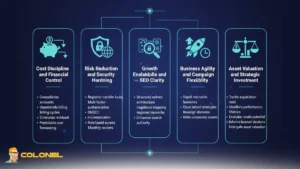
Kostendisziplin und Finanzkontrolle
Unkontrollierter Domainkauf führt zu doppelten Registrierungen über mehrere Erweiterungen hinweg, verstreute Rechnungskonten, und ungenutzte Domains, bei denen Verlängerungskosten anfallen. Finanzteams entdecken unnötige Ausgaben oft erst, wenn die Budgets eskalieren.
Zentralisiertes Domain-Portfolio-Management konsolidiert Registrarkonten, standardisiert Abrechnungszyklen, ermöglicht mehrjährige Verlängerungen für geschäftskritische Domänen, und eliminiert redundante Registrierungen. Im Laufe der Zeit, Dies führt zu vorhersehbaren Kostenprognosen und einer verbesserten Hebelwirkung bei der Tarifverhandlung.
Eine disziplinierte Bestandsaufnahme verdeutlicht zudem, welche Domains Traffic generieren, Einnahmen, oder defensiver Wert, Ermöglicht datengesteuerte Entscheidungen über Erneuerungen, konsolidieren, oder Desinvestitionsmaßnahmen.
Risikominderung und Sicherheitshärtung
Cyber-Bedrohungen nutzen eine schwache Domain-Governance aus. Abgelaufene Domains können von Angreifern erneut registriert werden. Nicht autorisierte DNS-Änderungen können den Datenverkehr umleiten. Lookalike-Domains können Phishing-Kampagnen ermöglichen.

Günstiger VPS-Server
Ab 2,99 $/Monat
Das Domain-Portfoliomanagement mindert diese Risiken durch mehrschichtige Kontrollen wie z:
- Registrar-Übertragungssperren
- Durchsetzung der Multi-Faktor-Authentifizierung
- DNSSEC-Implementierung
- Rollenbasierte Zugriffstrennung
- Monatliche Überprüfung des Aktivitätsprotokolls
Wenn Sicherheitsrichtlinien in das Portfolio-Framework eingebettet sind, Das Risiko von Domain-Hijacking und DNS-Poisoning nimmt deutlich ab.
Wachstumsförderung und SEO-Klarheit
Ein fragmentiertes Domain-Ökosystem schwächt die Suchautorität. Das Starten von Microsites auf separaten Root-Domains ohne strategische Zuordnung führt zu einer Streuung des Backlink-Equity und verwirrt Suchmaschinen.
Das Domain-Portfoliomanagement festigt die SEO-Stärke durch:
- Verwendung einer strukturierten Weiterleitungsarchitektur
- Absichtliche Zuordnung regionaler Domänen
- Wahrung der kanonischen Hierarchie
- Vermeidung unnötiger Domänenwucherung
Wenn länderspezifische ccTLDs gezielt verwendet und durch strukturierte Hreflang- und Lokalisierungssignale unterstützt werden, Das Domain-Portfolio-Management stärkt das regionale Vertrauen, ohne die Root-Autorität zu opfern.
Geschäftsagilität und Kampagnenflexibilität
Marketingteams starten häufig Kampagnen-Microsites, Landingpages, oder produktspezifische Domänen. Ohne Aufsicht, temporäre Vermögenswerte werden zu dauerhaften Kostenbelastungen.
Windows VPS-Hosting
Remote Access & Full Admin
Eine dokumentierte Domänenlebenszyklusrichtlinie ermöglicht es Teams:
- Starten Sie schnell konforme Microsites
- Wenden Sie nach Abschluss der Kampagne saubere Weiterleitungsstrategien an
- Weisen Sie Domänen für die zukünftige Verwendung neu zu
- Entsorgen Sie unnötige Vermögenswerte systematisch
Die Agilität verbessert sich, wenn Bestandstransparenz besteht.
Vermögensbewertung und strategische Investitionen
Domains sind immaterielle Vermögenswerte mit messbarem Wert. Verkehr, Backlink-Profil, Keyword-Stärke, Wiederverkaufspotenzial, und Markenausrichtung beeinflussen ihren Wert. Nach Angaben der Weltorganisation für geistiges Eigentum (WIPO):
„Domainnamen sind wertvolle geistige Eigentumswerte, die die Marke und Marktpräsenz eines Unternehmens erheblich beeinflussen können.“
Das Domain-Portfoliomanagement verfolgt die Anschaffungskosten, Erneuerungsausgaben, Leistungskennzahlen, und Wiederverkaufsindikatoren. Dadurch können Finanz- und Führungsteams beurteilen, ob sie halten sollten, entwickeln, verkaufen, oder Konsolidierung von Domainbeständen.
Eine klare Bewertungsverfolgung verwandelt Domänen vom technischen Overhead in Finanzinstrumente.
Verantwortlichkeit aller Beteiligten
Verlängerungsfehler treten häufig aufgrund unklarer Eigentumsverhältnisse auf. Technische Kontakte ändern sich. Rechnungs-E-Mails laufen ab. Zugangsdaten bleiben undokumentiert. (Kasse E-Mail-Hosting für Unternehmen)
Das Domain-Portfoliomanagement standardisiert die Informationen des Registranten, Abrechnungskontakte, und technisches Eigentum. Dies beseitigt Unklarheiten und gewährleistet Kontinuität bei organisatorischen Übergängen, Fusionen, oder Infrastrukturmigrationen.
Kernstrategien für ein effektives Domain-Portfoliomanagement
Für ein erfolgreiches Domain-Portfoliomanagement ist eine operative Struktur erforderlich. Das folgende Framework gewährleistet Skalierbarkeit und Risikokontrolle.
Schaffen Sie eine einzige Quelle der Wahrheit
Ein Master-Inventar ist die Grundlage des Domain-Portfolio-Managements. Es zentralisiert die Sichtbarkeit und eliminiert Rätselraten.
Vor der Implementierung der Automatisierung, Organisationen müssen jede Domäne mit den folgenden Attributen dokumentieren:
- Domainname
- Geschäftsinhaber
- Funktioneller Zweck
- Registrator
- DNS-Anbieter
- Nameserver
- Verlängerungsdatum
- Status der automatischen Verlängerung
- Sperrstatus
- Rechnungskontakt
- Hinweise zu Weiterleitungen oder Kampagnen
Dieses Inventar muss nach jeder Änderung unverzüglich aktualisiert werden. Ohne eine verlässliche Quelle der Wahrheit, Die Automatisierung kann nicht richtig funktionieren.
Erstellen Sie Benennungs- und Erweiterungs-Governance-Regeln
Die Ausbreitung von Erweiterungen verringert die Übersichtlichkeit. Unternehmen müssen definieren, welche TLDs zur Markenstrategie passen und welche vermieden werden sollten. Ein praktisches Governance-Dokument definiert typischerweise:
- Kernstrategie für globale Domänen, wie zum Beispiel .com als primär
- Genehmigte ccTLD-Nutzung basierend auf Marktpräsenz
- Regeln für defensive Registrierungen
- Bedingungen für die Verwendung von Subdomains anstelle neuer Root-Domains
- Verbotene Benennungsmuster
Dies verhindert inkonsistente Akquisitionen und bewahrt die Markenkohärenz.
Zentralisieren Sie Einkaufs- und Abrechnungsvorgänge
Fragmentierte Registrarkonten erhöhen das Verlängerungsrisiko und erschweren die Finanzprüfung. Das Domain-Portfoliomanagement zentralisiert den Erwerb über ein primäres Registrarkonto mit rollenbasierten Berechtigungen. Hier sind die wichtigsten Vorteile:
- Konsolidierte Rechnungsstellung
- Mehrjährige Verlängerungsoptionen
- Reduzierter versehentlicher Ablauf
- Einfachere Compliance-Nachverfolgung
- Funktionen zur Massenverwaltung
Durch die Zentralisierung wird die Flexibilität nicht beseitigt. Es formalisiert einfach die Kontrolle.
Implementieren Sie standardmäßige Sicherheit
Sicherheit sollte nicht auf manueller Disziplin beruhen. Das Domänenportfoliomanagement bettet Schutzmechanismen als Standardkonfigurationen ein. Zu den Standard-Basisrichtlinien gehören::
- Obligatorische Multi-Faktor-Authentifizierung
- Aktivierung der Client-Übertragungssperre (Domain übertragen)
- DNSSEC-Implementierung für primäre Domänen
- Trennung zwischen Registranten und DNS-Editoren
- Monatliche Zugriffsüberprüfungen
Dieser Ansatz, bei dem die Sicherheit an erster Stelle steht, verringert die Abhängigkeit von der Wachsamkeit des Einzelnen.
Erweiterte Optimierung im Domain-Portfolio-Management
Die erweiterte Optimierung im Domain-Portfolio-Management konzentriert sich auf die Beseitigung struktureller Ineffizienzen und die Steigerung des messbaren Werts im gesamten Portfolio. In diesem Stadium, Das Ziel ist nicht die Kontrolle, aber Verfeinerung. Jede Domäne muss ihre Existenz durch Leistung rechtfertigen, Schutz, oder strategische Positionierung.
Die Optimierung erfordert eine Segmentierung statt einer Massenentscheidung. Anstatt das Portfolio als eine Einheit zu behandeln, Domänen sollten nach Funktion und messbarer Wirkung kategorisiert werden. Dies verhindert eine Überkonsolidierung und schützt Vermögenswerte, die einen indirekten Wert bieten, wie zum Beispiel Markenverteidigung.
- Funktionales Segmentierungsmodell: Ein praktisches Optimierungsmodell unterteilt Domänen in vier Betriebskategorien:
- Kernmarkendomänen: Diese stellen die primäre Markenidentität dar und müssen stabil bleiben, geschützt, und langfristig registriert. (Domain registrieren)
- Markterweiterungsdomänen: Länder- oder regionalspezifische Domänen, die geografische Vertrauenssignale unterstützen und lokalisiert sind SEO.
- Kampagnen- und taktische Domänen: Kurz- bis hin zu mittelfristigen Vermögenswerten im Zusammenhang mit Marketinginitiativen, die nach Abschluss der Kampagne eine Lebenszyklusbewertung erfordern.
- Strategische Reservedomänen: Defensive oder zukunftsorientierte Domänen, die zum Schutz oder zur potenziellen Entwicklung gehalten werden.
Diese Klassifizierung ermöglicht es dem Domain-Portfoliomanagement, von der reaktiven Beschneidung zur strategischen Neuzuweisung überzugehen.

Governance des Zertifikatslebenszyklus
Zertifikatsverwaltung innerhalb des Domänenportfolios ,Die Verwaltung muss proaktiv und mit der Domänenüberwachung synchronisiert sein. SSL Eine Fehlausrichtung ist häufig eine versteckte Betriebsschwachstelle, da die Ablaufzyklen verschiedener Zertifikate unterschiedlich sind.
Anstatt Zertifikate selbstständig zu verwalten, Unternehmen sollten jeden SSL-Eintrag direkt dem zugehörigen Domäneninventar zuordnen. Dieser integrierte Ansatz stellt sicher, dass keine aktive Domäne ohne Verschlüsselungsabdeckung ist und keine veraltete Domäne über unnötige Zertifikate verfügt.
Risikozuordnung von Zertifikaten
Anstatt operative Schritte aufzulisten, Organisationen profitieren von der Risikostufenzuordnung:
| Stufe | Domänentyp | Zertifikatsstrategie |
| Stufe 1 | Primäre Markendomänen | Mehrjähriges Zertifikat mit Überwachung |
| Stufe 2 | Regionale Domänen | Jährliche Verlängerung mit Alarmredundanz |
| Stufe 3 | Kampagnendomänen | Auf den Lebenszyklus abgestimmtes Kurzzeitzertifikat |
Diese Zuordnung reduziert blinde Flecken und richtet die Zertifikatskosten an der strategischen Bedeutung aus.
Automatisierung ohne strukturelle Abhängigkeit
Automatisierung stärkt das Domain-Portfoliomanagement nur dann, wenn zuerst Governance vorhanden ist. Werkzeuge können fehlende Eigentumsklarheit oder unvollständige Bestände nicht ausgleichen. Anstatt alles zu automatisieren, Konzentrieren Sie die Automatisierung auf Reibungspunkte:
- Verlängerungswarnungen über mehrere Eskalationsebenen hinweg
- Erkennung von DNS-Konfigurationsabweichungen
- Verfolgung unautorisierter Nameserver-Änderungen
- Markenähnlichkeitserkennung bei Neuzulassungen
Automatisierung sollte die menschliche Aufsicht unterstützen, anstatt sie zu beseitigen. Governance definiert Richtlinien. Automatisierung sorgt für Transparenz.

Ablaufstrategie: Verteidigungsarchitektur
Das Ablaufmanagement im Domain-Portfolio-Management sollte als mehrschichtiger Schutz und nicht als Kalenderverfolgung dienen. Sich ausschließlich auf die Erinnerungen des Registrars zu verlassen, birgt ein vermeidbares Risiko.
Eine belastbare Architektur beinhaltet finanzielle Redundanz, Kontaktredundanz, und Überwachung der Redundanz. Zahlungsmethoden sollten nicht von einer einzigen Karte abhängen. Benachrichtigungs-E-Mails sollten nicht an eine Abteilung weitergeleitet werden. Kritische Domänen sollten nicht auf jährliche Verlängerungen angewiesen sein, wenn ein mehrjähriger Schutz verfügbar ist.
Der Ablauf wird als Risikomodell und nicht als Verwaltungsaufgabe behandelt, Die Belastbarkeit verbessert sich deutlich.
Governance-Modell und abteilungsübergreifende Ausrichtung
Das Domain-Portfolio-Management überschneidet sich mit der Einhaltung gesetzlicher Vorschriften, Infrastruktursicherheit, finanzielle Verantwortung, und Markenstrategie. Ohne eine definierte Governance-Struktur, Jede Abteilung arbeitet unabhängig, zunehmende Reibung.
Statt einer starren Hierarchie, Eine Rechenschaftsmatrix ist effektiver.
Beispiel einer Verantwortungsmatrix
| Funktion | Haupteigentümer | Nebenrolle |
| Genehmigung der Domainregistrierung | Marketing | Legal |
| DNS-Verwaltung | ES | Sicherheit |
| Überwachung des Erneuerungsbudgets | Finanzen | ES |
| Überwachung des Markenschutzes | Legal | Sicherheit |
Diese Ausrichtung reduziert doppelte Registrierungen und verhindert unbefugte Domainkäufe.
Strategischer Akquisitionsrahmen
Der Erwerb neuer Domains sollte einer definierten Bewertungslogik folgen. Emotionale oder opportunistische Käufe schwächen die Disziplin des Domain-Portfoliomanagements.
Vor der Übernahme, Organisationen sollten bewerten:
- Langfristige Markenausrichtung
- Suchnachfrage und Keyword-Stärke
- Historische Domänenreputation
- Wettbewerbsfähige Verteidigungsnotwendigkeit
- Machbarkeit der Monetarisierung
Premium-Akquisitionen erfordern Backlink-Audits und eine Überprüfung der Strafhistorie. Eine strukturierte Bewertungscheckliste verhindert die Anhäufung geringwertiger Vermögenswerte.
Monetarisierung und Vermögensbewertung
Nicht alle Domains dienen betrieblichen Zwecken. Einige fungieren als Wertschätzung digitaler Vermögenswerte. Das Domain Portfolio Management muss zwischen aktiver Infrastruktur und Investmentbeteiligungen unterscheiden.
Die Bewertung hängt von mehreren Faktoren ab: semantische Klarheit, Einprägsamkeit, Backlink-Equity, kommerzielles Suchvolumen, und Branchenrelevanz. Jedoch, Das Halten spekulativer Domains ohne regelmäßige Bewertungsprüfung führt zu einer Inflation der Erneuerungskosten.
Eine halbjährliche Bewertungsüberprüfung stellt sicher, dass die Anlagelogik weiterhin datengesteuert und nicht annahmegesteuert bleibt.

Domain Health Auditing Framework
Die Gesundheitsprüfung im Domain Portfolio Management sollte zyklisch erfolgen und dokumentiert werden. Passives Monitoring ersetzt keine strukturierte Evaluation.
Ein umfassendes Audit überprüft die technische Konfiguration, Eigentumsgenauigkeit, Integrität umleiten, Zertifikatsausrichtung, und Verkehrsbeitrag. Weiterleitungsketten müssen auf ihre Effizienz getestet werden. Veraltete Kampagnendomänen müssen im Hinblick auf eine Konsolidierung oder Stilllegung geprüft werden.
Audits identifizieren auch „Geisterdomänen“ – Vermögenswerte, die weiterhin registriert sind, aber keine messbare Funktion bieten. Das Entfernen oder Umwidmen dieser Domänen reduziert den Kostenrausch innerhalb des Portfolios.
Abschluss
Domain Portfolio Management ist keine statische Registrierungsliste. Es handelt sich um eine sich weiterentwickelnde Governance-Disziplin, die den Markenschutz miteinander verbindet, Sicherheitsarchitektur, finanzielle Effizienz, und digitale Wachstumsstrategie.
Organisationen, die ihr Portfolio mit Segmentierungslogik strukturieren, mehrschichtiger Erneuerungsschutz, Zertifikatssynchronisierung, und Prüfzyklen verwandeln den Domänenbesitz in eine kontrollierte digitale Infrastruktur. Wer die strukturelle Governance vernachlässigt, akkumuliert stilles Betriebsrisiko.
In wettbewerbsorientierten digitalen Ökosystemen, Ein diszipliniertes Domain-Portfoliomanagement stärkt sowohl die Widerstandsfähigkeit als auch den langfristigen Vermögenswert.
Häufig gestellte Fragen zum Domain-Portfolio-Management
Was ist das Hauptziel des Domain-Portfolio-Managements??
Das Hauptziel des Domain-Portfoliomanagements ist die Zentralisierung der Governance, Risiko reduzieren, Kosten kontrollieren, und richten Sie Domain-Assets an der langfristigen Marken- und Wachstumsstrategie aus.
Wie oft sollte ein Domain-Portfolio geprüft werden??
Ein Domain-Portfolio sollte mindestens zweimal pro Jahr überprüft werden, Dabei werden hochwertige Domänen kontinuierlich auf Sicherheit überwacht, Ablauf, und DNS-Integrität.
Sollte jedes Unternehmen mehrere TLDs registrieren??
Nicht jedes Unternehmen benötigt eine umfassende TLD-Abdeckung. Das Domain-Portfoliomanagement sollte defensive Registrierungen mit dem Markenrisiko und den Plänen zur geografischen Expansion in Einklang bringen.
Ist Domain-Portfolio-Management nur für große Unternehmen?
Während große Unternehmen erheblich profitieren, wachsende Unternehmen mit mehreren Kampagnen, Regionen, oder Marken erfordern auch ein strukturiertes Domain-Portfoliomanagement, um Fragmentierung und Erneuerungsrisiken zu vermeiden.