
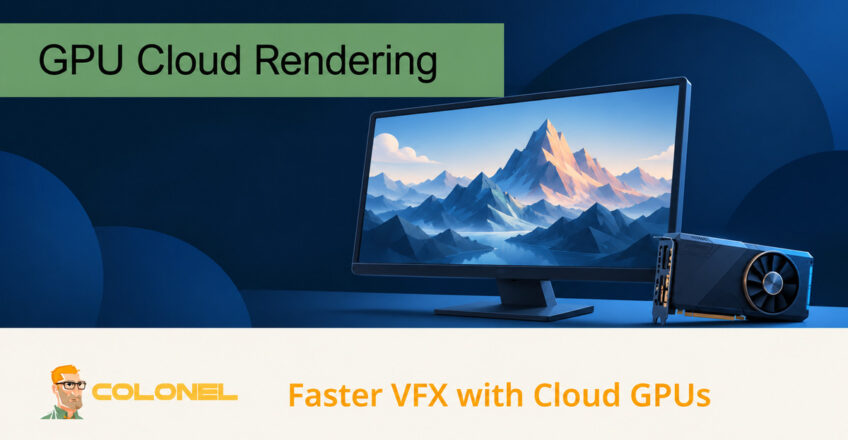
Warum moderne VFX-Workflows mehr Rechenleistung benötigen
Die Produktion visueller Effekte hat sich im letzten Jahrzehnt dramatisch weiterentwickelt. Studios erstellen jetzt hochdetaillierte digitale Umgebungen, realistische Simulationen, Erweiterte Charakteranimationen, und visuelle Effekte in Kinoqualität, die enorme Rechenressourcen erfordern.
Zu den heutigen Projekten gehören regelmäßig:
- Komplexer Rauch, Feuer, und Flüssigkeitssimulationen
- Physikalisch genaue Raytracing-Beleuchtung
- Hochauflösende Texturen und Assets
- Riesige Animationsszenen
- 4K, 8K, und immersive VR-Ergebnisse
- Virtuelle Produktionsumgebungen in Echtzeit
Mit zunehmender Projektkomplexität, Die Rendering-Anforderungen wachsen exponentiell. Selbst eine kurze Sequenz mit erweiterten Simulationen und fotorealistischer Beleuchtung kann Tausende von Renderstunden erfordern.
Herkömmliches Workstation-basiertes Rendering stellt oft einen großen Engpass dar, der Produktionspläne verlangsamt und die kreative Flexibilität einschränkt.
Herausforderungen der traditionellen Rendering-Infrastruktur
Viele Studios setzen zunächst auf lokale Workstations oder kleine Renderfarmen. Während dieser Ansatz für kleinere Projekte funktionieren kann, Es bringt mit zunehmender Produktionsskalierung mehrere Herausforderungen mit sich.
Hardware-Investition
Der Aufbau einer internen Rendering-Umgebung erfordert erhebliche Vorabinvestitionen:

WordPress-Webhosting
Ab 3,99 $/Monat
- Hochleistungs-Workstations
- Unternehmens-GPUs
- Speicherinfrastruktur
- Netzwerkausrüstung
- Kühlsysteme
- Stromverteilung
Auch Hardware veraltet schnell, da die GPU-Technologie immer weiter voranschreitet.
Limited Scalability
Die Produktionsauslastung bleibt während eines Projekts selten konstant.
Teams brauchen oft:
- Minimale Ressourcen bei der Planung
- Erhebliche Wiedergabekapazität während der Produktion
- Enorme Wiedergabeleistung bei der Endauslieferung
Herkömmliche Renderfarmen machen es schwierig, sich schnell an veränderte Anforderungen anzupassen.
Infrastructure Management
Die Aufrechterhaltung der Rendering-Infrastruktur erfordert eine kontinuierliche Verwaltung:
- Hardware failures
- Treiberaktualisierungen
- Betriebssysteme
- Speicherkapazität
- Kühlsysteme
- Security controls
Diese operativen Aufgaben verbrauchen wertvolle Zeit, die sonst für kreative Arbeit aufgewendet werden könnte.
Günstiger VPS-Server
Ab 2,99 $/Monat
Wie GPU-beschleunigtes Cloud-Rendering die VFX-Produktion verbessert
Moderne GPU-Technologie ist speziell für die parallelen Verarbeitungsaufgaben konzipiert, die häufig bei Rendering-Workloads auftreten.
Unlike CPUs, die sich auf eine kleinere Anzahl leistungsstarker Kerne konzentrieren, GPUs enthalten Tausende von Prozessorkernen, die in der Lage sind, eine große Anzahl von Berechnungen gleichzeitig durchzuführen.
Diese Architektur macht sie außerordentlich effektiv für die Produktion visueller Effekte.
Schnellere Rendering-Leistung
GPU-Rendering-Engines können die Rendering-Zeiten im Vergleich zu CPU-basierten Workflows drastisch verkürzen.
Zu den Vorteilen gehören::
- Schnellere Beleuchtungsberechnungen
- Beschleunigtes Raytracing
- Reduzierte Simulationsverarbeitungszeit
- Verbesserte Reaktionsfähigkeit des Ansichtsfensters
- Kürzere Lieferzeiten
Bei vielen Produktionen kommt es zu Verbesserungen der Rendering-Geschwindigkeit, die je nach Komplexität der Arbeitslast um ein Vielfaches bis zu Dutzenden Mal schneller gehen.
Windows VPS-Hosting
Fernzugriff und vollständige Verwaltung
Kreatives Feedback in Echtzeit
Einer der größten Vorteile des GPU-Renderings ist die Möglichkeit, Änderungen fast sofort zu erkennen.
Künstler können:
- Vorschau der Beleuchtungsanpassungen
- Bewerten Sie wesentliche Änderungen
- Kamerabewegungen testen
- Überprüfen Sie Animationsaktualisierungen
- Simulationen ändern
Dies ermöglicht eine schnellere Entscheidungsfindung und verbessert die kreative Iteration erheblich.
Verbesserte Produktionseffizienz
Wenn das Rendern nicht mehr zum Engpass wird, Teams können:
- Experimentieren Sie häufiger
- Entdecken Sie zusätzliche kreative Optionen
- Reduzieren Sie Genehmigungszyklen
- Beschleunigen Sie Kundenbewertungen
- Liefern Sie Projekte schneller
Das Ergebnis ist eine effizientere Produktionspipeline vom Konzept bis zur endgültigen Lieferung.
Vorteile des GPU-Server-Hostings für VFX
Dedizierte Hochleistungshardware
GPU-Server-Hosting bietet direkten Zugriff auf Hardware der Enterprise-Klasse, ohne dass Studios physische Systeme kaufen und warten müssen.
Zu den Vorteilen gehören:
- Dedizierte GPU-Ressourcen
- Konsistente Leistung
- Hohe Speicherkapazität
- Zuverlässigkeit auf Unternehmensniveau
- Professionelle Rechenzentrumsinfrastruktur
Im Vergleich zu gemeinsam genutzten GPU-Zuweisungen, dedizierte GPU-Server Reduzieren Sie die Konkurrenz um GPU-Ressourcen. Lagerung, Netzwerk- und Softwareengpässe können dennoch die Leistung beeinträchtigen.
Flexible Scalability
Die Rendering-Anforderungen können sich im Laufe der Produktion dramatisch ändern.
GPU-Hosting ermöglicht es Studios:
- Skalieren Sie Ressourcen bei Spitzenlasten
- Fügen Sie bei Bedarf zusätzliche Server hinzu
- Erweitern Sie schnell die Rendering-Kapazität
- Reduzieren Sie Ressourcen nach Projektabschluss
Diese Flexibilität ermöglicht es Unternehmen, die Infrastrukturkosten an die tatsächlichen Produktionsanforderungen anzupassen.
Reduzierter Kapitalaufwand
Anstatt viel in Hardware-Käufe zu investieren, Studios können Ressourcen dafür bereitstellen:
- Kreatives Talent
- Softwareentwicklung
- Produktionserweiterung
- Kundenakquise
GPU-Hosting verwandelt große Investitionsausgaben in vorhersehbare Betriebskosten.
Wichtige VFX-Workloads, die von GPU-Servern profitieren
3D Animation und Rendering
GPU-Server beschleunigen Rendering-Aufgaben in Anwendungen wie z. B. erheblich:
- Mixer
- Autodesk Maya
- Kino 4D
- Houdini
- 3ds Max
Künstler können mit komplexeren Szenen arbeiten und gleichzeitig reaktionsfähige Arbeitsabläufe beibehalten.
GPU-Rendering-Engines
Moderne Rendering-Plattformen sind stark für die GPU-Beschleunigung optimiert.
Zu den beliebten Lösungen gehören::
- Rotverschiebung
- OctaneRender
- Arnold-GPU
- Zyklen
- V-Ray-GPU
Diese Engines nutzen die GPU-Verarbeitung, um fotorealistische Ergebnisse mit wesentlich schnelleren Renderzeiten zu liefern.
Compositing und Finishing
Auch Compositing-Workflows profitieren von der GPU-Beschleunigung.
Aufgaben wie:
- Tiefes Compositing
- Bewegungsverfolgung
- Keying
- Farbkorrektur
- Mehrschichtiges Compositing
können mithilfe dedizierter GPU-Ressourcen effizienter durchgeführt werden.
Virtuelle Produktion
Die virtuelle Produktion hat sich zu einem der am schnellsten wachsenden Segmente der Branche für visuelle Effekte entwickelt.
GPU-gestützte Infrastruktur ermöglicht:
- Umgebungsrendering in Echtzeit
- LED-Wandproduktion
- Interaktive Beleuchtungssysteme
- Live-Kameraverfolgung
- Visualisierung virtueller Sets
Diese Arbeitsabläufe sind stark von der GPU-Leistung abhängig, um die Reaktionsfähigkeit in Echtzeit aufrechtzuerhalten.
KI-gestützte Postproduktions-Workflows
Künstliche Intelligenz wird schnell Teil moderner VFX-Pipelines.
GPU-Server stellen die Rechenressourcen bereit, die für KI-gestützte Aufgaben erforderlich sind, einschließlich:
Automatisiertes Rotoskopieren
KI-gestützte Maskierungstools reduzieren den manuellen Arbeitsaufwand erheblich und verbessern die Effizienz.
Frame-Interpolation
Fortschrittliche KI-Modelle generieren Zwischenbilder, um die Bewegungsglätte zu verbessern und die Produktion mit hoher Bildrate zu unterstützen.
Video-Upscaling
Algorithmen für maschinelles Lernen können Filmmaterial mit niedrigerer Auflösung für moderne Bereitstellungsstandards verbessern.
Inhaltsverbesserung
KI-Tools können dabei helfen:
- Objektentfernung
- Noise reduction
- Detailrekonstruktion
- Szenenanalyse
- Asset-Tagging
Die GPU-Infrastruktur ermöglicht einen effizienten Betrieb dieser Arbeitsabläufe im Produktionsmaßstab.
Auswahl des richtigen GPU-Servers für VFX
Die Auswahl der richtigen GPU-Infrastruktur hängt von den Arbeitslastanforderungen ab.
GPU-Speicher
Große Szenen erfordern eine erhebliche Speicherkapazität.
Zu den empfohlenen Konfigurationen gehören normalerweise::
- 24Mindestens GB VRAM
- 48GB VRAM bevorzugt für anspruchsvolle Workloads
- Höhere Kapazitäten für umfangreiche Simulationen und Renderings
Storage Performance
Schnelle Speicherung ist für medienintensive Arbeitsabläufe von entscheidender Bedeutung.
Suchen:
- NVMe-SSD-Speicher
- High IOPS performance
- Schnelles Laden von Assets
- Schneller Cache-Zugriff
Multi-GPU-Unterstützung
Viele Rendering-Engines können mehrere GPUs gleichzeitig nutzen.
Zu den Vorteilen gehören::
- Schnelleres Rendern des endgültigen Frames
- Beschleunigte Simulationen
- Verbesserte Stapelverarbeitung
- Größere Skalierbarkeit
Network Capacity
Große Produktionsdateien erfordern eine zuverlässige Konnektivität.
Priorisieren:
- Hochgeschwindigkeitsnetzwerk
- Large bandwidth allocations
- Schnelle Dateiübertragungen
- Verbindungen mit geringer Latenz
Wichtige Hosting-Funktionen für VFX Studios
Bei der Bewertung von GPU-Hosting-Anbietern, halten:
Dedizierte GPU-Server
Dedizierte Hardware gewährleistet:
- Vorhersehbare Leistung
- Volle Ressourcenverfügbarkeit
- Konsistente Rendering-Geschwindigkeiten
- Erhöhte Zuverlässigkeit
Flexible Abrechnung
Die Produktionsauslastung variiert im Laufe des Jahres.
Flexible monatliche Optionen helfen dabei, die Infrastrukturkosten an die Projektanforderungen anzupassen.
Pipeline-Kompatibilität
Die Hosting-Umgebung sollte in bestehende Arbeitsabläufe und Support integriert werden:
- Render-Manager
- Automatisierungssysteme
- Asset-Management-Plattformen
- Kundenspezifische Produktionspipelines
Security and Data Protection
Studios, die mit vertraulichen Projekten arbeiten, sollten diese bewerten:
- Sicherheit im Rechenzentrum
- Firewall management
- Zugangskontrollen
- Backup-Systeme
- Compliance-Standards
Beispiele aus der Praxis für GPU-Rendering-Workflows
Remote-Produktionsteams
Künstler, die von verschiedenen Standorten aus arbeiten, können auf eine zentrale GPU-Infrastruktur zugreifen und effizient an gemeinsamen Projekten zusammenarbeiten.
Hochauflösendes Rendering
Studios, die 4K- und 8K-Inhalte produzieren, können die Renderzeiten drastisch verkürzen und gleichzeitig die visuelle Qualität beibehalten.
KI-gestützte Postproduktion
Teams, die maschinelle Lerntools verwenden, können das Rendering beschleunigen, Erweiterung, und Workflows zur Inhaltsgenerierung.
Virtuelle Produktionspipelines
Echtzeit-Rendering-Umgebungen ermöglichen Regisseuren und Künstlern die Visualisierung von Szenen in Endqualität während der Produktion.
Erste Schritte mit GPU-gestütztem Cloud-Rendering
Die Anforderungen an die moderne Produktion visueller Effekte steigen immer weiter. Höhere Auflösungen, komplexere Simulationen, und KI-gestützte Arbeitsabläufe erfordern eine Infrastruktur, die mit den kreativen Ambitionen Schritt halten kann.
GPU-gestütztes Cloud-Rendering sorgt für die Leistung, Flexibilität, und Skalierbarkeit, die zur Unterstützung moderner Produktionspipelines erforderlich sind, ohne die betriebliche Belastung durch die Wartung physischer Renderfarmen.
Durch die Kombination dedizierter GPU-Hardware mit professioneller Hosting-Infrastruktur, Studios können das Rendern beschleunigen, die Zusammenarbeit verbessern, reduce costs, und mehr Ressourcen auf die Schaffung außergewöhnlicher visueller Erlebnisse konzentrieren.
Verwandte Dienstleistungen
- VPS-Server-Hosting: https://colonelserver.com/vps-server-hosting/
- Cloud-Server: https://colonelserver.com/cloud-servers/