
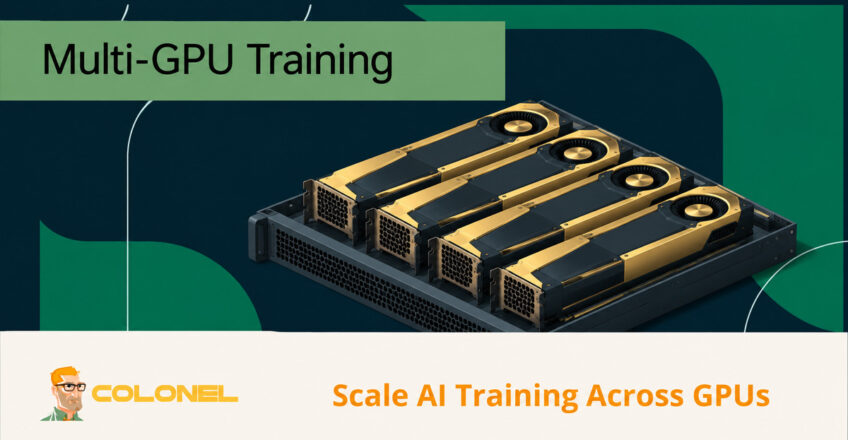
Warum Multi-GPU-Training unverzichtbar geworden ist
Da maschinelle Lernmodelle immer größer und komplexer werden, Für viele Schulungsaufgaben wird es immer weniger praktikabel, sich auf eine einzelne GPU zu verlassen. Moderne große Sprachmodelle, multimodale Systeme, Bilderzeugungsplattformen, und fortgeschrittene neuronale Netze erfordern erhebliche Rechenressourcen, die oft die Fähigkeiten einzelner GPUs übersteigen.
Ganz gleich, ob Sie ein großes Open-Source-Sprachmodell verfeinern, Schulung eines benutzerdefinierten Computer-Vision-Systems, oder ein Fundamentmodell von Grund auf erstellen, Die Verteilung von Arbeitslasten auf mehrere GPUs ist oft die einzig realistische Möglichkeit, akzeptable Trainingszeiten und Ressourcenauslastung zu erreichen.
Durch Multi-GPU-Schulungen können Unternehmen größere Datensätze verarbeiten, Erhöhen Sie die Chargengröße, Trainingsdauer verkürzen, und Speicherbeschränkungen überwinden, die andernfalls die Modellentwicklung einschränken würden.
Warum über mehrere GPUs skalieren??
Die zunehmende Größe moderner Modelle
Modelle der künstlichen Intelligenz sind in den letzten Jahren dramatisch gewachsen.
Modelle mit Milliarden von Parametern sind in verschiedenen Bereichen üblich geworden, einschließlich:
- Große Sprachmodelle
- Bilderzeugungssysteme
- Vision-Spracharchitekturen
- Empfehlungsmaschinen
- Wissenschaftliche Rechenmodelle
Das Training dieser Systeme erfordert oft Hunderte Gigabyte Speicher und enorme Mengen an Rechenleistung.

WordPress-Webhosting
Ab 3,99 $/Monat
Auch die Datensätze wurden erweitert. Trainingsdaten werden häufig in Terabytes oder sogar Petabytes gemessen, Effiziente Skalierung wird zu einer kritischen Anforderung und nicht zu einer optionalen Optimierung.
Einschränkungen einzelner GPUs
Selbst die leistungsstärksten modernen GPUs stoßen irgendwann an Hardware-Einschränkungen.
Zu den häufigsten Engpässen gehören::
Einschränkungen der Speicherkapazität
Der GPU-Speicher bestimmt die maximale Modellgröße und Stapelgröße, die effizient verarbeitet werden können.
Große Modelle übersteigen schnell den verfügbaren VRAM, Dies macht das Training mit einer einzelnen GPU in vielen Szenarien unmöglich.
Engpässe bei der Datenübertragung
Die Host-zu-Gerät-Kommunikation kann zu einer erheblichen Leistungseinschränkung werden, wenn während des Trainings kontinuierlich große Datensätze übertragen werden.
Günstiger VPS-Server
Ab 2,99 $/Monat
Eingeschränkte Parallelverarbeitung
Eine einzelne GPU kann zu einem bestimmten Zeitpunkt nur eine begrenzte Menge an Arbeit verarbeiten. Ohne Verteilung, Die Schulungszeiten können sich von Tagen auf Wochen oder sogar Monate erstrecken.
Für große Schulungsprojekte, Die horizontale Skalierung über mehrere GPUs hinweg bietet den praktischsten Weg nach vorne.
Multi-GPU-Skalierungsstrategien
Für die Verteilung von Arbeitslasten auf mehrere GPUs stehen mehrere Ansätze zur Verfügung. Die optimale Strategie hängt von der Modellgröße ab, Datensatzmerkmale, Speicherbedarf, und Infrastrukturdesign.
Datenparallelität
Datenparallelität ist eine der am weitesten verbreiteten Trainingsstrategien.
In diesem Ansatz:
- Jede GPU enthält eine vollständige Kopie des Modells
- Trainingsdaten werden auf GPUs verteilt
- Jedes Gerät verarbeitet einen Teil der Charge unabhängig
- Farbverläufe werden während des Trainings zwischen GPUs synchronisiert
Nach jedem Trainingsschritt, Gradienteninformationen werden mithilfe kollektiver Kommunikationsoperationen wie All-Reduce aggregiert.
Windows VPS-Hosting
Fernzugriff und vollständige Verwaltung
Vorteile
- Relativ einfache Implementierung
- Starke Framework-Unterstützung
- Hervorragende Skalierbarkeit für viele Workloads
- Effiziente Nutzung mehrerer GPUs
Herausforderungen
- Erfordert, dass das vollständige Modell in den Speicher jeder GPU passt
- Der Synchronisierungsaufwand steigt mit der Clustergröße
Ideale Anwendungsfälle
- Mittelgroße Sprachmodelle
- Computer-Vision-Workloads
- Große Datensätze mit überschaubaren Modellgrößen
Modellparallelität
Modellparallelität verteilt verschiedene Teile eines neuronalen Netzwerks auf mehrere GPUs.
Anstatt das Modell zu replizieren, Die Architektur selbst ist auf die Geräte aufgeteilt.
Beispiele hierfür sind:
- Layerbasierte Partitionierung
- Tensorparallelität
- Partitionierung auf Bedienerebene
Jede GPU ist für die Verarbeitung eines bestimmten Abschnitts des Netzwerks verantwortlich.
Vorteile
- Ermöglicht das Trainieren von Modellen, die größer sind als der Speicher einer einzelnen GPU
- Unterstützt extrem große Parameterzahlen
Herausforderungen
- Erhöhte Kommunikationskomplexität
- Schwierigeres Optimieren und Debuggen
- Sorgfältige Platzierungsentscheidungen erforderlich
Ideale Anwendungsfälle
- Große Sprachmodelle
- Foundation-Modelle
- Transformatorarchitekturen mit Milliarden von Parametern
Pipeline-Parallelität
Die Pipeline-Parallelität unterteilt ein Modell in mehrere aufeinanderfolgende Phasen.
Jede GPU verarbeitet eine bestimmte Phase, während sich Mikrobatches durch die Pipeline bewegen.
Anstatt darauf zu warten, dass eine ganze Charge fertig ist, GPUs arbeiten gleichzeitig an verschiedenen Teilen der Berechnung.
Vorteile
- Reduzierter Speicherbedarf
- Bessere Ausnutzung bei großen Modellen
- Unterstützt größere Schulungsarbeitslasten
Herausforderungen
- Blasen in der Pipeline können die Effizienz beeinträchtigen
- Der Lastausgleich wird kritisch
- Zusätzliche Planungskomplexität
Ideale Anwendungsfälle
- Große Transformatormodelle
- Umgebungen mit eingeschränktem Speicher
- Strukturierte sequentielle Architekturen
Hybride Parallelität
Die meisten modernen Trainingssysteme kombinieren mehrere Parallelisierungsmethoden.
Moderne Frameworks integrieren sich häufig:
- Datenparallelität
- Tensorparallelität
- Pipeline-Parallelität
Dieser hybride Ansatz ermöglicht es Unternehmen, sowohl die Modellgröße als auch den Trainingsdurchsatz gleichzeitig zu skalieren.
Beliebte Beispiele sind::
- Megatron-LM
- DeepSpeed
- MosaikML
- NVIDIA NeMo
Obwohl sehr effektiv, Hybridstrategien führen zu zusätzlicher Komplexität bei der Bereitstellung, Überwachung, und Fehlerbehebung.
Hardware-Überlegungen für Multi-GPU-Training
Der Erfolg einer Multi-GPU-Bereitstellung hängt stark von der Hardwarearchitektur und der Infrastrukturauswahl ab.
GPU-Verbindungstechnologien
Die Kommunikationsgeschwindigkeit zwischen GPUs hat einen großen Einfluss auf die Effizienz des verteilten Trainings.
PCIe
PCIe bleibt der am weitesten verbreitete Verbindungsstandard.
Zu den Vorteilen gehören:
- Breite Kompatibilität
- Niedrigere Bereitstellungskosten
- Große Verfügbarkeit
Jedoch, Die PCIe-Kommunikation kann bei stark verteilten Arbeitslasten zu einem Engpass werden.
NVLink
NVLink ist NVIDIAs Hochgeschwindigkeits-GPU-Verbindungstechnologie.
Zu den Vorteilen gehören::
- Direkter GPU-zu-GPU-Speicherzugriff
- Höhere Bandbreite als PCIe
- Geringere Kommunikationslatenz
NVLink kann kommunikationsintensives Training auf unterstützten GPUs und Plattformen verbessern. Überprüfen Sie das genaue GPU-Modell und die Servertopologie: Der L40S unterstützt NVLink nicht.
InfiniBand
InfiniBand wird häufig in großen KI-Clustern verwendet.
Zu den Vorteilen gehören:
- Extrem niedrige Latenz
- Extrem hoher Durchsatz
- Effiziente Kommunikation mit mehreren Knoten
Für verteiltes Training auf mehreren Servern, Vergleichen Sie InfiniBand mit geeigneten Ethernet/RoCE-Optionen im Hinblick auf die Kommunikationsanforderungen des Workloads.
Single-Node- oder Multi-Node-Architekturen
Single-Node-GPU-Server
Einzelknotensysteme enthalten typischerweise zwischen zwei und acht GPUs, die über PCIe oder NVLink verbunden sind.
Zu den Vorteilen gehören::
- Geringere Latenz
- Einfachere Bereitstellung
- Einfachere Verwaltung
- Starke Leistung für die meisten Trainingsaufgaben
Viele Organisationen finden das eine einzige GPU-Server mit hoher Dichte stellt ausreichend Ressourcen für ihre Arbeitsbelastung bereit.
GPU-Cluster mit mehreren Knoten
Umgebungen mit mehreren Knoten verbinden mehrere GPU-Server über Hochgeschwindigkeitsnetzwerke.
Zu den Vorteilen gehören::
- Massive Skalierbarkeit
- Unterstützung für extrem große Modelle
- Erweiterte Gesamtspeicherkapazität
Diese Architekturen werden häufig für groß angelegte Forschung verwendet, Entwicklung eines Fundamentmodells, und KI-Schulung für Unternehmen.
Auswahl der richtigen GPUs
Die GPU-Auswahl wirkt sich direkt auf die Trainingsleistung aus, Skalierbarkeit, und Betriebskosten.
NVIDIA H100
Der H100 ist ein KI-Beschleuniger, der für anspruchsvolle Trainings- und Inferenz-Workloads verwendet wird.
Zu den Hauptmerkmalen gehören::
- Transformer Engine-Unterstützung
- FP8-Beschleunigung
- Große Speicherkapazität
- NVLink 4 Unterstützung
- Außergewöhnliche KI-Leistung
H100-GPUs werden häufig für das Training großer Sprachmodelle und fortgeschrittene KI-Forschung verwendet.
NVIDIA L40S
Der L40S ist für konzipiert:
- KI-Schlussfolgerung
- Grafik-Workloads
- Visualisierung
- Gemischte KI- und Rendering-Umgebungen
Es bietet für viele Workloads ein attraktives Gleichgewicht zwischen Leistung und Kosten.
Anforderungen an Strom und Kühlung
Multi-GPU-Systeme erzeugen erhebliche Wärme und erfordern eine erhebliche elektrische Kapazität.
Eine moderne Hochleistungs-GPU kann verbrauchen:
- 300W
- 400W
- 500W
- 700W oder mehr
Mit mehreren Beschleunigern ausgestattete Server können leicht mehrere Kilowatt Leistung benötigen.
Zu den wichtigen Überlegungen zur Infrastruktur gehören::
- Redundante Stromversorgungssysteme
- Hocheffiziente Kühlung
- Optimierung des Rack-Luftstroms
- Flüssigkeitskühllösungen für dichte Einsätze
Das richtige Wärmemanagement ist für die Aufrechterhaltung einer stabilen Leistung und die Maximierung der Hardware-Lebensdauer unerlässlich.
Software-Frameworks für Multi-GPU-Training
Für eine effektive Skalierung sind Software-Frameworks erforderlich, die in der Lage sind, verteilte Arbeitslasten zu koordinieren.
PyTorch
PyTorch bietet umfangreiche verteilte Trainingsfunktionen:
- Fackel verteilt
- Fackellauf
- Vollständig geteilte Datenparallelität (FSDP)
Diese Tools unterstützen alles von kleinen Multi-GPU-Systemen bis hin zu großen Clustern.
TensorFlow
TensorFlow bietet native Unterstützung für verteiltes Training durch:
- Gespiegelte Strategie
- MultiWorkerMirroredStrategy
- Verteilte Ausführungs-APIs
JAX
JAX bietet hochgradig skalierbare Schulungen durch:
- pmap
- pjt
- xmap
- Verteilte Laufzeitunterstützung
Diese Tools sind besonders beliebt für anspruchsvolle Forschungsarbeiten.
Horovod
Horovod vereinfacht das verteilte Training über mehrere Frameworks hinweg und ist für leistungsstarke Kommunikation optimiert.
Umarmendes Gesicht beschleunigen
Accelerate bietet einen vereinfachten Ansatz für die Multi-GPU-Bereitstellung mit minimalen Codeänderungen.
Dies ist besonders nützlich für Teams, die transformatorbasierte Modelle verfeinern.
Planung und Orchestrierung
Während die Cluster wachsen, Die Workload-Orchestrierung wird immer wichtiger.
Slurm
Slurm bleibt einer der beliebtesten Workload-Manager in HPC- und KI-Umgebungen.
Zu den Fähigkeiten gehören:
- Auftragsplanung
- Ressourcenzuteilung
- Warteschlangenverwaltung
- Clusterüberwachung
Kubernetes
Containerisierte KI-Umgebungen basieren häufig auf Kubernetes.
Kombinierte Lösungen umfassen:
- Kubeflow
- Laufen:KI
- NVIDIA GPU-Operator
Diese Plattformen vereinfachen die Ressourcenverwaltung im gesamten Unternehmen GPU-Infrastrukturen.
Container
Containertechnologien verbessern die Portabilität und Konsistenz.
Zu den gängigen Optionen gehören::
- Docker
- Singularität
- Apptainer
Container tragen dazu bei, reproduzierbare Trainingsumgebungen über Entwicklungs- und Produktionssysteme hinweg sicherzustellen.
Checkpointing und Fehlertoleranz
Lang andauernde Trainingsjobs erfordern robuste Wiederherstellungsmechanismen.
Wichtige Praktiken umfassen:
- Häufige Checkpoint-Erstellung
- Verteilte Datensatzverwaltung
- Wiederaufnahme der Fähigkeit nach einer Unterbrechung
- Automatisierte Wiederherstellungsverfahren
Diese Funktionen sind besonders wichtig, wenn Trainingsjobs mehrere Tage oder Wochen dauern.
Best Practices zur Leistungsoptimierung
Optimierung der Chargengröße
Größere Chargengrößen verbessern häufig den Durchsatz, können jedoch die Konvergenzqualität beeinträchtigen.
Es ist entscheidend, das richtige Gleichgewicht zwischen Leistung und Modellgenauigkeit zu finden.
Gradientenakkumulation
Durch die Gradientenakkumulation können effektive Stapelgrößen erhöht werden, ohne dass zusätzlicher GPU-Speicher erforderlich ist.
Dieser Ansatz ist besonders nützlich, wenn der VRAM begrenzt ist.
Gemischtes Präzisionstraining
Gemischte Präzisionstechniken verbessern die Leistung und reduzieren gleichzeitig den Speicherverbrauch.
Zu den beliebten Formaten gehören:
- FP16
- BF16
- FP8
Moderne GPUs bieten eine erhebliche Beschleunigung für diese Präzisionsmodi.
Überwachung und Profilierung
Kontinuierliche Überwachung hilft, Ineffizienzen und Engpässe zu erkennen.
Zu den gängigen Werkzeugen gehören::
- NVIDIA Nsight
- TensorBoard
- PyTorch-Profiler
- nvidia-smi
Durch die Überwachung können Teams identifizieren:
- Kommunikationsengpässe
- Nicht ausgelastete GPUs
- Ineffiziente Kernel
- Verzögerungen beim Laden der Daten
Wann Sie auf einen dedizierten Multi-GPU-Server umsteigen sollten
Unternehmen erreichen häufig einen Punkt, an dem Systeme mit einer GPU nicht mehr ausreichen.
Zu den üblichen Indikatoren gehören::
- Modelle mit mehr verfügbarem VRAM
- Schulungsjobs, die mehrere Tage pro Epoche erfordern
- Zunehmende Arbeitsbelastung beim Experimentieren
- Mehrere gleichzeitige Trainingsjobs
- Notwendigkeit einer vollständigen Infrastrukturkontrolle
- Steigende Cloud-GPU-Kosten
Eine dedizierte Multi-GPU-Umgebung kann eine vorhersehbare Leistung bieten, größere Anpassungsflexibilität, und eine verbesserte langfristige Kosteneffizienz.
Auswahl eines Multi-GPU-Hosting-Anbieters
Die Auswahl des richtigen Infrastrukturpartners ist eine wichtige Entscheidung für KI-Teams.
Zu den wichtigsten Bewertungskriterien gehören::
Dedizierter GPU-Zugriff
Stellen Sie sicher, dass GPUs vollständig dediziert sind und nicht mit anderen Benutzern geteilt werden.
Hochgeschwindigkeitsverbindungen
Suchen Sie nach unterstützender Infrastruktur:
- NVLink
- PCIe Gen4 oder neuer
- InfiniBand-Netzwerk
Moderne GPU-Verfügbarkeit
Überprüfen Sie den Zugriff auf Beschleuniger der aktuellen Generation, die für Ihre Arbeitslasten geeignet sind.
Kühl- und Stromversorgungsinfrastruktur
Zuverlässige thermische und elektrische Systeme sind für eine nachhaltige KI-Arbeitsbelastung unerlässlich.
Infrastrukturflexibilität
Die Umgebung sollte unterstützen:
- Benutzerdefinierte Betriebssysteme
- CUDA-Anpassung
- Fahrerkontrolle
- Rahmenflexibilität
Technische Unterstützung
Reaktionsschnelle Supportteams können Ausfallzeiten und Bereitstellungsherausforderungen erheblich reduzieren.
Da KI-Modelle immer komplexer und umfangreicher werden, Multi-GPU-Architekturen sind zur Grundlage moderner Infrastruktur für maschinelles Lernen geworden. Durch die Kombination der richtigen Skalierungsstrategie, Hardware-Architektur, Netzwerktechnologien, und Software-Stack, Unternehmen können die Schulungseffizienz erheblich verbessern und sich gleichzeitig auf zukünftige Generationen immer anspruchsvollerer KI-Arbeitslasten vorbereiten.