

What Is a Subdomain? A practical guide to understanding how subdomains work and why they matter for modern websites. A subdomain is a separate section of your main domain that helps you organize content, create distinct site areas, or target different audiences without purchasing a new domain name. From blogs and online stores to support portals and localized versions of a site, subdomains offer flexibility in structure and branding. In diesem Ratgeber, we’ll explore how subdomains function, when to use them, and how they can impact your SEO strategy and overall website performance.
What Is a Subdomain and How Does It Work?
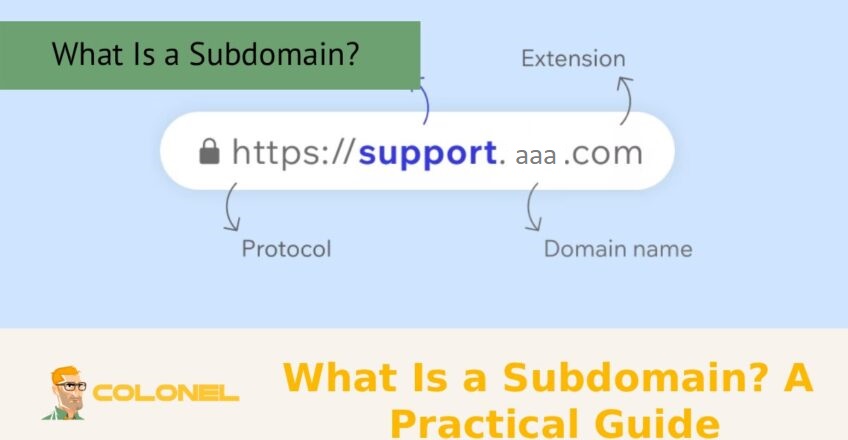
If you manage a website, at some point you will likely ask yourself: What Is a Subdomain and how can it help structure my content more effectively? A subdomain is a prefix added before your main domain name, separated by a dot. Zum Beispiel, in blog.example.com, “blog” is the subdomain, while “example.com” is the primary domain.
To properly understand What Is a Subdomain, you need to understand how DNS (Domain Name System) works. DNS translates human-readable domain names into IP addresses that servers can understand. When you create a subdomain, you essentially create a new DNS record that points to a specific directory, Server, or application.
Technically, a subdomain can:
- Point to a different directory within the same hosting account
- Connect to an entirely separate server
- Run a different CMS or application
- Operate under distinct configurations
When users type a subdomain into their browser, the DNS resolver checks the records and routes traffic accordingly. From a technical perspective, subdomains are treated as separate properties, even though they remain connected to the main domain.
Understanding What Is a Subdomain is critical because it affects site architecture, SEO structure, hosting configuration, and even security planning. Subdomains are not merely cosmetic; they influence how search engines interpret your content hierarchy.

WordPress-Webhosting
Ab 3,99 $/Monat

Subdomain vs Subdirectory: Wichtige Unterschiede erklärt
One of the most debated topics in web architecture is subdomain vs subdirectory. While both methods organize content, they function differently in technical and SEO contexts.
A subdirectory looks like:
example.com/blog
A subdomain looks like:
blog.example.com
Here’s a comparison table to clarify the differences:
| Besonderheit | Subdomain | Subdirectory |
|---|---|---|
| URL Structure | blog.example.com | example.com/blog |
| SEO Treatment | Often treated as separate site | Treated as part of main domain |
| Server Flexibility | Can be hosted separately | Same hosting environment |
| Authority Sharing | Partial or separate | Fully shared |
| Technical Complexity | Higher | Lower |
Search engines may treat subdomains as independent entities. That means ranking signals, backlinks, and authority might not automatically consolidate the same way they do with subdirectories.

Günstiger VPS-Server
Ab 2,99 $/Monat
This structural distinction becomes especially important when planning long-term SEO strategies.
Why Use a Subdomain for Your Website?
There are strategic reasons to implement subdomains. Businesses often use them to separate functions, manage scalability, or serve different geographic audiences.
Common reasons include:
- Hosting a blog on a separate platform
- Running an eCommerce store apart from the main site
- Creating country-specific versions (z.B., uk.example.com)
- Building a knowledge base or support portal
When analyzing What Is a Subdomain, it becomes clear that flexibility is the biggest advantage. Subdomains allow you to isolate projects without buying new domains.
For large enterprises, subdomains help manage complex ecosystems. For startups, they allow experimentation without affecting the primary site structure.


Windows VPS-Hosting
Remote Access & Full Admin
Common Examples of Subdomains in Action
To better understand What Is a Subdomain, consider real-world implementations:
- blog.company.com (content marketing section)
- shop.company.com (Online-Shop)
- support.company.com (help center)
- app.company.com (web application dashboard)
Major companies use subdomains extensively to manage services efficiently. Zum Beispiel, Google uses multiple subdomains to separate products and services.
Subdomains are also common in SaaS platforms where each customer receives a custom subdomain.
How to Create a Subdomain in cPanel
If you’re using cPanel, creating a subdomain is straightforward.
Follow these steps:
- Melden Sie sich bei Ihrem cPanel-Konto an
- Navigate to the “Domains” section
- Click on “Subdomains”
- Enter your desired prefix
- Choose the root directory
- Click “Create”
Once created, the system automatically updates DNS records.
Jedoch, technical configuration doesn’t stop there. You must also:
- Install SSL certificates
- Configure redirects if necessary
- Set up proper file permissions
For secure implementation, you may find it helpful to read the article Select HTTPS and Port 443: Secure Web Browsing Essentials, which explains encryption and secure port configuration in depth.

SEO Impact of Using a Subdomain
SEO is often the main concern when discussing What Is a Subdomain.
Search engines sometimes treat subdomains as independent websites. That means:
- Backlinks may not fully transfer authority
- Rankings are calculated separately
- Crawling budgets might differ
Jedoch, this can be beneficial. If you want a separate brand identity or distinct keyword targeting, a subdomain can help isolate ranking signals.
Here is a simplified SEO comparison:
| SEO Factor | Subdomain | Subdirectory |
|---|---|---|
| Authority Transfer | Beschränkt | Stark |
| Keyword Targeting | Isolated | Unified |
| Brand Separation | Stark | Weak |
| Crawl Management | Separate | Combined |
Google’s own documentation suggests that subdomains are acceptable when used properly.
Als Google states:
“Google web search is fine with using either subdomains or subdirectories.”
This quote reflects flexibility, but strategy determines effectiveness.

When Should You Choose a Subdomain?
You should consider a subdomain when:
- You need technical independence
- You plan to host on a different server
- You require separate analytics tracking
- You want to test a new business model
If you’re still asking What Is a Subdomain in strategic terms, the answer depends on growth plans. Subdomains are ideal for scaling large projects.
For small websites, Jedoch, subdirectories are often simpler.
Advantages and Disadvantages of Subdomains
Before implementing one, evaluate both sides.
Advantages:
- Better segmentation of content
- Separate branding opportunities
- Technical flexibility
- Easier server distribution
Disadvantages:
- SEO authority may not consolidate
- Additional SSL configuration required
- More complex DNS management
Understanding What Is a Subdomain means understanding trade-offs. There is no universal right answer—only contextual decisions.
Best Practices for Subdomain Structure
If you decide to use subdomains, follow best practices:
- Keep naming simple and logical
- Avoid keyword stuffing
- Maintain consistent branding
- Secure each subdomain with HTTPS
- Connect to Google Search Console separately
Architecture planning is critical. Poorly structured subdomains can dilute authority.
Technical management also matters. For deeper system understanding, Erwägen Sie das Lesen Ein praktischer Leitfaden für Linux-Dienste und -Daemon to better grasp server-level processes affecting web services.

Subdomain Security and Technical Considerations
Security should never be overlooked. Each subdomain may require:
- Separate SSL certificate installation
- Independent firewall rules
- Dedicated CMS updates
Misconfiguration can expose vulnerabilities. Many security breaches occur due to neglected subdomains. Proper HTTPS setup ensures encrypted communication. Port 443 configuration is especially important for secure browsing. DNS records must also be properly configured (A record, CNAME, usw.). Errors in DNS can cause downtime or misrouting.
How Subdomains Affect Website Authority
Authority is influenced by backlinks, Benutzerverhalten, and trust signals.
Subdomains can:
- Build independent authority
- Target niche audiences
- Strengthen topical relevance
- Jedoch, they may divide link equity.
If your main domain has strong authority, placing new content under a subdirectory might accelerate ranking. But if the content serves a completely different purpose, separation may be strategic.
Understanding What Is a Subdomain in SEO context means evaluating how search engines cluster signals.
Letzte Gedanken: Is a Subdomain Right for You?
In diesem Stadium, you should clearly understand What Is a Subdomain and how it functions technically and strategically.
Subdomains are powerful tools for structuring modern websites. They provide flexibility, Skalierbarkeit, and segmentation. Jedoch, they also require thoughtful SEO planning and proper security configuration.
If your project demands separation, Skalierbarkeit, or technical independence, a subdomain may be the right choice. If simplicity and authority consolidation are your priority, a subdirectory might serve you better.
The key is not simply knowing What Is a Subdomain, but knowing when and why to use one effectively.