
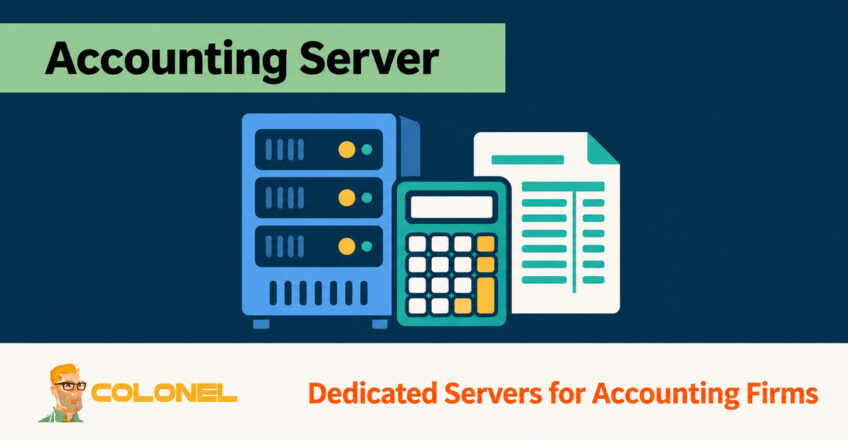
What Is a Dedicated Server for an Accounting Office?
Accounting firms manage highly sensitive financial information, tax records, payroll data, client documents, and compliance-related files. Because of these requirements, many firms eventually outgrow shared hosting, consumer cloud storage platforms, or standard office computers.
A dedicated server is a physical server exclusively allocated to a single business. Unlike shared hosting environments where resources are divided among multiple customers, a dedicated server provides complete access to all available CPU power, memory, storage, and networking resources.
For accounting firms, dedicated servers provide a configurable environment for applications, documents and remote access. Security depends on configuration, access control, maintenance and recovery practices, not the hosting model alone.
Dedicated servers can be deployed in two primary ways:
- On-premises within the accounting office.
- Hosted in a professional datacenter by a hosting provider.
Dedicated Server vs Shared Hosting vs Cloud Hosting
| Feature | Shared Hosting | Cloud Hosting | Dedicated Server |
|---|---|---|---|
| Performance | Shared resources | Flexible and scalable | Consistent high performance |
| Security | Depends on controls and provider | Good security options | Maximum control and isolation |
| Customization | Limited | Moderate | Complete customization |
| Compliance Support | Difficult | Possible | Requires validated controls |
| Resource Availability | Shared | Allocation varies by service | Fully dedicated |
| Software Flexibility | Limited | Moderate | Complete control |
Dedicated hosting offers physical compute isolation and administrative control. Compare the complete security design and service responsibilities across hosting options.
Why Accounting Firms Choose Dedicated Servers
As firms grow, they typically encounter challenges such as:

WordPress Web Hosting
Starting From $3.99/Monthly
- Slow software performance
- Large client databases
- Shared file access requirements
- Compliance obligations
- Security concerns
- Remote workforce management
A dedicated server addresses these issues by providing exclusive resources and centralized infrastructure.
Common Accounting Use Cases
Hosting Accounting Software
Many accounting firms rely on software platforms such as:
- QuickBooks Desktop
- Sage Accounting
- Drake Tax
- UltraTax
- Lacerte
- CCH ProSystem fx
Before centralizing an application, verify the vendor’s supported server OS, database mode, multi-user architecture and hosting license. Product editions and deployment rights vary; not every accounting application can be moved to an arbitrary hosted server.
Centralized Document Storage
Accounting firms process:
- Tax returns
- Financial statements
- Payroll records
- Client contracts
- Audit documentation
A dedicated server provides secure centralized storage and controlled access management.
Remote Employee Access
Dedicated servers allow staff to securely access:

Cheap VPS Server
Starting From $2.99/Monthly
- Accounting software
- Shared files
- Client records
- Internal applications
from any approved location.
Backup and Data Retention
A separate backup hosting service can provide an off-server destination. Restrict access, encrypt sensitive copies and test restoration of both application data and configuration.
Financial records often require long-term retention.
Dedicated servers support:
- Automated backups
- Offsite replication
- Data archiving
- Version control
Benefits of a Dedicated Server for Accounting Firms
Enhanced Data Security
Security is one of the primary reasons firms invest in dedicated infrastructure.
Advantages include:
Windows VPS Hosting
Remote Access & Full Admin
- Isolated environment
- Dedicated firewalls
- Custom security policies
- Encrypted storage
- Intrusion detection systems
Physical compute isolation removes some tenant-sharing risks, but exposed services, credentials and unpatched applications remain important attack paths.
Governance and Data-Handling Requirements
Identify the obligations that apply to the firm, its clients and the specific data being hosted. Document access controls, retention, backup recovery, incident handling and provider responsibilities. No server type or location alone establishes compliance; validate the required controls and contractual arrangements for the deployment.
Superior Application Performance
Accounting applications often process large datasets and multiple concurrent users.
Dedicated resources eliminate performance issues caused by neighboring users.
Benefits include:
- Faster database operations
- Reduced software lag
- Improved reporting speed
- Better multi-user performance
Full Administrative Control
Dedicated servers allow firms to customize:
- Operating systems
- User permissions
- Security settings
- Backup schedules
- Software installations
This flexibility enables firms to build infrastructure around their workflows rather than adapting workflows to infrastructure limitations.
Reliable Uptime
Accounting operations frequently depend on continuous access to client information.
Dedicated servers provide:
- Stable performance
- Predictable workloads
- Reduced service interruptions
Many enterprise hosting providers offer uptime guarantees exceeding 99.99%.
Better Remote Work Support
As hybrid work environments become more common, firms need secure remote access.
Dedicated servers can support:
- Remote Desktop Services
- VPN access
- Secure file sharing
- Multi-user accounting applications
with centrally managed access controls. Use a secure remote-access gateway or VPN, MFA where supported, and verify Windows/RDS and application licensing for the intended users.
Hardware Recommendations
Processor
Modern accounting environments benefit from enterprise-grade processors such as:
- Intel Xeon
- AMD EPYC
These CPUs provide excellent multi-user performance and reliability.
Memory
Recommended RAM:
- Small firms: 16 GB
- Growing firms: 32 GB
- Large firms: 64 GB or more
Additional memory improves responsiveness when multiple users are connected simultaneously.
Storage
Solid-state drives (SSD) are strongly recommended.
Benefits include:
- Faster file access
- Faster database operations
- Improved application responsiveness
NVMe SSD storage provides even higher performance.
RAID Protection
RAID configurations improve data redundancy.
Common choices include:
- RAID 1
- RAID 10
These configurations tolerate specified disk failures but do not protect against deletion, corruption or ransomware. Keep independent backups and test application-level restoration.
Security Features to Prioritize
Firewall Protection
Dedicated firewalls help control network access and reduce attack exposure.
Encryption
Sensitive accounting records should be protected using:
- Disk encryption
- Encrypted backups
- TLS-secured connections
Multi-Factor Authentication
Administrative accounts should always use multi-factor authentication to prevent unauthorized access.
DDoS Protection
DDoS mitigation helps maintain service availability during network attacks.
Access Control Policies
Role-based access allows employees to access only the information necessary for their responsibilities.
Managed vs Unmanaged Dedicated Servers
Review the scope of managed dedicated servers against your accounting software and internal IT responsibilities.
Managed Hosting
Managed dedicated servers include provider assistance for:
- Security updates
- Monitoring
- Backups
- Troubleshooting
- Operating system maintenance
Most accounting firms benefit significantly from managed hosting because it reduces internal IT workload.
Unmanaged Hosting
Unmanaged servers provide complete control but require technical expertise.
Responsibilities include:
- Security patching
- Monitoring
- Backup management
- Server administration
This option is typically best suited for firms with experienced IT personnel.
Potential Challenges
Higher Cost
Dedicated servers cost more than shared hosting or entry-level cloud services.
Expenses may include:
- Server rental
- Licensing
- Backup services
- Managed support
However, many firms consider these costs justified due to security and reliability improvements.
IT Expertise Requirements
Server management requires:
- Security knowledge
- Backup planning
- Software maintenance
Managed hosting can reduce this burden significantly.
Growth Planning
Dedicated servers are highly scalable, but upgrades generally require more planning than cloud-based environments.
Firms should anticipate future growth when selecting server specifications.
On-Premises vs Hosted Dedicated Servers
On-Premises Servers
Advantages:
- Complete physical control
- Internal network performance
- Direct hardware access
Disadvantages:
- Hardware maintenance
- Cooling requirements
- Power costs
- Disaster recovery responsibility
Hosted Dedicated Servers
Advantages:
- Professional datacenter infrastructure
- Redundant power
- Network redundancy
- Physical security
- Faster deployment
Most accounting firms prefer hosted dedicated servers because they reduce operational complexity while maintaining security and performance.
How to Choose a Dedicated Server Provider
Compliance Experience
Choose providers familiar with:
- Financial services
- Regulatory requirements
- Data privacy standards
Managed Support
24/7 technical support is highly valuable during critical periods such as tax season.
Backup Services
Ensure the provider offers:
- Daily backups
- Offsite storage
- Fast recovery options
Security Features
Verify inclusion of:
- Firewalls
- DDoS protection
- Monitoring
- Multi-factor authentication support
Datacenter Location
Selecting datacenters near your primary operations can improve performance and simplify compliance requirements.
Is a Dedicated Server Right for Your Accounting Firm?
A dedicated server is often an excellent investment when:
- Multiple employees share accounting software.
- Client data security is a priority.
- Compliance obligations are significant.
- Existing systems feel slow or unreliable.
- Remote staff require secure access.
Smaller firms relying entirely on cloud-based accounting solutions may not yet require dedicated infrastructure. However, firms experiencing growth, increasing security demands, or performance limitations often find dedicated servers provide a long-term foundation for operational efficiency.
Final Thoughts
Dedicated servers provide accounting firms with a powerful combination of security, performance, reliability, and control. Whether hosting accounting software, securing sensitive client information, supporting remote employees, or meeting compliance obligations, dedicated infrastructure can significantly improve operational stability and data protection.
For firms handling critical financial information, a properly configured dedicated server is often one of the most effective investments they can make in their technology infrastructure.