
Einführung
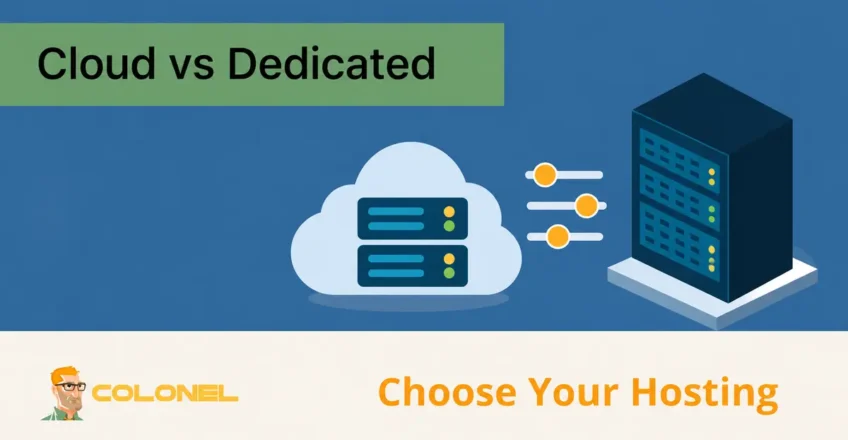
Wählen zwischen cloud hosting Und Dediziertes Server-Hosting often comes down to one critical factor: Anpassung. While both solutions offer powerful infrastructure and enterprise-grade capabilities, they provide very different levels of control over hardware, Software, Vernetzung, und Leistungsoptimierung.
WordPress-Webhosting
Ab 3,99 $/Monat
Organizations running standard web applications may find cloud hosting offers sufficient flexibility, while businesses with specialized workloads often require the extensive customization available with dedicated servers.
Understanding the differences helps ensure your infrastructure aligns with your performance, Einhaltung, und betriebliche Anforderungen.
Understanding Customization in Hosting
Customization refers to the ability to control and modify various aspects of a hosting environment, einschließlich:
- Hardware configuration
- Auswahl des Betriebssystems
- Software stack deployment
- Network architecture
- Sicherheitskontrollen
- Performance tuning
- Storage design
- Ressourcenzuteilung
The level of customization available directly impacts flexibility, Skalierbarkeit, Einhaltung, and long-term operational efficiency.
Cloud Hosting Overview
Cloud hosting uses virtualized infrastructure distributed across clusters of physical servers.
Resources are allocated dynamically and delivered through virtual machines, Behälter, or cloud instances.
Günstiger VPS-Server
Ab 2,99 $/Monat
Cloud platforms may provide the following features, depending on the service and architecture:
- Schnelle Bereitstellung
- Elastische Skalierung
- Self-service management
- Pay-as-you-grow pricing
- Hohe Verfügbarkeit
Cloud platforms abstract the underlying hardware, allowing users to focus primarily on applications and services rather than infrastructure management.
Dedicated Server Hosting Overview
Dedicated hosting provides exclusive access to an entire physical server.
Unlike cloud environments, all resources belong exclusively to a single customer.
Dedicated servers offer:
- Vollständige Hardwarekontrolle
- Exklusive Ressourcenzuteilung
- Erweiterte Anpassung
- Konsistente Leistung
- Maximum isolation
This approach is often preferred for mission-critical workloads, regulatory requirements, and specialized applications.
Windows VPS-Hosting
Fernzugriff und vollständige Verwaltung
Cloud Hosting Customization
Cloud environments offer flexibility, but customization occurs primarily within the virtual environment rather than at the physical infrastructure level.
Resource Scaling
One of the strongest advantages of cloud hosting is on-demand scalability.
Administrators can easily adjust:
- CPU-Kerne
- Erinnerung
- Lagerung
- Bandbreite
Changes often occur within minutes through a management portal or API.
Zu den Vorteilen gehören::
- Schnelle Bereitstellung
- Dynamic resource allocation
- Cost efficiency
- Simplified management
Application-Level Control
Cloud users typically have full control inside their virtual machines.
Common customization options include:
- Installing software packages
- Configuring web servers
- Deploying containers
- Managing databases
- Creating automation workflows
Beispiele:
- Apache
- NGINX
- Docker
- Kubernetes
- MySQL
- PostgreSQL
Management Interfaces
Most cloud platforms include centralized dashboards that simplify administration.
Zu den allgemeinen Merkmalen gehören::
- Instance deployment
- Firewall-Verwaltung
- Backup scheduling
- Überwachung
- Resource scaling
This makes cloud environments attractive for businesses without dedicated infrastructure teams.
Cloud Customization Limitations
Despite its flexibility, cloud hosting has several infrastructure restrictions.
Fixed Instance Types
Cloud providers generally offer predefined virtual machine configurations.
Beispiele:
| Instance Type | CPU | RAM |
|---|---|---|
| Klein | 2 vCPU | 4 GB |
| Medium | 4 vCPU | 8 GB |
| Large | 8 vCPU | 16 GB |
Custom combinations may not be available.
No Hardware Selection
Users typically cannot choose:
- Specific CPU models
- Memory manufacturers
- RAID controllers
- Network adapters
The provider determines the underlying hardware.
Kernel and Hardware Access
Full virtual machines commonly allow custom kernels and root access. Containers and managed hosting services may impose tighter restrictions. Physical BIOS and firmware access normally remains with the cloud provider.
Dedicated Server Customization
Hardware changes, firmware access and networking features depend on the provider and contract. Public clouds also offer GPU and specialized instance types. Neither cloud nor dedicated hardware makes an application compliant or highly available by itself; redundancy and operational controls must be designed separately.
Dedicated hosting provides significantly more control because customers manage the entire physical machine.
Hardware-Level Customization
Dedicated servers allow precise hardware selection.
Options commonly include:
Prozessorauswahl
Beispiele:
- AMD EPYC 9004 Serie
- AMD Ryzen
- Skalierbarer Intel Xeon
- Intel Core Series
Businesses can select processors based on:
- Core count
- Taktfrequenz
- Cachegröße
- Workload requirements
Memory Configuration
Dedicated servers often support:
- 32 GB
- 64 GB
- 128 GB
- 256 GB
- 512 GB
- 1 TB+
or even larger configurations.
This flexibility benefits:
- Datenbanken
- Virtualization clusters
- KI-Workloads
- In-memory applications
Storage Customization
Options may include:
- SATA-SSD
- Enterprise SSD
- NVMe-SSD
- ÜBERFALL 1
- ÜBERFALL 5
- ÜBERFALL 10
Organizations can optimize storage for:
- Leistung
- Redundancy
- Capacity
GPU Support
Dedicated servers can accommodate specialized GPUs.
Beispiele:
- NVIDIA L40S
- NVIDIA A100
- NVIDIA H100
- NVIDIA RTX-Serie
Ideal für:
- Künstliche Intelligenz
- Maschinelles Lernen
- Video-Rendering
- Wissenschaftliche Simulationen
Specialized Hardware
Dedicated infrastructure supports components rarely available in public clouds:
- FPGA accelerators
- High-speed network adapters
- Custom storage controllers
- Specialized compute devices
Operating System Freedom
Dedicated hosting provides complete operating system control.
Possible deployments include:
Linux
- AlmaLinux
- Rockiges Linux
- Ubuntu
- Debian
- Fedora
Windows
- Windows-Server 2022
- Windows-Server 2025
Custom Environments
Organizations may install:
- Legacy operating systems
- Specialized distributions
- Custom kernels
This flexibility is often essential for proprietary applications.
Network Customization
Dedicated servers offer advanced networking options.
Beispiele hierfür sind:
- Multiple NICs
- Private VLANs
- BGP-Routing
- Custom firewalls
- Dedicated IP ranges
- DDoS mitigation integration
These capabilities are particularly useful for hosting providers, SaaS-Plattformen, and enterprise environments.
Security Customization
Dedicated servers provide full control over security architecture.
Organizations can implement:
- Custom firewall policies
- Intrusion detection systems
- Endpoint monitoring
- Kernel hardening
- Compliance controls
Beispiele:
- HIPAA environments
- PCI-DSS systems
- Financial services platforms
- Government workloads
Leistungsoptimierung
Dedicated infrastructure allows extensive tuning.
Beispiele hierfür sind:
Kernel Optimization
sysctl -w net.core.somaxconn=65535
CPU Tuning
Administrators can adjust:
- CPU governors
- Core affinity
- NUMA configurations
Database Optimization
Dedicated servers support extensive tuning for:
- MySQL
- MariaDB
- PostgreSQL
- MongoDB
within the limits of the selected hardware and service. Similar software tuning is also possible in cloud VMs.
Cloud vs Dedicated: Customization Comparison
| Besonderheit | Cloud-Hosting | Dediziertes Hosting |
|---|---|---|
| CPU-Auswahl | Beschränkt | Within provider options |
| RAM Configuration | Preset Options | Within available hardware configurations |
| GPU Selection | Limited Availability | Extensive Options |
| Operating Systems | Supported Templates | Any Compatible OS |
| Kernel Access | Usually available in full VMs; platform dependent | Within provider options |
| RAID Configuration | Beschränkt | Fully Configurable |
| BIOS Access | NEIN | Often Available |
| Network Hardware | Abstracted | Anpassbar |
| Compliance Control | Depends on architecture and controls | Depends on architecture and controls |
| Skalierbarkeit | Exzellent | Manual Expansion |
When Cloud Hosting Makes Sense
Cloud hosting is often the better choice when:
- Workloads fluctuate significantly
- Rapid deployment is required
- Simplicity is important
- Infrastructure management resources are limited
- Applications fit standard resource profiles
Ideal examples include:
- SaaS-Plattformen
- Webanwendungen
- Entwicklungsumgebungen
- Startup infrastructure
Wenn dediziertes Hosting Sinn macht
Dedicated servers are ideal when:
- Hardware requirements are specialized
- Compliance is critical
- Performance consistency matters
- Large datasets are involved
- Custom infrastructure is required
Common use cases:
- AI and machine learning
- High-frequency trading
- Enterprise databases
- Large virtualization clusters
- Media rendering farms
- Government systems
Hybrid Approaches
Many organizations combine both technologies.
Beispiele:
- Dedicated database servers with cloud application servers
- Dedicated AI clusters with cloud front-end services
- Cloud-based scaling combined with dedicated backend infrastructure
Hybrid architectures provide flexibility while maintaining control where needed.
Letzte Gedanken
Cloud hosting and dedicated server hosting each offer valuable customization capabilities, but they serve different needs.
Cloud hosting excels at flexibility, rapid scaling, und einfache Verwaltung. It allows extensive application-level customization while abstracting hardware complexity.
Dedicated servers provide complete control over hardware, Betriebssysteme, Vernetzung, Sicherheit, und Leistungsoptimierung. This level of customization is unmatched and remains essential for organizations with specialized workloads, strict compliance requirements, or demanding performance objectives.
The best choice depends on your infrastructure goals, technische Anforderungen, and long-term growth strategy. Understanding the strengths and limitations of each option helps ensure your hosting environment is optimized for both current and future needs.