
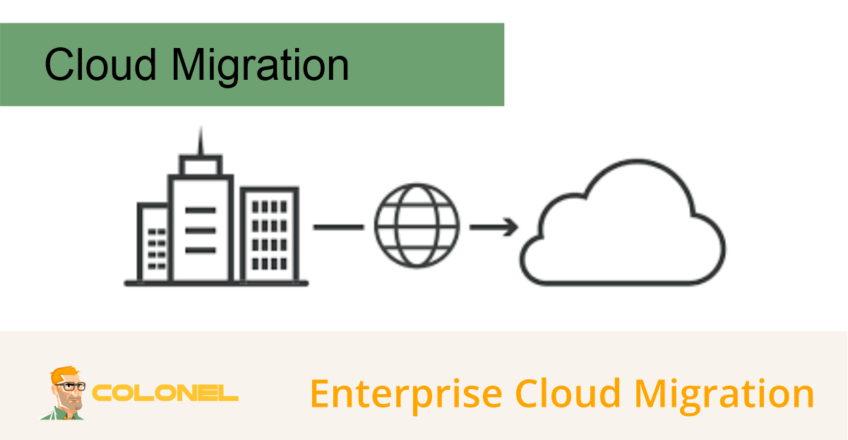
What Is Enterprise Cloud Migration?
Enterprise cloud migration is the process of moving applications, workloads, Datenbanken, and business data from existing infrastructure into a cloud environment.
Organizations typically migrate from:
- On-premises data centers
- Dedizierte Server
- VPS infrastructure
- Legacy hosting platforms
- Existing cloud providers
The destination environment may be:
- Private cloud
- Public cloud
- Hybrid cloud
- Multi-cloud infrastructure
As organizations continue modernizing their IT environments, cloud adoption has become a critical component of long-term growth, Skalierbarkeit, und betriebliche Effizienz. A successful migration requires careful planning, clear business objectives, and ongoing optimization after deployment.
Why Enterprises Are Moving to the Cloud
Cloud adoption continues to accelerate as businesses seek more flexible and scalable infrastructure.
Common reasons for cloud migration include:

WordPress-Webhosting
Ab 3,99 $/Monat
- Improved scalability
- Faster resource provisioning
- Better infrastructure performance
- Reduced hardware dependency
- Centralized management
- Increased availability
- Enhanced disaster recovery capabilities
- Long-term modernization
Cloud platforms allow organizations to respond more quickly to changing business requirements without the limitations associated with traditional infrastructure.
Types of Enterprise Cloud Infrastructure
Before planning a migration, organizations should understand the different cloud deployment models available.
Private Cloud
A private cloud provides dedicated infrastructure for a single organization.
Zu den Vorteilen gehören::
- Dedizierte Ressourcen
- Größere Kontrolle
- Enhanced security
- Improved compliance support
- Vorhersehbare Leistung
Private cloud environments are commonly used by:
- SaaS providers
- Gesundheitsorganisationen
- Finanzinstitute
- Enterprises with sensitive workloads
- High-traffic ecommerce platforms
Private cloud deployments are often preferred when security, compliance, and resource isolation are top priorities.
Günstiger VPS-Server
Ab 2,99 $/Monat
Public Cloud
Public cloud environments share infrastructure among multiple customers.
Zu den Vorteilen gehören::
- Niedrigere Eintrittskosten
- Schnelle Bereitstellung
- Flexible Skalierung
- Wide service availability
Public cloud platforms are frequently used for:
- Development environments
- Testing workloads
- General-purpose applications
- Variable-demand workloads
Organizations should carefully evaluate security and compliance requirements before selecting a public cloud model.
Hybrid Cloud
A hybrid cloud combines both private and public cloud environments.
This approach allows organizations to place workloads where they make the most sense.
Windows VPS-Hosting
Fernzugriff und vollständige Verwaltung
Zum Beispiel:
- Sensitive customer data remains in a private cloud.
- Public-facing services run in a public cloud.
Zu den Vorteilen gehören::
- Improved flexibility
- Better workload placement
- Enhanced cost management
- Greater operational control
Multi-Cloud
A multi-cloud strategy uses services from multiple cloud providers.
Organizations may choose this approach to:
- Avoid vendor lock-in
- Improve redundancy
- Optimize costs
- Select best-of-breed services
Different workloads can be assigned to different cloud environments based on performance, compliance, or operational requirements.
Benefits of Enterprise Cloud Migration
Moving enterprise workloads to the cloud offers numerous operational advantages.
Faster Provisioning
Traditional infrastructure often requires:
- Hardware procurement
- Installation
- Konfiguration
- Capacity planning
Cloud infrastructure can be provisioned within minutes, dramatically reducing deployment timelines.
This allows IT teams to respond faster to business requirements.
Improved Scalability
Cloud platforms make it easy to expand resources when demand increases.
Organizations can:
- Add compute resources
- Increase storage capacity
- Deploy additional virtual machines
- Expand clusters
This flexibility is particularly valuable during:
- Seasonal traffic spikes
- Marketing campaigns
- Business growth periods
Enhanced Performance
Cloud environments support technologies that improve performance and workload distribution.
Beispiele hierfür sind:
- Lastausgleich
- Resource scheduling
- Clustering
- High-performance storage
Workloads can be distributed across multiple hosts, reducing bottlenecks and improving overall efficiency.
Resource Consolidation
Cloud migration allows organizations to consolidate infrastructure into centralized management platforms.
Zu den Vorteilen gehören::
- Reduced hardware requirements
- Simplified administration
- Lower maintenance overhead
- Improved operational visibility
Centralized management helps IT teams work more efficiently.
Reduced Downtime
Modern cloud platforms provide built-in availability features.
Beispiele hierfür sind:
Hohe Verfügbarkeit (HA)
High Availability automatically detects failures and restarts workloads when necessary.
Zu den Vorteilen gehören::
- Faster recovery
- Reduced downtime
- Improved service continuity
Fault Tolerance (FT)
Fault Tolerance maintains synchronized secondary systems that can immediately take over if a primary system fails.
Zu den Vorteilen gehören::
- Continuous availability
- Reduced disruption
- Improved resilience
These features help organizations maintain business continuity during unexpected events.
Improved Security and Compliance
Private cloud environments provide greater control over security policies and infrastructure configuration.
Benefits may include:
- Resource isolation
- Dedicated infrastructure
- Enhanced monitoring
- Stronger access controls
- Regulatory compliance support
Industries handling sensitive information often benefit significantly from cloud environments designed for compliance requirements.
Beispiele hierfür sind:
- Healthcare
- Financial services
- Government
- Legal services
Future-Proofing Infrastructure
Technology evolves rapidly.
Cloud providers continuously invest in:
- Hardware upgrades
- Platform improvements
- Security enhancements
- Automation technologies
Migrating to the cloud helps organizations stay aligned with modern infrastructure standards without repeatedly investing in physical hardware replacements.
Common Challenges During Cloud Migration
Despite its benefits, cloud migration introduces several challenges that must be addressed.
Limited Cloud Experience
Organizations with limited cloud expertise may encounter difficulties during migration.
Challenges may include:
- Improper planning
- Configuration mistakes
- Security gaps
- Missed optimization opportunities
Ausbildung, consulting services, or managed cloud solutions can help reduce these risks.
Cost Concerns
Cloud migration often requires an initial investment.
Expenses may include:
- Migration services
- New infrastructure
- Software licensing
- Staff training
Jedoch, many organizations achieve long-term savings through:
- Reduced hardware costs
- Improved efficiency
- Better resource utilization
Downtime Risks
Migration activities can temporarily affect business operations.
Potential concerns include:
- Service interruptions
- Data synchronization delays
- User access issues
Careful planning helps minimize disruption and maintain continuity during the migration process.
Understanding the 7 Cloud Migration Strategies
Cloud migration approaches are commonly categorized using the „7 Rs“ framework.
Rehost (Lift and Shift)
Workloads are moved to the cloud without significant modifications.
Vorteile:
- Fast migration
- Lower complexity
- Reduced risk
Best suited for organizations seeking rapid cloud adoption.
Relocate
Infrastructure is moved from an on-premises platform to a cloud-based version of the same platform.
This approach is common with virtualization technologies.
Replatform
Applications receive limited modifications to better utilize cloud capabilities.
Vorteile:
- Improved efficiency
- Moderate effort
- Reduced modernization risk
Refactor (Re-Architect)
Applications are redesigned specifically for cloud environments.
Vorteile:
- Maximum optimization
- Bessere Skalierbarkeit
- Improved cloud-native capabilities
This approach typically requires the greatest investment.
Repurchase
Existing applications are replaced with cloud-native alternatives.
Beispiele hierfür sind:
- SaaS-Plattformen
- Modern business applications
- Cloud-based productivity suites
Retire
Obsolete systems and workloads are removed entirely.
Migration projects often reveal applications that are no longer needed.
Retain
Some workloads remain on existing infrastructure while others move to the cloud.
This strategy is common during phased migrations and hybrid cloud deployments.
Planning an Enterprise Cloud Migration
Successful migrations begin with thorough planning.
Define Business Objectives
Clearly identify the reasons for migrating.
Beispiele hierfür sind:
- Cost reduction
- Performance improvements
- Increased scalability
- Compliance requirements
- Infrastructure modernization
Objectives help determine whether the migration is successful.
Assess Existing Infrastructure
Create a detailed inventory of:
- Servers
- Anwendungen
- Datenbanken
- Storage systems
- Network resources
A complete assessment reduces the risk of overlooked dependencies.
Identify Application Dependencies
Many enterprise applications rely on interconnected services.
Beispiele hierfür sind:
- Datenbanken
- Authentication systems
- APIs
- Shared storage
Understanding these relationships is essential for migration planning.
Clean Up Unnecessary Resources
Migration projects provide an excellent opportunity to eliminate:
- Legacy applications
- Unused databases
- Obsolete backups
- Redundant systems
Reducing unnecessary workloads lowers migration complexity.
Choose the Appropriate Cloud Model
Evaluate whether the organization requires:
- Private cloud
- Public cloud
- Hybrid cloud
- Multi-cloud
The right choice depends on:
- Budget
- Security requirements
- Compliance needs
- Operational goals
Select a Migration Strategy
Choose the migration approach that best aligns with business objectives, technical requirements, and available resources.
Communicate with Stakeholders
Cloud migrations affect multiple departments.
Regular communication helps ensure:
- Alignment
- Risk awareness
- Resource availability
- Operational readiness
Establish Risk Mitigation Plans
Potential risks include:
- Data loss
- Compatibility issues
- Downtime
- Security concerns
Contingency planning reduces the impact of unexpected challenges.
Executing the Cloud Migration
Once planning is complete, execution can begin.
Verify Readiness
Confirm that:
- Migration tools are prepared
- Resources are allocated
- Teams are ready
- Backups are available
Perform Data and Workload Migration
Transfer:
- Anwendungen
- Datenbanken
- Virtual machines
- Storage resources
Migration speed may vary depending on:
- Data volume
- Network performance
- Infrastructure complexity
Validate Migrated Systems
Verifizieren:
- Application functionality
- Database integrity
- User access
- Service availability
Validation helps identify issues before production workloads fully transition.
Test Performance and Security
Conduct testing to ensure:
- Performance expectations are met
- Security controls function correctly
- Monitoring systems operate properly
Document the Migration
Detailed documentation supports:
- Future troubleshooting
- Knowledge transfer
- Process improvement
Notify Stakeholders
Once validation is complete, communicate the migration status to affected teams and users.
Post-Migration Optimization
Migration is only the beginning.
Ongoing optimization is critical for long-term success.
Monitor Infrastructure
Track:
- Resource utilization
- Performance metrics
- Verfügbarkeit
- Security events
Continuous monitoring helps identify optimization opportunities.
Optimize Workload Placement
Review resource allocation and adjust workloads as needed.
Techniques may include:
- Lastausgleich
- Clustering
- Auto-scaling
- Resource scheduling
Review Security Configurations
Ensure:
- Access controls are appropriate
- Security policies are enforced
- Compliance requirements remain satisfied
Implement Backup and Recovery Procedures
Cloud environments still require robust backup strategies.
Regular backups improve resilience against:
- Human error
- System failures
- Security incidents
Evaluate Costs Regularly
Cloud spending should be monitored continuously.
Review:
- Resource consumption
- Idle infrastructure
- Storage growth
- Licensing costs
Optimization helps maximize return on investment.
Building a Successful Enterprise Cloud Migration Strategy
Enterprise cloud migration is a strategic initiative that can improve scalability, Leistung, resilience, and operational efficiency when executed correctly. By carefully assessing existing infrastructure, selecting the appropriate cloud model, choosing the right migration strategy, validating workloads, and continuously optimizing the new environment, organizations can reduce risk and maximize the value of their cloud investment. A well-planned migration not only modernizes infrastructure but also creates a foundation for future growth and innovation.