
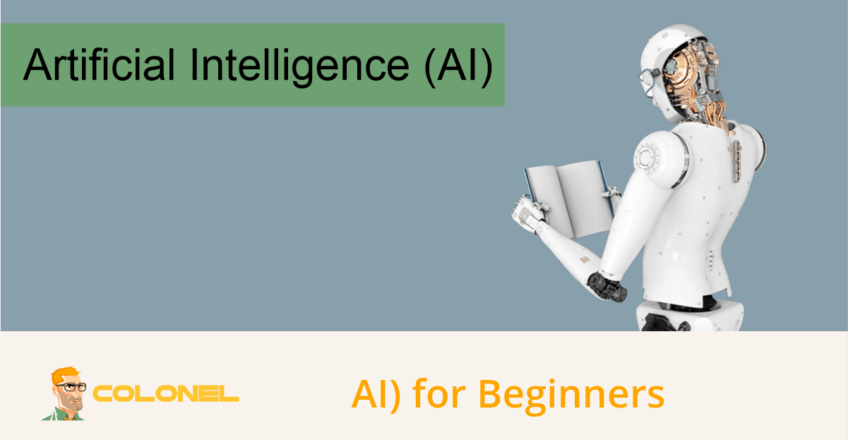
What Is Artificial Intelligence?
Künstliche Intelligenz, commonly referred to as AI, describes computer systems designed to perform tasks that normally require human intelligence. These tasks may include learning from data, identifying patterns, understanding language, solving problems, making decisions, recognizing images, and generating content.
Rather than following rigid instructions for every action, AI systems analyze information and use learned patterns to produce results. This ability allows software to handle increasingly complex tasks that previously required direct human involvement.
If you’re new to the subject, one simple way to think about AI is as a technology that learns from examples. Just as a music streaming platform recommends songs based on your listening habits, AI systems analyze data to predict outcomes and provide relevant responses.
The Evolution of Artificial Intelligence
Although AI has become a mainstream topic only in recent years, the foundations of the technology were established decades ago.
1950: The Turing Test
Computer scientist Alan Turing proposed the Turing Test, a concept designed to evaluate whether a machine could demonstrate behavior comparable to human intelligence.
1956: AI Becomes a Research Discipline
The Dartmouth Conference marked the beginning of artificial intelligence as a formal academic field, bringing together researchers interested in machine intelligence.

WordPress-Webhosting
Ab 3,99 $/Monat
1997: AI Defeats a Chess Champion
IBM’s Deep Blue defeated world chess champion Garry Kasparov, demonstrating the growing strategic capabilities of computer systems.
2012: Deep Learning Advances
The introduction of the AlexNet neural network significantly improved image recognition accuracy and accelerated interest in deep learning technologies.
2016: AlphaGo Makes History
AlphaGo defeated professional Go player Lee Sedol, proving that AI could master highly complex decision-making environments.
2020: Large Language Models Gain Momentum
The release of GPT-3 showcased major advances in natural language generation and automated content creation.
2022: Generative AI Reaches the Public
ChatGPT introduced millions of users to AI-powered conversational systems and accelerated widespread adoption of generative AI tools.
2024 and Beyond
Current AI development focuses on improving reasoning capabilities, multimodal understanding, safety, regulation, and the long-term pursuit of Artificial General Intelligence (AGI). Leading AI organizations continue to develop increasingly capable models that work with text, images, audio, video, and code.

Günstiger VPS-Server
Ab 2,99 $/Monat
How Artificial Intelligence Works
Modern AI relies on several underlying technologies that work together to process information and generate results.
Algorithms: The Foundation of AI
Algorithms are structured sets of instructions used to solve problems or perform calculations.
Every AI system relies on algorithms to process data, identify relationships, and determine outcomes. Some algorithms are relatively simple and follow predefined rules, while others are highly sophisticated and capable of adapting based on experience.
Not all AI systems are built in the same way. Some rely on fixed decision trees, while others continuously learn from new data through machine learning techniques.
Maschinelles Lernen: The Engine Behind Modern AI
Machine learning is a branch of AI that enables systems to improve their performance based on data rather than explicit programming.
Instead of manually defining every rule, developers provide training data that allows the system to discover patterns and relationships on its own.

Windows VPS-Hosting
Fernzugriff und vollständige Verwaltung
Machine learning generally falls into two major categories:
Supervised Learning
Supervised learning uses labeled examples to teach a model how to recognize patterns and make predictions.
Zum Beispiel, a model may be trained with thousands of images labeled as cats or dogs until it can accurately identify each category.
Unsupervised Learning
Unsupervised learning analyzes unlabeled data and identifies patterns without predefined answers.
This method is commonly used for clustering, anomaly detection, and discovering hidden relationships within datasets.
Natural Language Processing (NLP)
Natural Language Processing focuses on enabling computers to understand, interpret, and generate human language.
NLP powers technologies such as:
- Chatbots
- Translation services
- Sprachassistenten
- Search engines
- Content generation tools
- Sentiment analysis systems
When your smartphone predicts words while typing or automatically corrects spelling mistakes, NLP is often involved behind the scenes.
Computer Vision
Computer vision enables machines to interpret visual information from images and videos.
Using computer vision, AI systems can:
- Identify objects
- Detect faces
- Analyze medical images
- Read documents
- Support visual search functionality
- Monitor industrial processes
This technology continues to play an important role across healthcare, manufacturing, Sicherheit, retail, and transportation industries.
Deep Learning
Deep learning is a specialized area of machine learning that uses artificial neural networks inspired by the structure of the human brain.
These networks contain multiple processing layers that allow them to identify increasingly complex patterns within data.
Deep learning powers many modern AI breakthroughs, einschließlich:
- Image recognition
- Speech recognition
- Language models
- Empfehlungsmaschinen
- Autonome Systeme
The more high-quality data available during training, the more effective deep learning models typically become.
Categories of Artificial Intelligence
AI systems are commonly grouped into three categories based on their capabilities.
Narrow AI
Narrow AI, sometimes called Weak AI, is designed to perform specific tasks.
Beispiele hierfür sind:
- Sprachassistenten
- Recommendation systems
- Spam filters
- Translation tools
- Image recognition software
Virtually all AI systems currently in widespread use belong to this category.
General AI
General AI refers to a theoretical system capable of performing any intellectual task a human can perform.
Unlike Narrow AI, General AI would not be limited to a specific domain and could adapt to a wide range of challenges.
At present, General AI remains a research objective rather than a practical reality.
Artificial Superintelligence
Artificial Superintelligence represents a hypothetical future stage where AI exceeds human intelligence across every measurable domain, including reasoning, creativity, scientific discovery, and decision-making.
Momentan, ASI remains a theoretical concept.
Common Misconceptions About AI
Many misunderstandings surround artificial intelligence. Separating fact from fiction is important for anyone learning about the field.
AI Thinks Like Humans
False.
AI does not possess consciousness, emotions, personal experiences, or self-awareness. It analyzes information and produces outputs based on patterns found in training data.
AI Will Replace Every Job
Mostly false.
AI is expected to automate certain repetitive tasks, but it also creates demand for new skills, roles, and industries. In many cases, AI serves as a productivity tool that assists human workers rather than replacing them entirely.
AI Learns Independently Like People
False.
AI systems require training data, development, Überwachung, and updates. They cannot independently acquire knowledge in the same way humans do.
More Data Always Creates Better AI
False.
Poor-quality, biased, or inaccurate data can negatively affect performance regardless of quantity. Data quality remains one of the most important factors in AI development.
AI Is Always Correct
False.
AI systems can generate inaccurate, misleading, or biased outputs. Human oversight remains essential when using AI for important decisions.
How AI Is Transforming Digital Businesses
Artificial intelligence is changing how businesses build websites, analyze customer behavior, improve efficiency, and deliver services.
AI Website Creation
AI-powered website builders can generate layouts, content structures, and visual designs with minimal user input.
These tools simplify website creation for users without development or design experience.
Jedoch, custom development and professional design remain important for organizations with specialized requirements.
Personalized User Experiences
AI systems can analyze visitor behavior and deliver personalized recommendations, content suggestions, and product offerings.
This level of customization often improves engagement and user satisfaction.
Operational Efficiency
AI can automate routine tasks such as:
- Data analysis
- Content reviews
- Customer support
- Workflow automation
- Berichterstattung
Automation allows teams to spend more time on strategic activities.
Advanced Analytics
AI-powered analytics platforms help organizations understand:
- Customer preferences
- Traffic patterns
- User behavior
- Conversion opportunities
- Performance trends
These insights support better decision-making and continuous optimization.
Erhöhte Sicherheit
Artificial intelligence can identify unusual activity, detect threats, and assist in preventing attacks.
Applications include:
- Fraud detection
- Threat monitoring
- Login anomaly detection
- Malware identification
- Behavioral analysis
Inventory Management
AI helps businesses forecast demand, monitor stock levels, optimize purchasing decisions, and reduce inventory inefficiencies.
Challenges and Ethical Considerations
As AI adoption increases, organizations must also consider the associated risks and responsibilities.
Algorithmic Bias
AI systems learn from data, and biased data can produce biased outcomes.
Developers must carefully evaluate training datasets and implement safeguards that promote fairness and accuracy.
A practical way to assess bias is by testing AI systems with diverse inputs and comparing the consistency of the results.
Workforce Impact
Automation may change job requirements in certain industries.
Organizations should consider workforce development, retraining opportunities, and long-term planning when introducing AI-driven automation.
Privacy Concerns
Many AI systems rely on large volumes of user data.
Organizations should:
- Be transparent about data usage
- Follow privacy regulations
- Protect sensitive information
- Implement strong security controls
Compliance with regulations such as GDPR remains essential when processing personal information.
How to Learn Artificial Intelligence
You do not need advanced programming knowledge to begin learning AI.
Many educational resources focus on practical understanding before moving into technical implementation.
1. Identify Your Goals
Determine how AI relates to your interests or business objectives.
Beispiele hierfür sind:
- Automatisierung
- Content creation
- Customer service
- Entwicklung
- Analytik
- Sicherheit
2. Study High-Quality Educational Resources
Several respected learning platforms offer beginner-friendly AI courses.
Recommended options include:
- AI For Everyone
- Elements of AI
- IBM Introduction to Artificial Intelligence
- Google AI Education resources
These programs provide strong foundations for understanding AI concepts and practical applications.
3. Select Appropriate AI Tools
The AI ecosystem includes thousands of products designed for different purposes.
Beispiele hierfür sind:
- Chatbots
- Content generation tools
- Analytics platforms
- Empfehlungsmaschinen
- Development assistants
- Bilderzeugungssysteme
Choose tools based on your primary business or personal objectives.
4. Verify Compatibility
Before deploying AI solutions, evaluate compatibility with your existing infrastructure, Anwendungen, and workflows.
Proper planning reduces future integration challenges.
5. Plan for Maintenance
AI systems require ongoing monitoring, retraining, and updates to maintain accuracy and effectiveness.
Organizations should allocate sufficient resources for long-term management rather than treating AI as a one-time deployment.
Real-World AI Applications
Artificial intelligence is already delivering value across numerous industries.
Healthcare
AI assists with:
- Medical image analysis
- Treatment recommendations
- Patient outcome prediction
- Clinical decision support
Ecommerce
AI improves product recommendations, personalization, Kundenbetreuung, and demand forecasting.
Finance
Financial institutions use AI for:
- Fraud detection
- Risk assessment
- Market analysis
- Investment decision support
Manufacturing
Manufacturers apply AI to optimize production processes, improve quality control, and reduce operational costs.
Edge Computing
AI enables real-time decision-making closer to where data is generated, supporting applications such as:
- Autonomous vehicles
- Smart devices
- Industrial sensors
- Augmented reality systems
Software Development
AI-powered development tools assist with coding, debugging, Testen, Dokumentation, and personalization features.
Infrastructure Management
AI can optimize server environments by predicting resource demands and automatically allocating computing power based on workload requirements.
Combined with GPU-accelerated infrastructure, AI enables faster processing, improved efficiency, and more intelligent resource utilization across modern hosting environments.