

WordPress Cron Jobs are very important in the automation of scheduled tasks like posting articles, sending emails, updating plugins, and cleaning up databases. In the complete guide on how to set up WordPress Cron Jobs correctly, you will be taken through the WordPress scheduling system and how it can fail on a low-traffic WordPress site. From the guide, you will be able to set up the WordPress Cron Jobs correctly to ensure that your WordPress site runs smoothly and efficiently.
What Are WordPress Cron Jobs?
WordPress Cron Jobs refer to the WordPress core’s built-in scheduling mechanism that enables the WordPress core to execute recurring and one-time tasks without the need to access the server’s native cron job scheduling mechanism. WordPress Cron Jobs execute tasks in the background, which include publishing scheduled posts, checking for updates to plugins, sending scheduled emails, and performing routine WordPress maintenance tasks like database cleanup.
Unlike traditional Unix cron jobs, WordPress does not rely on a system timer to execute scheduled tasks. In plaats van, WordPress Cron Jobs rely on the interaction generated by the WordPress core’s visitors to execute scheduled tasks. In this regard, WordPress checks if the scheduled task’s execution time has elapsed each time a visitor loads a page on the WordPress website. If the scheduled task’s execution time has elapsed, WordPress executes the scheduled task during the page load process.
From an architectural point of view, WordPress Cron Jobs rely on a combination of core files, the database, and hooks to manage scheduled tasks. WordPress Cron Jobs store scheduled tasks as events in the database’s wp_options table and link them to a specific callback function that WordPress core, plug-ins, and/or themes provide.

How WordPress Cron Works Behind the Scenes
Behind the scenes, WordPress’s own version of cron is made up of a file called wp-cron.php, which is the file responsible for actually executing the scheduled tasks. As a WordPress page is requested, WordPress compares the scheduled tasks stored in the database with the current time on the server.

WordPress-webhosting
Vanaf $ 3,99/maandelijks
If a scheduled event is pending, WordPress sends a non-blocking HTTP request to wp-cron.php for each scheduled event. This means that these requests are executed asynchronously, meaning they don’t block the current visitor from viewing the site while waiting for the scheduled tasks to be processed. The file then processes each scheduled event sequentially.
As for the scheduling, this is done through the use of hooks such as wp_schedule_event() and wp_schedule_single_event(). Plugins make use of these hooks to schedule their own tasks, which can be scheduled for a variety of intervals, such as an hour, a day, etc.
It is worth noting that WordPress Cron Jobs don’t actually execute outside of the PHP execution lifecycle, which means they are subject to a variety of PHP configuration settings, such as memory limits, execution time, etc.
Common Issues with WordPress Cron Jobs
Although WordPress Cron Jobs are very convenient, they also have some common problems that can affect the stability and performance of a website.
Some of the most common problems associated with WordPress Cron Jobs include:
- Scheduled posts not being published due to low traffic on the website
- Multiple cron jobs piling up and running at the same time
- Long-running cron jobs consuming a lot of CPU resources
These problems are generally associated with the fact that the cron system relies on page views. If a website has low traffic, the scheduled tasks may not run at the same time as they are intended to. On the other hand, if a website has high traffic, the opposite problem can occur, where multiple cron jobs run at the same time.

Goedkope VPS-server
Vanaf $ 2,99/maandelijks
Another common problem associated with WordPress Cron Jobs is plugin conflicts. Sometimes, plugins can register cron jobs without cleaning up the database, resulting in orphaned tasks in the database even after the plugin has been uninstalled.
When You Should Use Real Cron Jobs Instead
There are certain cases wherein the use of WordPress cron jobs is not encouraged, and the use of real cron jobs is preferred.
When to use real cron jobs:
- Your WordPress site contains mission-critical cron jobs
- Your WordPress site contains large data sets to process
- Your WordPress site contains varying traffic patterns
The main reason to use real cron jobs is that they are executed by the operating system at a predetermined interval, which means they are more reliable and can be executed independently without any restrictions on the number of web requests that can be executed at a particular interval.
For an enterprise-level WordPress installation, it is recommended that the internal cron job mechanism should not be used, and the server-level cron job should be used instead.

Windows VPS-hosting
Remote Access & Full Admin
How to Disable the Default WordPress Cron
The default cron system can be disabled easily by making one change to the configuration file. Adding a constant to the file will prevent WordPress cron jobs from running on page load.
Before you can set up a real cron job, it’s necessary to disable the default cron system. Running two cron systems can lead to duplicate executions of cron jobs.
By disabling the default cron system, you will no longer be running WordPress Cron Jobs. All executions of cron jobs will be handled by your server.
Setting Up a Real Cron Job on Your Server
Once the internal scheduler has been disabled, the next step would be to set up a real cron job on the server. This is usually done through the hosting control panel or through SSH using crontab.
The usual setup would be to run wp-cron.php at fixed intervals, such as every 5 of 10 notulen.
Here is a comparison between the internal cron execution and the real cron execution:
| Functie | WordPress Cron | Server Cron |
| Trigger Method | Page visits | OS scheduler |
| Betrouwbaarheid | Variable | Hoog |
| Performance Impact | Can spike | Controlled |
| Best for High Traffic | Nee | Ja |
This setup gives you full control over execution timing and resource allocation.
Managing WordPress Cron Jobs through the wp-cron.php File
The WordPress file that handles the execution of scheduled tasks is the wp-cron.php file. The file executes all scheduled tasks in sequence if executed directly.
Manually invoking this file by WordPress administrators helps to troubleshoot and test the execution of cron jobs. Echter, making this file publicly accessible may pose a threat to the WordPress site.
Understanding the relationship between WordPress Cron Jobs and the file that handles the execution of scheduled tasks is crucial if you are planning to switch to server-side cron jobs or if you are experiencing execution failures.

Using WP-CLI to Control WordPress Cron Jobs
WP-CLI can be used to efficiently manage cron jobs in WordPress. WP-CLI can be used to list cron events and the associated hooks, run overdue cron events manually, and delete cron events.
The advantages of using WP-CLI include:
- Checking cron events and associated hooks
- Executing overdue cron events manually
- Deletion of cron events
The use of WP-CLI can be beneficial in situations where developers need to manage complex WordPress installations and cannot use the usual debugging tools.
Best Practices for Optimizing WordPress Cron Jobs
Optimizing WordPress Cron Jobs demands a thoughtful strategy that takes into consideration reliability, prestatie, and maintenance.
It is critical to conduct a review of the scheduled tasks before applying any optimizations.
The main practices in optimizing WordPress Cron Jobs include:
- Consolidation of cron jobs
- Increase in intervals of non-critical cron jobs
- Offloading of heavy cron jobs
These practices will greatly reduce the server load and improve the overall responsiveness of the site.
!!!
Improper cron scheduling can negatively affect site performance. For a deeper look at speed-related optimizations, check out our complete guide to WordPress website speed optimization.
Security Considerations for Cron Jobs
Cron jobs, if misconfigured, can provide an avenue for exploitation, where the exposed cron jobs can be used to perform excessive executions, leading to denial-of-service attacks.
To be safe, it’s important to limit access to the cron execution files, ensuring that the validation of permissions takes place prior to performing any sensitive operations.
Volgens de WordPress.org documentatie:
“WP-Cron is triggered by visits to your site, but it can be configured to run as a real cron job for better reliability and performance.” — WordPress.org
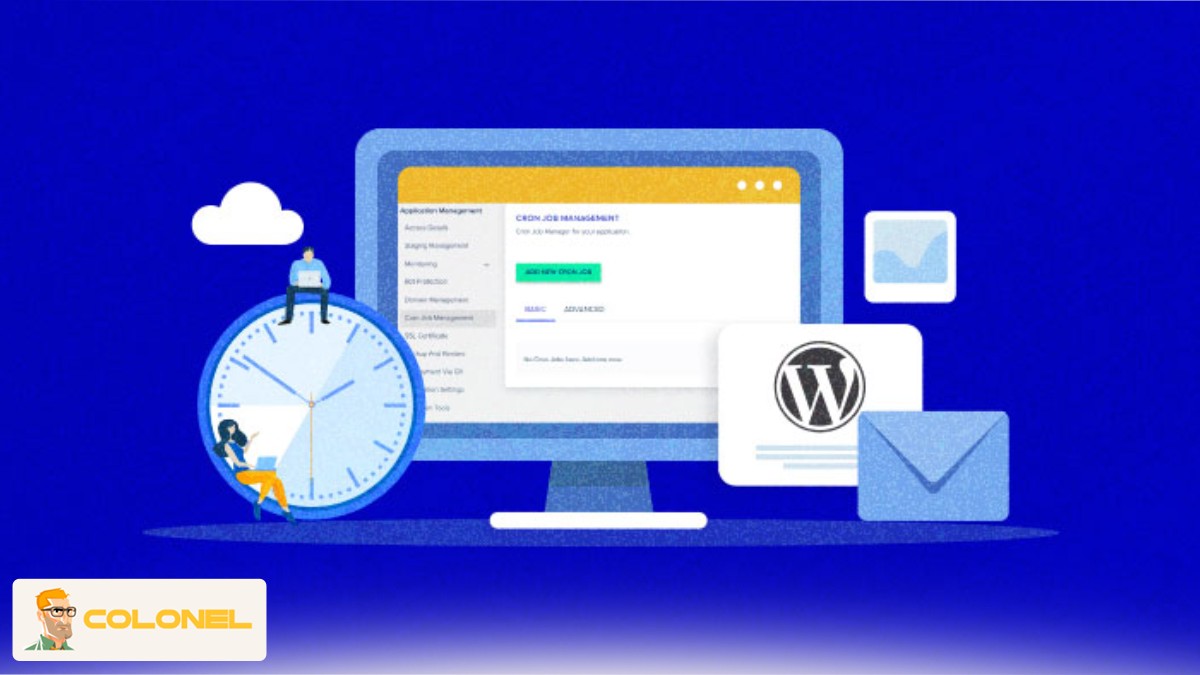
Troubleshooting WordPress Cron Job Errors
In case of errors in cron jobs, some of the common signs are missing blog posts, delayed emails, and increased server loads. In order to troubleshoot WordPress cron job errors, log files are to be checked and analyzed, and the cron events are to be inspected. In order to troubleshoot cron errors, some of the common steps are checking PHP error logs, checking time zone settings, and checking the cron array in the database. Advanced debugging techniques involve manually activating WordPress Cron Jobs.
Conclusie
WordPress scheduling system, although it may seem a simple task, requires a deep understanding and implementation of the system in a professional project. In dit artikel, we learned about the WordPress cron jobs, their limitations, and when to switch from cron jobs to the real cron system. By disabling the default cron jobs, the cron server, and the WP-CLI, and keeping the security aspects in mind, you can develop a robust and scalable system as required by the search engines and the professional world.